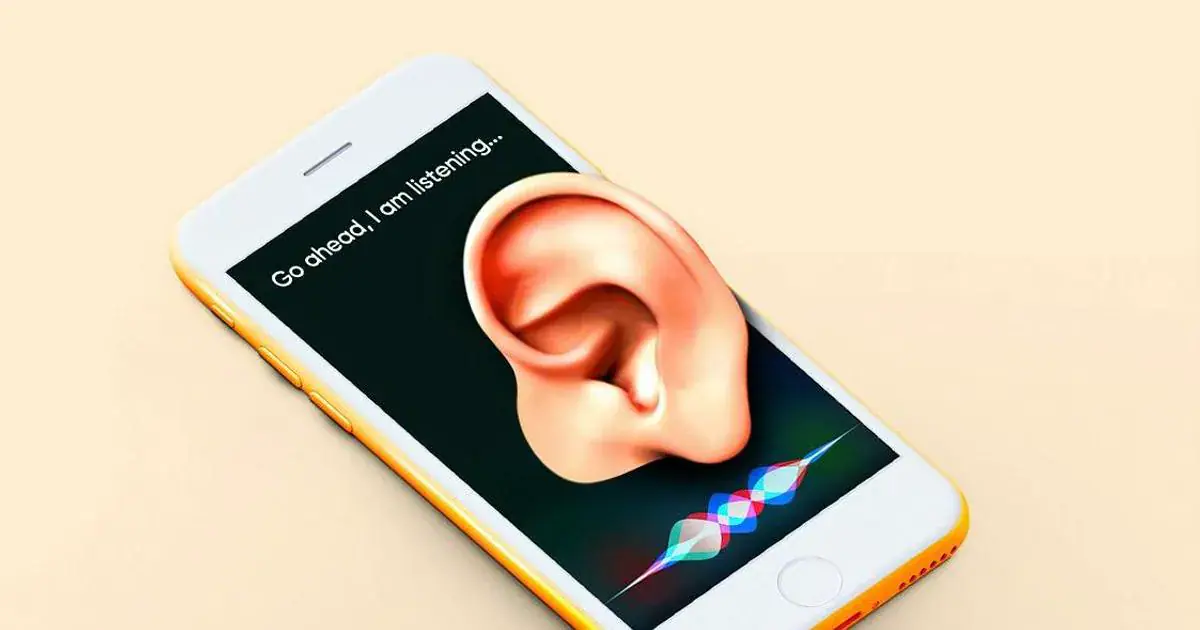
Many people have experienced the phenomenon of discussing a product or service with a friend, only to see ads for it pop up on their phone shortly after. This has led some to wonder if their phone is secretly listening to their conversations. However, according to research, phones are not eavesdropping on users. Instead, advertisers use various methods to predict users' interests and show them targeted ads. These methods include proximity data, hyper-predictive algorithms, and psychological phenomena like confirmation bias.
One of the methods used by advertisers is proximity data, also known as "friend connection" data. When two people spend time together, their phones broadcast location data via GPS, Bluetooth, and Wi-Fi. Ad networks can recognize that the devices were in close proximity to each other and link their profiles. For example, if a friend recently searched for a particular product or interacted with a local business page, the algorithm may show that user ads related to their friend's interests.
Another method used by advertisers is subconscious priming. This occurs when a user scrolls past an ad or image of a product without consciously paying attention to it. The visual cue remains in their subconscious, leading them to bring it up in conversation with a friend later. When they open their phone again and see the product, they assume the conversation caused the post, when in reality, the earlier post quietly triggered the conversation.
Hyper-predictive modeling is also used by advertisers to predict users' interests. Algorithms track thousands of data points, including demographic profiles, exact locations, local weather, and time of day. They can predict what a user is likely craving or thinking about with remarkable accuracy. This method allows advertisers to show targeted ads without needing to listen to users' conversations.
The Frequency Illusion, also known as the Baader-Meinhof Effect, is a psychological phenomenon that contributes to the illusion that phones are listening to users. This phenomenon occurs when a user notices a product or service they were just thinking about, while ignoring the numerous unrelated posts around it. This selective attention makes it seem like the phone is targeting them with ads.
To check whether an app is using their microphone, users can go to their phone's settings and review which apps have access to the microphone. On iPhone, users can go to Settings → Privacy & Security → Microphone, while on Android, users can go to Settings → Security and privacy → Privacy dashboard → Microphone. Users can also reduce advertising tracking by turning off personalized ads, limiting precise location access, and removing unnecessary app permissions.
In conclusion, phones are not secretly listening to users' conversations to serve targeted ads. Advertisers use various methods, including proximity data, hyper-predictive algorithms, and psychological phenomena, to predict users' interests and show them targeted ads. By understanding how these methods work, users can take steps to protect their privacy and reduce advertising tracking.
Key points
- Advertisers use proximity data, algorithms, and psychological phenomena to show targeted ads.
- Phones are not secretly listening to users' conversations to serve targeted ads.
- Users can take steps to protect their privacy and reduce advertising tracking.