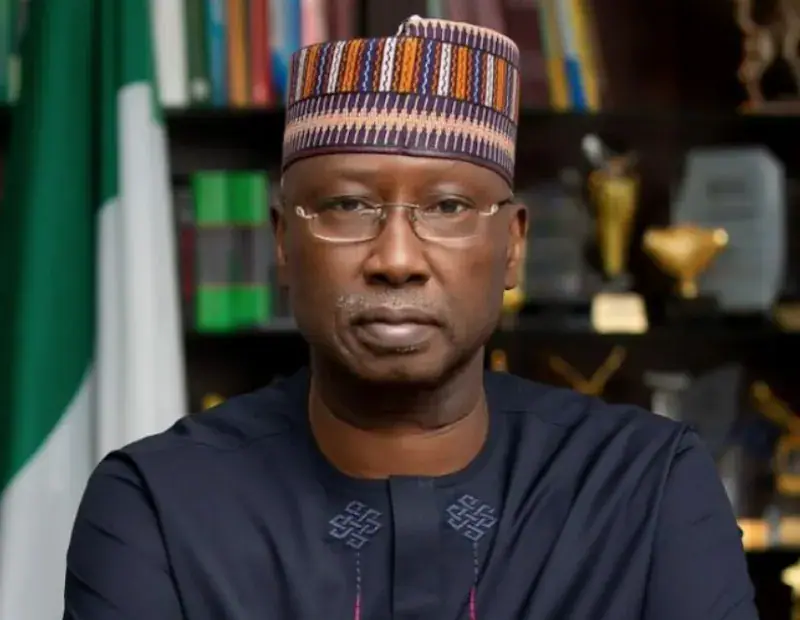
Former Secretary to the Government of the Federation, Boss Mustapha, has expressed concerns over the remuneration of directors-general of federal parastatals in Nigeria. He alleged that they earn more than ministers, permanent secretaries, and directors combined. This disparity is an abnormality that requires urgent attention, according to Mustapha. He made the call while delivering the keynote address at the colloquium and unveiling of the Council of Retired Federal Permanent Secretaries and Heads of the Civil Service of the Federation Journal on Public Policy and Governance in Abuja.
The event, which marked the beginning of CORFEPS Week 2026, had the theme: ‘Navigating the Headwinds of Governance: Centrality of the Civil Service’. Mustapha emphasised the need for a fair and sustainable remuneration system that would improve workers’ welfare, boost morale, help tackle corruption within the service, and enhance productivity across the public service. The National Salaries, Incomes and Wages Commission, in collaboration with the Federal Civil Service and the Office of the Head of the Civil Service of the Federation, must address disparities in public sector remuneration.
Mustapha questioned the rationale behind entrusting public servants with enormous responsibilities without adequately remunerating them. He described as abnormal a situation in which some agency heads earn more than ministers and permanent secretaries combined. The former SGF cited Singapore’s remuneration structure, noting that its Prime Minister earned $2.6 million annually, compared with the $400,000 earned by US President Donald Trump.
Mustapha attributed Singapore’s leadership structure to its rigorous recruitment process, which draws many leaders from the civil service. He sometimes feels embarrassed when he sees successive governments presenting budget estimates running into trillions of naira, yet the people expected to manage those trillions of naira earn peanuts. The National Salaries, Incomes and Wages Commission has an important role to play in determining remuneration options.
The Chairman of the Federal Civil Service Commission, Prof. Tunji Olaopa, supported Mustapha’s position, stressing that the effectiveness of policies depended on the workforce responsible for implementing them. Professionalising the civil service is therefore not mere rhetoric. It requires far-reaching talent management reforms and sustained investment in capacity development, training, and retraining.
Olaopa noted that retaining talented personnel remained a major challenge, despite the service’s ability to attract highly capable individuals. He disclosed that he had discussed the issue with the Salaries and Wages Commission, adding that ongoing deliberations could help advance civil service reforms. The Federal Civil Service Commission is working to address the challenges facing the civil service.
Vice-President Kashim Shettima, represented by the Special Adviser to the President on Power Infrastructure, Office of the Vice-President, Sadiq Wanka, described the civil service as central to national development and the state’s ability to deliver public services. The colloquium aimed to promote discussions on the challenges and opportunities facing the civil service in Nigeria.
Key points
- The remuneration disparity between directors-general of federal parastatals and other public servants in Nigeria requires urgent attention.
- A fair and sustainable remuneration system is necessary to improve workers’ welfare and boost morale in the public service.
- The National Salaries, Incomes and Wages Commission has a crucial role to play in addressing disparities in public sector remuneration.