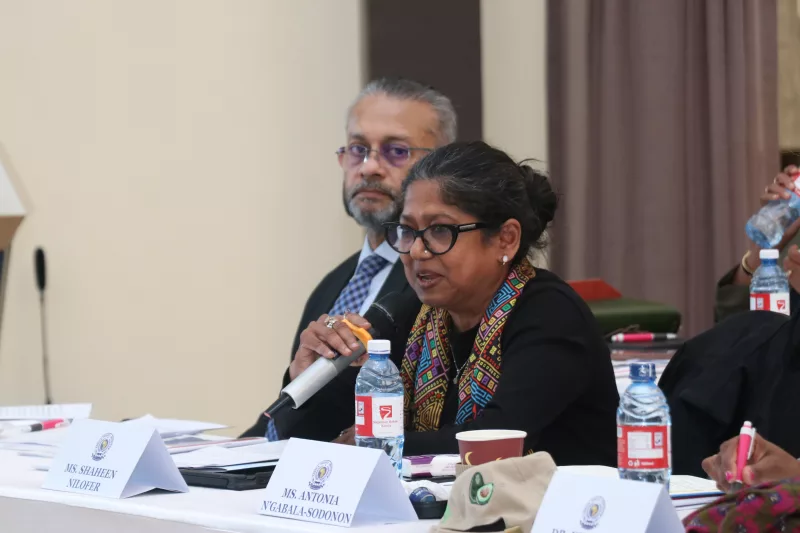
Africa may struggle to achieve all its development targets by 2030 unless it steps up investment in children and young people, Unicef Kenya Representative Shaheen Nilofer has warned. Nilofer emphasized that the continent's rapidly growing young population creates an urgent need for greater investment in health, education, skills, and jobs. She made these remarks on the sidelines of a conference on Advancing Global Development and Governance in Naivasha.
Nilofer stressed that Africa's growing youth population makes it critical to put children and young people at the center of development planning and international partnerships. She highlighted the importance of incorporating the voices of young people and children in development initiatives. According to Nilofer, Africa should move beyond being a recipient of development programs and have a greater role in determining the priorities of interventions designed to address its challenges.
Unicef is expanding cooperation with Chinese institutions on programs targeting maternal and child health, education, water and sanitation, nutrition, and skills development across Africa. In 2025, Unicef signed agreements with Chinese institutions covering cooperation in maternal and child health, primary healthcare, education, water and sanitation, climate resilience, and digitalization. These partnerships include planned maternal and child health centers in Ethiopia, Nigeria, and Mozambique.
Nilofer cited maternal and newborn mortality as one area requiring continued investment, noting that Unicef is supporting counties in Kenya to improve maternal and child health outcomes. Education and sanitation in schools are also part of the agenda, alongside technical and vocational education and training, which can help young people acquire skills needed in the labor market.
The jobs question is becoming increasingly urgent as more young Africans acquire education without finding sufficient employment opportunities. Nilofer noted that many young people end up in informal spaces and the informal economy. She called for greater private-sector involvement in creating employment and skills opportunities for young people, arguing that the benefits of investment extend beyond individual workers to their families and communities.
Nilofer pointed to the Vertical Agro Group factory, which delegates visited during the program, as an example of how employment can have wider social benefits. The company reported that about 10,000 people were directly benefiting from employment, while the wider economic impact reached about 35,000 people in households. The benefits include improved access to education, health services, and nutrition for workers' families.
Unicef's Africa Strategy places children and young people at the center of the organization's work on Africa's development priorities, linking its programs to the continent's Agenda 2063, the Agenda for Children 2040, and the SDGs. China has increasingly become part of that development agenda through its investments, development cooperation, and partnerships with African countries.
Key points
- Unicef urges China to partner with Africa to accelerate progress on the Sustainable Development Goals (SDGs).