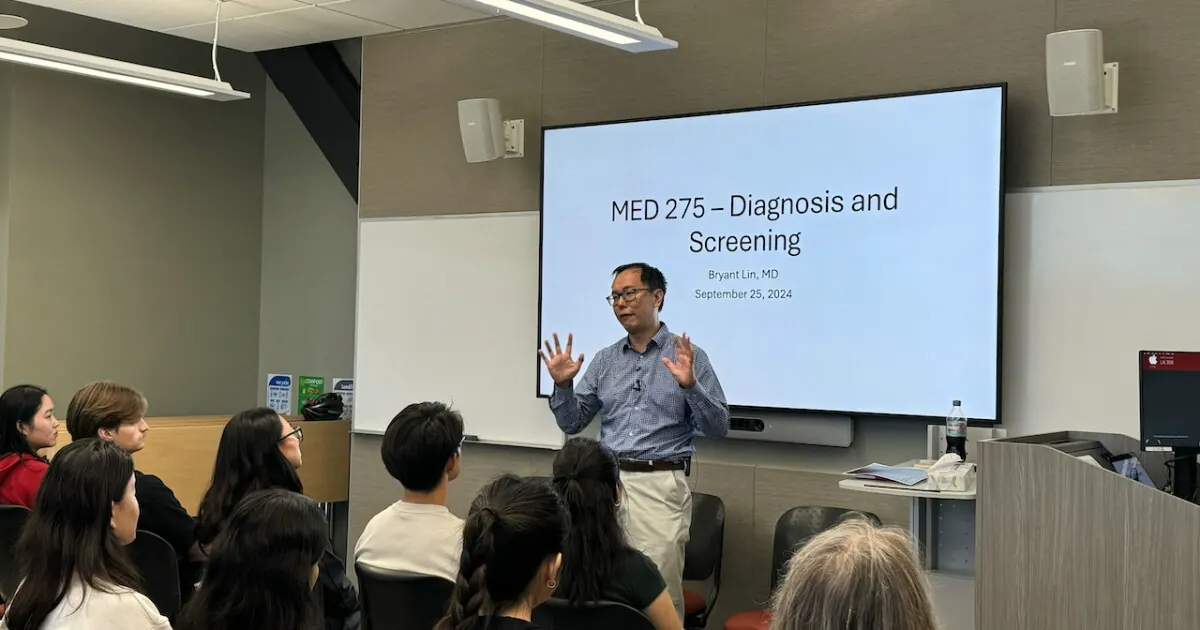
Stanford medical professor Bryant Lin, a renowned advocate for lung cancer screening, was diagnosed with Stage IV lung cancer two years ago. Despite being a non-smoker, Lin's diagnosis was a shock, but he remains hopeful due to recent advancements in treatment. He co-leads the Center for Asian Health Research and Education at Stanford, which focuses on improving lung cancer screening and treatment. Lin's personal experience has given him a unique perspective on the disease.
Lung cancer, once considered a death sentence, is now seeing notable improvements in treatment and survival rates. The five-year survival rate across all stages of lung cancer has doubled in three decades, reaching 30%. However, early detection is crucial, with a 67% five-year survival rate for localized cancer between 2015 and 2021. The diversity and complexity of lung cancer genetics have made treatment challenging, but recent technological advancements have enabled targeted treatments.
UCLA oncologist Jonathan Goldman explains that genetic testing can identify specific mutations driving abnormal cell growth, allowing for targeted treatments. These treatments are more effective and have fewer side effects compared to traditional chemotherapy. A recent study published in the New England Journal of Medicine showed dramatic reductions in recurrence when patients with rare subtypes receive targeted medicines as their first treatment. However, access to comprehensive genomic testing remains limited.
Professor-patient Bryant Lin initially began taking a daily pill called Tagrisso (osimertinib) after his diagnosis in May 2024. The FDA approved its use in combination with chemotherapy just three months prior, based on data showing it lengthened survival. Lin credits years of research for his current treatment regimen and notes the rapid progress in lung cancer treatment. He continues to teach, travel, and advise the Susan Wojcicki Foundation for lung cancer.
Despite the progress, affordability remains a significant challenge. Lin, a nationally known expert, faced battles with insurance to get some of his new, expensive treatments covered. Insurers often require prior authorization or deny coverage for new drugs. Lin worries about patients who cannot afford to pay out of pocket for oral and IV drugs, which can cost hundreds of thousands of dollars.
A year into his treatment, Lin's initial targeted therapy stopped working, and regulators approved another drug combination – amivantamab and lazertinib. This new therapy has given Lin more life and a better quality of life, with well-controlled symptoms. He continues to advocate for better screening modes and rates, particularly for high-risk patients. AI imaging is also being explored to improve screening.
Researchers are exploring potential crossover areas with other genetically similar cancers, such as pancreatic cancer. A recently approved drug, Rasonque (daraxonrasib), doubled survival for late-stage pancreatic cancer patients to over 13 months. Additionally, mRNA vaccines, custom-designed to match individual cancer genetic profiles, show promise in re-enlisting the immune system to fight tumors. Lin is investigating personalized mRNA vaccines for himself.
Key points
- Recent advancements in genetic testing and targeted treatments have improved lung cancer survival rates and quality of life for patients.
- Access to comprehensive genomic testing and affordable treatments remain significant challenges for lung cancer patients.
- Ongoing research and potential crossover areas with other cancers, such as pancreatic cancer, offer hope for future improvements in lung cancer treatment.