The city of Veracruz, with its rich musical history, proudly showcases its heritage through son jarocho, a regional genre that has been a staple for centuries. At the heart of this tradition is "La Bamba," a song that has been played in the city's central plaza every hour on the hour. This iconic melody is not the rock 'n' roll hit by Ritchie Valens from 1958, but the original "La Bamba," a syncopated and jubilant folk music that is a melange of European, Caribbean, and Indigenous influences.
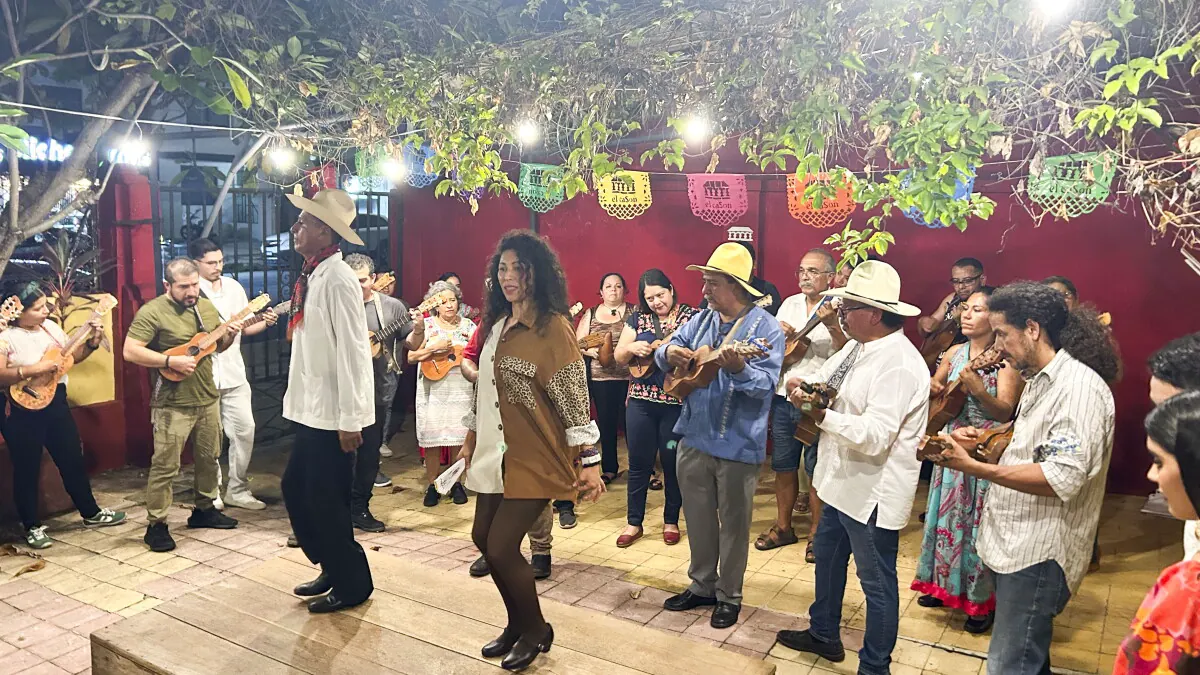
Son jarocho music is an integral part of fandangos, joyous community fiestas that have been a part of Veracruz's culture for over 300 years. These gatherings bring people together to play instruments, sing, and dance, creating a lively atmosphere that is infectious and captivating. The music is played on traditional instruments, including the jarana, a small eight-string guitar native to the region, and the quijada, the jawbone of a donkey. As the night wears on, the crowd joins in, creating a giant jam session that is truly unforgettable.
Despite its rich history, son jarocho music faced a decline in popularity in the 1960s and 1970s, when it was considered low-brow music. Many musicians, including Gilberto Gutierrez, a founding member of the seminal band Mono Blanco, had to put their instruments away or seek gigs in Mexico City. However, in recent years, there has been a resurgence of interest in son jarocho, with the music thriving not only in Veracruz but also around the world.
The caSon Cultural Center, founded by Gilberto Gutierrez, has played a significant role in reviving the interest in son jarocho music. The center, which celebrates its 25th anniversary this year, hosts monthly fandangos in the old city of Veracruz, bringing the community together to celebrate the music and dance. According to Gutierrez, fandangos are essential to human connection, allowing people to come together and feel a sense of belonging.
One of the essential elements of son jarocho music is el zapateo, the tap dancing that is both a performance and a form of percussion. The wooden platform, called a taríma, is an integral part of the fandango experience, and those who step onto it must have the skill and respect to dance. For many young Mexicans, son jarocho music and dance are a way to connect with their heritage and culture.
The popularity of son jarocho music has spread far and wide, with the genre being enjoyed in Mexico City, Argentina, Spain, Finland, Germany, Switzerland, Denmark, France, Tokyo, Canada, and US cities with big Latino populations like Los Angeles and New York. The music has a way of bringing people together, creating a sense of convivencia, or "alive together," that is hard to find in today's fast-paced world.
As the interest in son jarocho music continues to grow, it is clear that this traditional genre is here to stay. With its infectious rhythms and captivating dance moves, it is no wonder that people from all over the world are drawn to the vibrant culture of Veracruz. Whether you are a music lover, a dancer, or simply someone who appreciates the beauty of cultural heritage, son jarocho music and fandangos are an experience not to be missed.
Key points
- Son jarocho music and fandangos have been a part of Veracruz's cultural heritage for over 300 years.
- The music and dance have experienced a resurgence in popularity in recent years, with a new generation of musicians and dancers embracing the traditional genre.
- The caSon Cultural Center has played a significant role in reviving the interest in son jarocho music, hosting monthly fandangos in the old city of Veracruz.