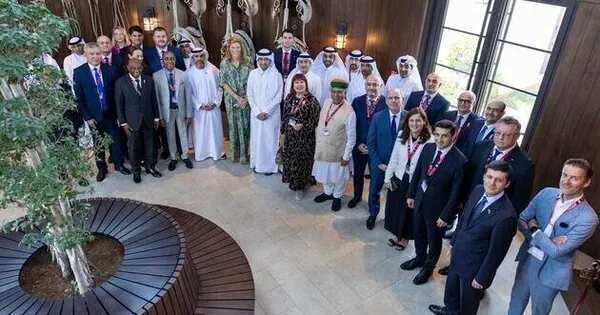
The 15th United Nations Congress on Crime Prevention and Criminal Justice, currently underway in Abu Dhabi, has featured high-level discussions on practical responses to emerging criminal threats. The second day of the congress focused on crimes affecting the environment, access to justice, organised and cyber-enabled fraud, money laundering, and terrorist financing. The discussions also covered the responsible use of digital solutions and artificial intelligence. The congress brings together ministers of justice and interior, representatives of international organisations, and civil society from around the world.
The second day of the congress presented a comprehensive programme of high-level discussions, including six thematic meetings and 22 ancillary meetings. The high-level segment continued to examine key challenges and priorities shaping the future of criminal justice systems worldwide. The discussions addressed ways to translate international commitments into legal and operational measures that protect the environment and natural resources. The congress also explored responses suited to the growing reach of criminal networks and their exploitation of technology and cross-border connectivity.
Abdullah Sultan bin Awad Al Nuaimi, Minister of Justice of the UAE and President of the 15th UN Congress on Crime Prevention and Criminal Justice, signed two memoranda of understanding with the Ministry of Justice of Qatar and the Ministry of Legal Affairs of Bahrain. The memoranda aim to strengthen legal and judicial cooperation and promote the exchange of expertise and best practices in the fields of justice and the rule of law. Al Nuaimi highlighted the strategic importance of such agreements in strengthening institutional cooperation among nations.
Al Nuaimi also held bilateral meetings with his counterparts from Ireland, Azerbaijan, Armenia, Thailand, Belgium, and San Marino, as well as the Ambassador of Germany to the UAE. The meetings discussed opportunities for strengthening cooperation in areas related to the objectives and themes of the congress. The UAE Minister of Justice also accompanied ministers of justice and interior on a visit to Saadiyat Island, showcasing Abu Dhabi's cultural and urban landscape.
The congress's thematic programme examined ways to harness digitalisation and artificial intelligence to improve the effectiveness and responsiveness of criminal justice systems. The discussions also focused on disrupting the financial resources of criminal networks, strengthening financial investigations, and advancing asset recovery efforts. The special high-level event on online scams highlighted the importance of identifying victims, tracing digital evidence, and strengthening efforts to detect and pursue perpetrators.
Ancillary meetings examined crimes affecting the environment from multiple perspectives, including support for implementing global environmental commitments and preparations for the first global review of the Kunming-Montreal Global Biodiversity Framework. The meetings also explored the contribution of civil society to strengthening multilateral action against environmental crime and examined illegal fishing as a serious form of transnational organised crime.
The 15th UN Congress on Crime Prevention and Criminal Justice will continue until October 1, hosted by the UAE. The congress aims to promote international cooperation and exchange of expertise in the fields of justice and the rule of law. The discussions will focus on finding practical solutions to emerging criminal threats and strengthening criminal justice systems worldwide.
Key points
- The 15th UN Congress on Crime Prevention and Criminal Justice discusses practical responses to emerging threats.
- The congress focuses on crimes affecting the environment, access to justice, and organised and cyber-enabled fraud.
- The UAE hosts the congress, which brings together ministers of justice and interior, and representatives of international organisations.