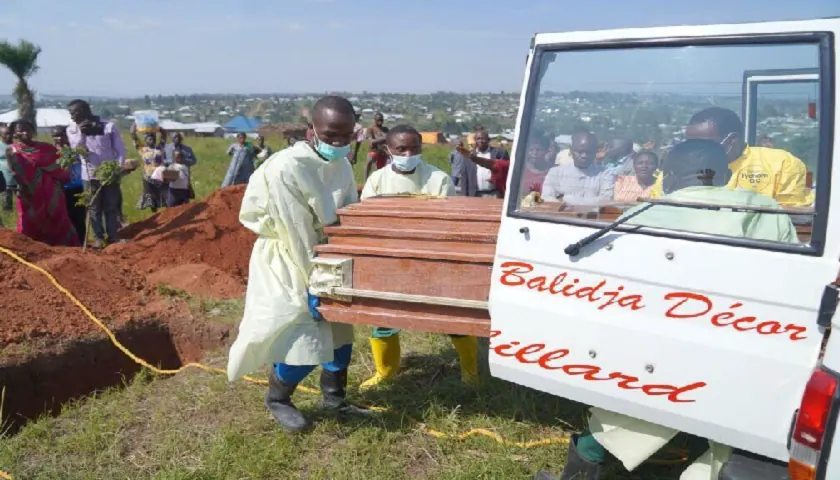
The Ebola epidemic declared in May in the Democratic Republic of Congo (DRC) is nearing 8,000 confirmed cases and has caused 3,833 deaths. According to the National Institute of Public Health (INSP), 7,946 confirmed infections have been recorded so far, including 56 in the last 24 hours, during which 34 more people died. The cumulative fatality rate stands at 48.2%. The situation remains dire, with 848 patients currently hospitalized or in isolation.
The province of Ituri remains the epicenter of the epidemic, accounting for 76.4% of all confirmed cases and 62.5% of new infections reported in the last 24 hours. The epidemic has also spread to other provinces, including North Kivu, South Kivu, Tshopo, Upper Uele, Lower Uele, and South Ubangi. Health authorities have expressed concerns about the limited capacity to receive new patients in Ituri, with hospitals and health centers already saturated.
The current epidemic is the deadliest in DRC's history, surpassing the 2018-2020 outbreak. Projections suggest it may even exceed the 2014-2016 epidemic in West Africa, which caused 11,325 deaths out of 28,616 cases identified in Guinea, Liberia, and Sierra Leone. The DRC has experienced over a dozen Ebola outbreaks since the virus was identified in 1976, including one in Kasai that was declared over in December 2025.
The Ebola virus is transmitted through direct contact with bodily fluids of infected people or animals, causing severe hemorrhagic fever, vomiting, diarrhea, and internal bleeding. The World Health Organization (WHO) and international partners are working to contain the outbreak, but the situation remains challenging. A total of 2,001 people have recovered from the disease so far.
The contact tracing rate stands at 79.2%, although it has decreased in recent days. Health authorities are working to improve the tracking of contacts and to enhance infection control measures. The DRC's experience with Ebola outbreaks has helped inform the response efforts, but the current situation remains complex and requires sustained international support.
The epidemic has highlighted the need for sustained investment in healthcare infrastructure and emergency preparedness in the DRC. The country has made progress in responding to outbreaks, but challenges persist, particularly in rural and hard-to-reach areas. The international community remains engaged in supporting the response efforts, including providing technical assistance, funding, and personnel.
As the situation continues to evolve, health authorities are urging calm and cooperation from the public. The response efforts are focused on containing the outbreak, treating patients, and preventing further transmission. The DRC's experience with Ebola has shown that with sustained efforts and international support, it is possible to bring outbreaks under control and save lives.
Key points
- The epidemic has caused 3,833 deaths out of 7,946 confirmed cases.
- The province of Ituri remains the epicenter of the epidemic.
- The current epidemic is the deadliest in DRC's history, surpassing the 2018-2020 outbreak.