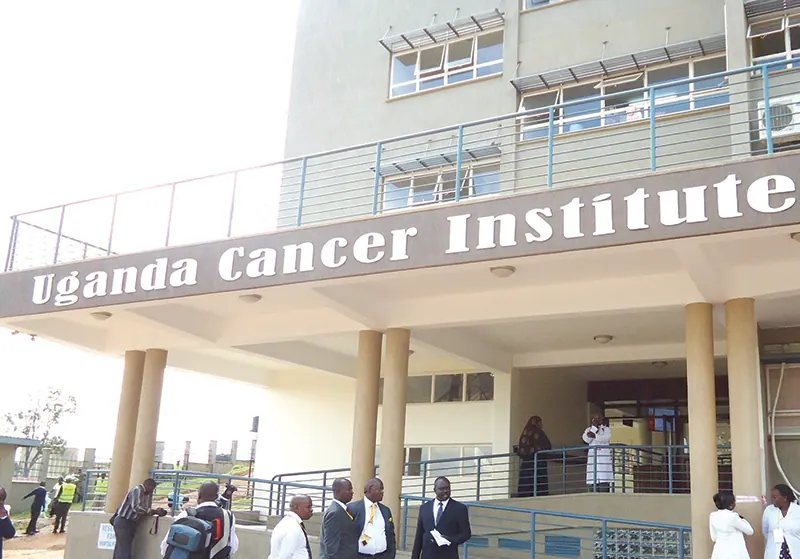
The Ugandan government is investing Shs 180 billion in a Positron Emission Tomography (PET) scan and nuclear medicine facility at the Uganda Cancer Institute (UCI). This move aims to bring advanced imaging technology closer to patients who would otherwise have to travel outside the country for specialized diagnostic services. The facility will have three PET machines and a cyclotron, a machine that produces radioactive materials needed for PET imaging.
The investment comes as UCI handles a growing patient load, with 8,764 new patients registered in 2025, a 10 per cent increase from the previous year. Outpatient visits reached 67,000, highlighting the need for enhanced diagnostic capabilities. Dr Diana Atwine, the permanent secretary in the ministry of Health, announced that the first PET machine is expected this month and will be fully functional by the end of the year.
A PET scan allows doctors to look beyond an organ's physical shape, using small amounts of radioactive material to show activity within tissues and organs at the cellular level. This technology can identify suspicious activity, determine the extent of a disease, and monitor treatment effectiveness. The new facility will not only aid in cancer diagnosis but also in assessing other diseases.
The doctor at UCI emphasized that a PET scan is not a standalone cancer test and should be used in conjunction with other diagnostics, including laboratory diagnostics and imaging. For instance, a PET scan may reveal an area of unusual cell activity, but a biopsy may still be required to confirm cancer. The doctor noted that while PET scans are beneficial, they are not a complete solution to Uganda's cancer burden.
The Shs 180 billion investment includes nuclear medicine treatment facilities, a SPECT scanner, and units for producing cold kits. The government is also constructing interventional radiology, endoscopy, and colonoscopy suites at UCI and expanding inpatient, outpatient, and radiotherapy services. This comprehensive approach aims to enhance cancer care and reduce Uganda's dependence on specialized diagnostic services abroad.
Access to PET technology remains limited across Africa, with fewer than 0.2 nuclear medicine units per million people. The International Atomic Energy Agency estimates that at least 10 of the continent's 54 countries have PET-CT scanners. The machines themselves are expensive, with PET equipment ranging from $250,000 to over $5 million and individual scans costing between $1,500 and $12,000 or more.
The investment is part of a broader effort to expand cancer services outside the capital. The government is establishing regional cancer centers in Arua, Mbale, Mbarara, and Gulu, with the goal of enabling regional referral hospitals to provide dedicated cancer treatment. Health minister Dr Chris Baryomunsi emphasized that sophisticated machines will only partially solve the problem, as many Ugandans still seek treatment when their cancer is already advanced.
Key points
- The Ugandan government is investing Shs 180 billion in a PET scan and nuclear medicine facility at UCI.
- The new facility will have three PET machines and a cyclotron to produce radioactive materials.
- The investment aims to reduce Uganda's dependence on specialized diagnostic services abroad and enhance cancer care.