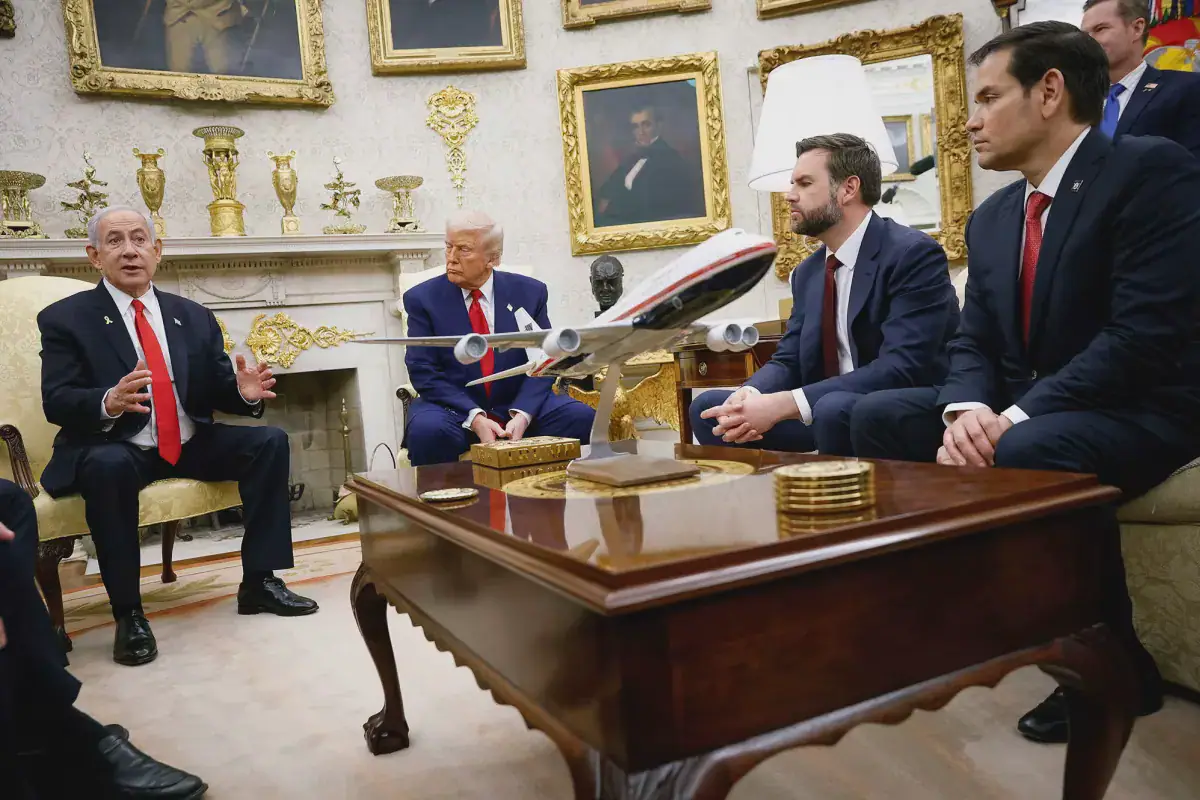
US President Donald Trump attributed the Republican party's midterm losses to several factors, including a "great dislike for Israel", the war with Iran, and the subsequent rise in gasoline prices. In an interview with CBS' "60 Minutes" that aired on Sunday, Trump stated that if he had been on the ballot, the outcome would have been different due to his popularity. He emphasized that the dislike for Israel was a significant factor, alongside the war and economic concerns.
Trump's comments highlight a shift in US politics, where Israel once enjoyed bipartisan support from both Republican and Democratic presidents. However, the extent of US military and financial support for Israel became a liability during the midterm elections. Several politicians, including Michigan's Democratic Sen.-elect Abdul El-Sayed, criticized Israel during their campaigns. Even Vice President JD Vance suggested that Republicans may need to reassess their support for Israel moving forward.
Trump agreed with Vance's position that the war with Iran contributed to the Republican loss, but he did not regret launching the war. He stated that preventing Iran from acquiring a nuclear weapon was a historically good decision, even if it may not be beneficial in the short term. Trump emphasized that he had to prioritize the interests of the United States and that other countries, including Israel, would need to share the costs of the war.
The US president mentioned that countries protected by the US, including Israel, would have to repay the costs incurred during the war. He stated that without US intervention, Israel would not exist. Trump's comments may signal a change in the US approach to Israel, with Israeli journalist Amir Tibon writing that Democrats and Republicans are competing to distance themselves from Israel.
Israeli Prime Minister Benjamin Netanyahu has traditionally managed the relationship with the US, particularly with Trump. However, Netanyahu's rival, Gadi Eizenkot, was tasked with forming the next government by Israeli President Isaac Herzog. Herzog emphasized the need for Israel to address urgent challenges, including Iran's threats, and to build a diplomatic horizon in the region.
The shift in American and international perceptions of Israel was also acknowledged by Herzog. He called for efforts to address the challenges facing the country, including the need to work with the US and other countries to counter Iran's threats. Trump's comments and the changing dynamics in US politics may have significant implications for Israel's security strategy.
On the day of the US elections, Trump announced that he would end $4 billion in annual aid to Israel, potentially impacting one of the key elements of Israel's security strategy. Netanyahu later stated that the aid would shift to a "partnership", but it was unclear whether Trump had informed him about the surprise announcement. The changes in US policy and the evolving relationship between the US and Israel will likely have far-reaching consequences.
Key points
- Trump's comments suggest a shift in US politics, where support for Israel is no longer bipartisan.
- The war with Iran and rising gas prices were also cited as factors in the Republican midterm losses.
- Trump's decision to end $4 billion in annual aid to Israel may impact the country's security strategy.
Reporting sources
- Trump says ‘great dislike of Israel’ contributed to Republican midterm losses · Egypt Independent