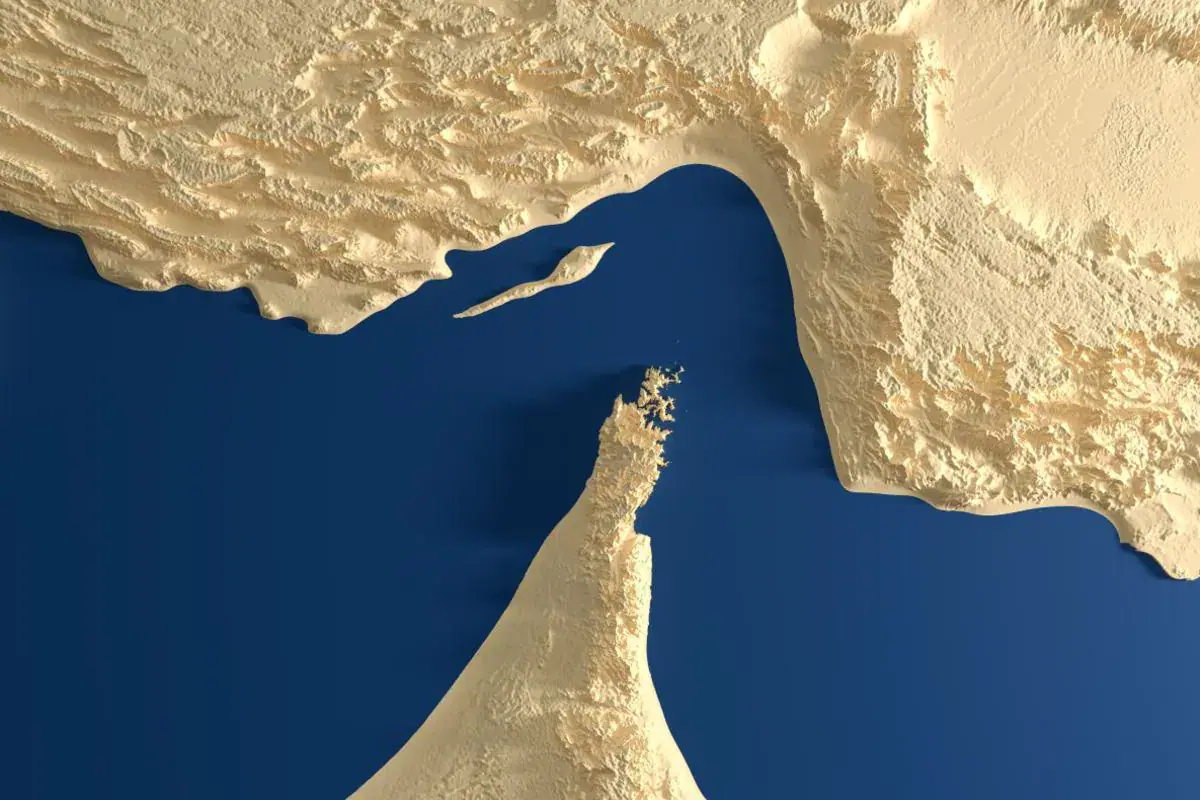
The increasing interconnectedness of the global economy has led to a misconception that geography is no longer a crucial factor. However, the opposite is true. The Strait of Hormuz, a vital commercial waterway connecting the Gulf with the Arabian Sea, illustrates the significance of geography in global trade. A substantial share of the global energy trade passes through this narrow corridor daily, linking producers in the Gulf with consumers worldwide.
The Strait of Hormuz is more than just an important waterway; it represents the value of connectivity in the global economy. Historically, successful cities and economies have grown around trade routes. Today, modern economic corridors combine various infrastructure, including ports, airports, free zones, financial centres, digital networks, roads, railways, and data infrastructure. The Gulf region has leveraged its geographic position to build world-class infrastructure, transforming it into a meeting point for global business.
The Gulf's strategic location between Asia, Africa, and Europe has been a significant advantage. Countries such as the UAE have developed exceptional economic infrastructure, including ports, aviation networks, logistics platforms, and financial centres. This has created a valuable opportunity for entrepreneurs, providing them with reach to various markets. A company operating from the Gulf can access large manufacturing economies in Asia, European markets, and rapidly growing African markets.
As global trade evolves, the Gulf's position is becoming increasingly important. Globalisation is not disappearing but rather becoming more diversified. Businesses are building additional supply chains, exploring new markets, and developing multiple routes to connect producers and consumers. This creates opportunities for countries at the crossroads of these new relationships, such as those in Africa.
Africa, in particular, could become a crucial player in this story as its economies industrialise and infrastructure improves. Trade between Africa, the Gulf, and Asia has the potential to expand significantly, supported by ports, logistics corridors, energy networks, and industrial zones. For investors, the lesson is straightforward: infrastructure that connects economies can be as valuable as the products moving between them.
The future of global trade will belong not only to those who produce the most but also to those who connect the world best. Technology will continue to transform global commerce, but it will not eliminate geography; instead, it will make good geography even more powerful. The Strait of Hormuz represents a larger story about the global economy: prosperity grows when countries, markets, and people are connected.
According to Prateek Suri, Chairman of Maser Group, infrastructure that connects economies can create industrial ecosystems, open new markets, and support entire economies. As the global economy continues to evolve, the importance of geography and connectivity will only continue to grow, highlighting the need for countries to invest in infrastructure that supports trade and economic growth.
Key points
- The Strait of Hormuz is a vital commercial waterway that highlights the importance of connectivity in global trade.
- The Gulf region has leveraged its geographic position to build world-class infrastructure, transforming it into a meeting point for global business.
- Africa could become a crucial player in the future of global trade as its economies industrialise and infrastructure improves.