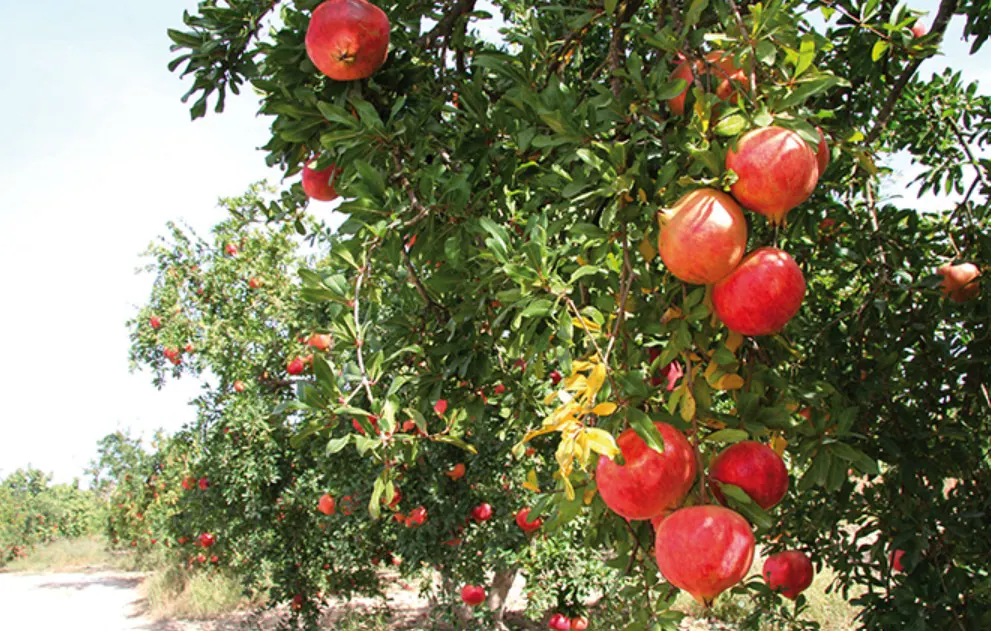
Tunisia's pomegranate production is expected to reach approximately 98,000 tons in 2026, marking an 8% increase from the 91,000 tons produced in 2025. According to data from the Tunisian Union of Agricultural Cooperatives, the country's pomegranate orchards cover an area of 10,472 hectares, comprising around 4.7 million trees. The majority of these orchards, over 95%, are irrigated, while the remaining 5% rely on rainwater.
The governorate of Gabes is expected to maintain its position as the leading producer of pomegranates in Tunisia, with a projected production of 17,024 tons in 2026. Other major producing regions include Bajah with 17,000 tons, Fnafes with 15,365 tons, and Kairouan with 14,200 tons. These four governorates are collectively expected to account for over 65% of Tunisia's total pomegranate production.
In addition to these major producing regions, other governorates such as Sidi Bouzid, Zaghouan, Sousse, Jendouba, Monastir, Mahdia, Sfax, and Kasserine also contribute to Tunisia's pomegranate production, albeit in smaller quantities. The production of pomegranates is an important aspect of Tunisia's agricultural sector, with the fruit being a significant contributor to the country's economy.
The governorate of Manouba has seen significant growth in pomegranate production, with a 153% increase in output to reach 11,000 tons. This growth is a testament to the region's potential for pomegranate production and the efforts of local farmers to increase yields.
Pomegranates are one of Tunisia's key agricultural products, with the fruit being highly valued for its nutritional and economic benefits. The country's diverse climate and soil conditions make it an ideal place for growing a wide range of pomegranate varieties, many of which are well-suited for both domestic consumption and export.
The Tunisian government and agricultural sector are working to promote the production and export of pomegranates, with a focus on increasing the country's competitiveness in the global market. This includes efforts to improve farming practices, reduce production costs, and enhance the quality of Tunisian pomegranates.
With its favorable climate and growing conditions, Tunisia is well-positioned to become a significant player in the global pomegranate market. The country's pomegranate production is expected to continue growing in the coming years, driven by government support, investment in agricultural infrastructure, and the hard work of local farmers.
Key points
- Tunisia's pomegranate production is expected to reach 98,000 tons in 2026, marking an 8% increase from 2025.
- The governorate of Gabes is expected to lead the production of pomegranates in Tunisia, with a projected output of 17,024 tons.
- Pomegranates are a key agricultural product in Tunisia, with the fruit being highly valued for its nutritional and economic benefits.