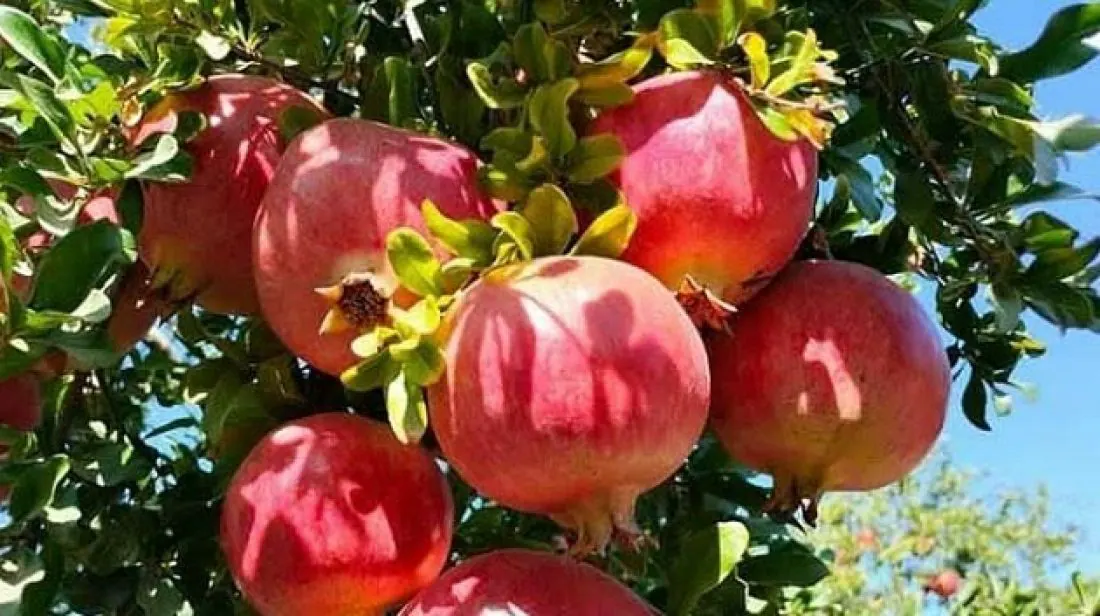
According to data from the Tunisian National Agricultural Union, the country's pomegranate production is expected to reach 98,000 tons in 2026, up from 91,000 tons in 2025, representing an increase of around 8%. The pomegranate sector in Tunisia covers a total area of 10,472 hectares, with approximately 4.7 million trees. The majority of these trees, over 95%, are irrigated, while the remaining 5% are rain-fed.
The governorate of Gabes is expected to be the top producer of pomegranates in 2026, with an expected production of 17,024 tons. It is followed closely by the governorates of Beja, with 17,000 tons, and Nabul, with 15,365 tons. The governorate of Kairouan is also among the top producers, with an expected production of 14,200 tons. These four governorates are expected to account for over 65% of Tunisia's total pomegranate production.
Pomegranate production is not limited to these governorates, as other regions such as Sidi Bouzid, Zaghouan, Sousse, Jendouba, Monastir, Mahdia, Sfax, and Kasserine also contribute to the country's production, albeit in smaller quantities. The diversity of production areas and the availability of high-quality varieties make pomegranates one of Tunisia's most important fruits, both for domestic consumption and for export.
The governorate of Manouba has seen significant growth in pomegranate production, with a 153% increase, reaching 11,000 tons. This growth highlights the potential for further development in the sector. Tunisia's pomegranates are highly regarded for their quality, and the country's production is expected to continue to grow in the coming years.
The pomegranate sector in Tunisia has significant potential for development, particularly in terms of processing and export. The country's pomegranates are highly prized for their quality, and there is a growing demand for them both domestically and internationally. The Tunisian government and private sector are working to promote the sector and increase production.
The production of pomegranates in Tunisia is an important contributor to the country's economy, particularly in rural areas where the crop is often grown. The sector provides employment and income for thousands of farmers and their families. The growth of the sector is also expected to have a positive impact on the country's trade balance.
In conclusion, Tunisia's pomegranate production is expected to reach 98,000 tons in 2026, with the governorate of Gabes leading the way. The sector has significant potential for development, particularly in terms of processing and export. With the right support and investment, the pomegranate sector in Tunisia could continue to grow and become an even more important contributor to the country's economy.
Key points
- Tunisia's pomegranate production is expected to reach 98,000 tons in 2026, up from 91,000 tons in 2025.
- The governorate of Gabes is expected to be the top producer of pomegranates in 2026, with an expected production of 17,024 tons.
- The pomegranate sector in Tunisia covers a total area of 10,472 hectares, with approximately 4.7 million trees.