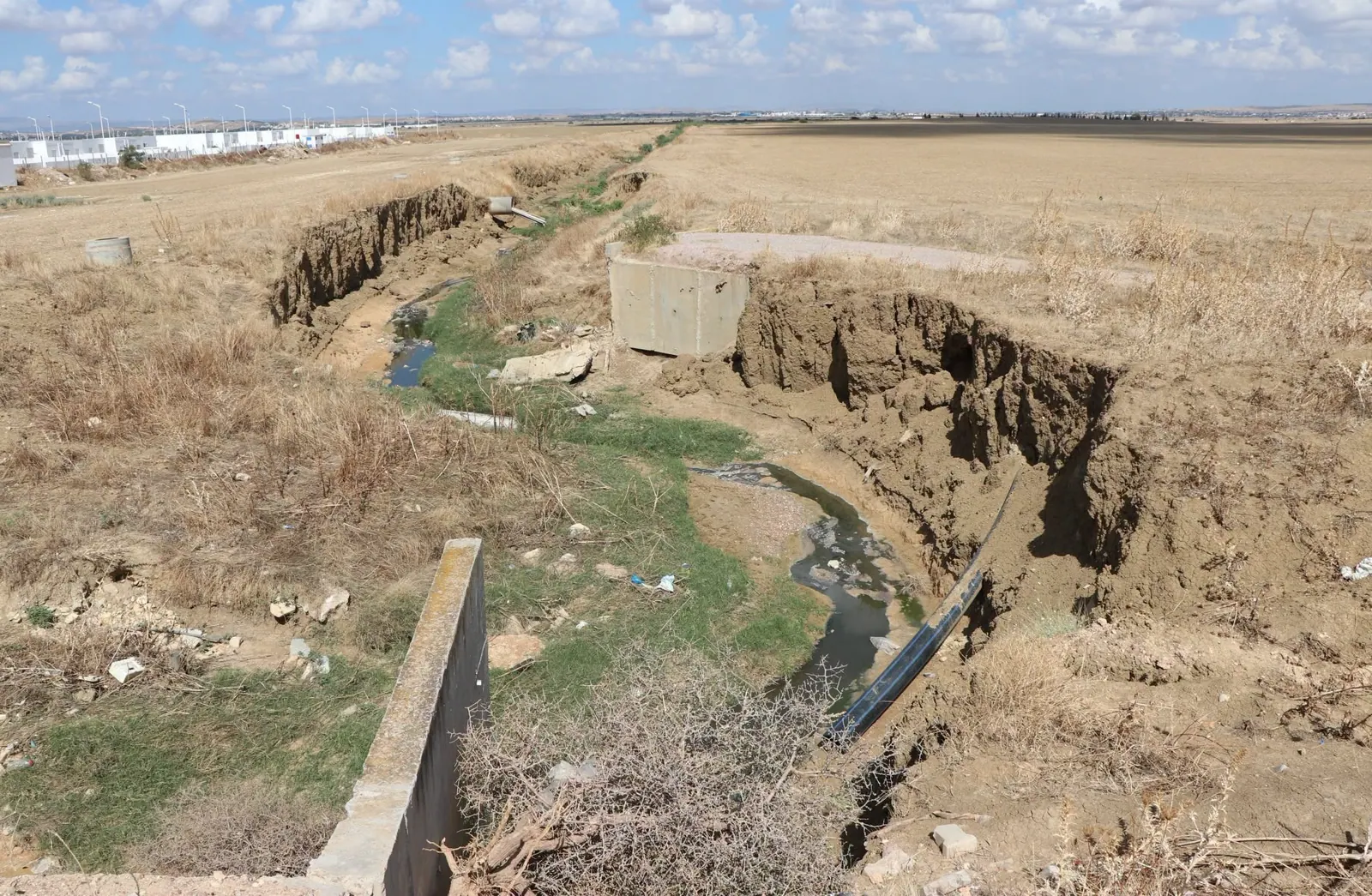
The Tunisian government has initiated monitoring operations to protect the Majerda valley, which spans across three governorates: Junduba, Bajah, and Manouba. A multidisciplinary team comprising the Ministries of Environment, Interior, Agriculture, and Health conducted inspections at 18 sites, resulting in 11 environmental infractions, three temporary closure proposals, and four samples collected from pollution sources. The operations aim to ensure compliance with national standards and limits for discharges into the environment.
The monitoring efforts will continue in the governorates of Junduba and Bajah, in addition to Manouba. The Majerda valley is a vital waterway, and protecting it from pollution is crucial for the environment and public health. The government's actions demonstrate its commitment to preserving the country's natural resources. The operations are part of a broader strategy to address environmental concerns and promote sustainable development.
In a related effort, the National Agency for Environmental Protection has been monitoring industrial facilities near the Melyan valley, which spans across the governorates of Ben Arous, Zaghouan, and Siliana. The agency has inspected 10 industrial facilities and raised infractions, with a plan to work with facility owners to implement environmental rehabilitation and install wastewater treatment plants.
The Melyan valley is approximately 160 kilometers long, originating from Jebel Bergou in Siliana and flowing into the Gulf of Tunis. The valley's water level varies depending on rainfall, reaching up to 200 cubic meters per second during floods. The government's monitoring efforts aim to mitigate the impact of pollution on the environment and public health.
The government has also made progress in building and rehabilitating wastewater treatment plants in the Melyan valley. Six treatment plants are being constructed or rehabilitated, including the Southern Melyan 2 plant, which has a capacity of 90,000 cubic meters per day and is 60% complete. The integrated industrial treatment plant in Southern Melyan is 70% complete and expected to be operational by the end of 2026.
Additionally, the government has completed the construction of the Khelidia treatment plant, which has a capacity of 2,400 cubic meters per day. The Fahs treatment plant is 85% complete and expected to be finished by the end of 2026. The Bir El Mcharqa treatment plant, with a capacity of 2,400 cubic meters per day, is 55% complete.
The government's efforts to protect the environment and promote sustainable development are ongoing. The monitoring operations and construction of wastewater treatment plants demonstrate the government's commitment to preserving the country's natural resources. The projects aim to improve the quality of life for citizens and promote economic development while protecting the environment.
Key points
- The Tunisian government has launched monitoring operations to protect the Majerda and Melyan valleys from pollution.
- The operations aim to ensure compliance with national standards and limits for discharges into the environment.
- The government is also constructing and rehabilitating wastewater treatment plants in the Melyan valley to mitigate the impact of pollution.