The government of Ghana has launched a digital monitoring system aimed at improving the identification, documentation, referral, and follow-up of child labour cases across the country. The Ghana Child Labour Monitoring System (GCLMS) is designed to help government officials and stakeholders track children exposed to hazardous or exploitative work and ensure support reaches affected children and families. This initiative targets sectors such as agriculture, artisanal and small-scale mining, domestic work, and informal economy areas where children face hazardous conditions.
The GCLMS has been made interoperable with other child protection systems in Ghana, enabling improved case referrals, follow-up, and coordination among child protection agencies. This interoperability is expected to enhance information sharing and facilitate timely interventions. The system was developed with funding from the International Labour Organization (ILO) through the ACCEL Africa Project and other development partners, in collaboration with the Government of Ghana.
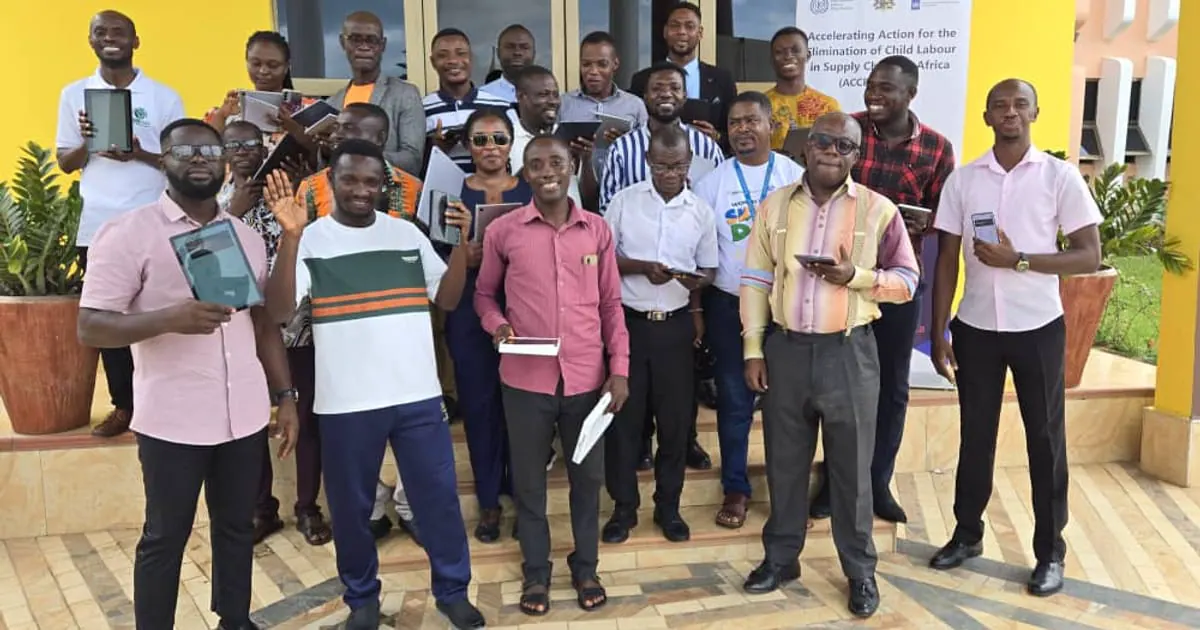
A four-day training programme was held from September 15 to 18, 2026, in Bibiani, to equip regional and district stakeholders with the skills to use the GCLMS. The training, organised by the ILO through its ACCEL Africa Project, in partnership with the Child Labour Unit of the Ministry of Labour, Jobs and Employment, covered topics such as case registration, data management, and report generation. Participants included stakeholders from ACCEL Africa project areas.
Bismark Quartey, National Project Coordinator of the ILO's ACCEL Africa Project in Ghana, emphasized the importance of reliable data in addressing child labour. He noted that the GCLMS would provide stakeholders with a common mechanism to document cases, understand their characteristics and underlying causes, and initiate interventions. The system is expected to improve data collection and coordination at the decentralised level.
The GCLMS is anticipated to help district and regional officers maintain accurate case records and ensure that information follows each case from identification through referral and follow-up. This will enable timely and evidence-based decisions, tracking whether interventions reach children and families in need. Stakeholders believe that strengthening data collection and coordination will support more effective child labour prevention and elimination efforts.
Frederick Osei Agyemang, a participant from the Social Welfare Department in Bibiani, stated that the training had strengthened his understanding of how to use the system to document child labour cases. He noted that the GCLMS would improve the quality of information collected at the district level and ensure that identified cases receive appropriate support. The training equipped participants with practical skills to utilize the system effectively.
The rollout of the GCLMS forms part of broader efforts to strengthen Ghana's national systems for the prevention and elimination of child labour, protecting children from work that threatens their safety, development, and future. The system is a significant step towards addressing the issue of child labour in Ghana, and stakeholders are optimistic about its potential impact. The government and its partners are committed to ensuring the effective implementation of the GCLMS.
Key points
- The Ghana Child Labour Monitoring System (GCLMS) has been introduced to improve the identification, documentation, referral, and follow-up of child labour cases across Ghana.
- The system targets sectors such as agriculture, artisanal and small-scale mining, domestic work, and informal economy areas where children face hazardous conditions.
- The GCLMS has been made interoperable with other child protection systems in Ghana, enabling improved case referrals, follow-up, and coordination among agencies involved in child protection.