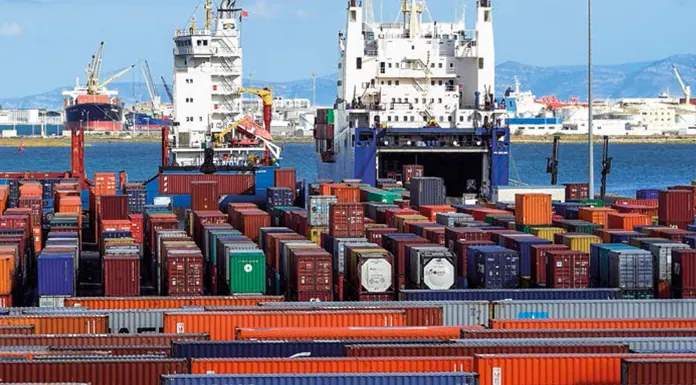
The trade exchange between Tunisia and Algeria has witnessed a significant surge, rising by 166% over the past five years to reach approximately $2.76 billion. This data was released by the Algerian Trade Representation Center for Export Promotion. Currently, Algeria ranks seventh among Tunisia's global trading partners and fourth among its suppliers. These statistics were presented during a meeting in Algiers that brought together businessmen and representatives from professional organizations of both countries. The gathering aimed to explore ways to enhance economic and commercial cooperation and discover new opportunities for partnerships and investments.
The meeting was part of a business mission organized by "Connect International" in partnership with the Algerian Confederation of Citizen Employers from September 22 to 24, 2026. The industrial and energy sectors prominently feature in Tunisia's imports from Algeria. Conversely, mechanical and electrical industries top Tunisia's exports to Algeria, accounting for 56.53%, followed by various chemical industries at 31.53%, and agricultural and food products at 7.05%. This composition indicates a diverse trade relationship with potential for further specialization and collaboration.
On the investment front, 43 Tunisian companies are active in Algeria, with the mechanical and electrical sectors leading at 30%, followed by the services sector at 23%, and the textile and agricultural sectors each at 16%. The trade between the two countries benefits from significant customs reductions of up to 40% under the bilateral preferential trade agreement. Additionally, they enjoy customs exemptions as part of the Greater Arab Free Trade Area. These preferential trade conditions facilitate the exchange of goods and services between Tunisia and Algeria.
To further enhance trade, the report suggests strengthening sectoral cooperation. One proposal is to facilitate the importation of automotive components and spare parts manufactured in Tunisia, in exchange for easing the entry of assembled and ready-to-use cars from Algeria. Developing border crossing infrastructure and storage warehouses, as well as expediting the creation of border free zones, are also recommended. Harmonizing technical standards and legal regulations between the two countries could also significantly boost trade.
The report emphasizes that improving logistical coordination can support joint exports and leverage the Trans-Saharan Highway to access African markets. Enhanced cooperation could lead to the development of shared production chains, particularly by improving logistics and facilitating the movement of goods between the two nations. This would not only deepen bilateral trade but also expand the presence of Tunisian and Algerian products in African markets.
Tunisia and Algeria are bound by close economic and commercial ties that encompass trade, investment, and cooperation in various sectors, including mechanical and electrical industries, agriculture, textiles, and services. Their geographic proximity and shared land border offer substantial potential for increasing exchanges and developing joint production chains. Enhanced connectivity and streamlined customs procedures could significantly support mutual access to African markets.
The strengthened trade relations between Tunisia and Algeria reflect a broader strategy to consolidate economic partnerships within the African continent. By diversifying trade and investment opportunities, both countries aim to leverage their comparative advantages and enhance their competitive edge in the global market. As the two nations continue to explore new avenues for cooperation, their bilateral trade is poised to play an increasingly pivotal role in the regional economy.
Key points
- The trade exchange between Tunisia and Algeria rose by 166% over five years, reaching $2.76 billion.
- Mechanical and electrical industries constitute 56.53% of Tunisia's exports to Algeria.
- 43 Tunisian companies are active in Algeria, with a significant presence in the mechanical, electrical, and service sectors.