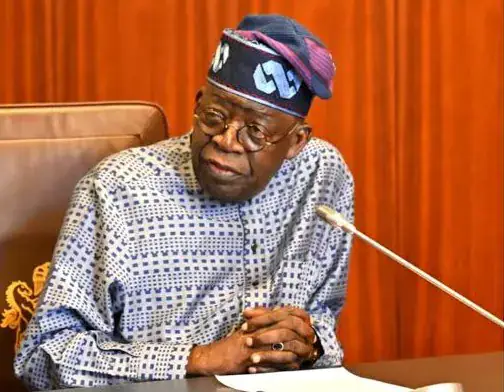
President Bola Tinubu has recalled his student days in the United States, where he drove a taxi and did odd jobs to support himself while pursuing his education. In a post on X, @OfficialPBAT, Tinubu shared his experiences, stating that he had to postpone starting school for several months to save enough money. He also worked multiple jobs to pay his way through university, highlighting the challenges he faced while pursuing an education.
Tinubu's reflections on his student days come as he returned to Abuja after completing his Umrah in Saudi Arabia. The president departed King Abdulaziz International Airport, Jeddah, on Wednesday and arrived in Nigeria's capital. During his time in the US, Tinubu gained valuable insights into the importance of education and the challenges many students face in accessing it.
The president has tasked Nigerians to provide feedback on issues affecting their communities, pledging to address identified problems. He stated, "If something is not working as it should in your community, I want to hear about it. Your feedback will help us identify problems and address them." This move is part of Tinubu's efforts to engage with citizens and improve governance.
Tinubu emphasized the importance of education in Nigeria's journey from reform to shared prosperity. He believes that education is a critical component of his administration's Renewed Hope agenda. To support this goal, the president introduced the Nigerian Education Loan Fund (NELFUND), which has disbursed over N372 billion in student loans to young Nigerians.
The president highlighted the progress made in the education sector, including the rehabilitation of 38 technical colleges and the introduction of free school fees, boarding, textbooks, and uniforms for students in federal and selected state technical colleges. Additionally, the technical and vocational education programme has attracted over 2.8 million applications.
Tinubu's administration has also invested in the education sector, with a record N3.52 trillion budgeted for education in 2026. The president announced a new agreement with the Academic Staff Union of Universities (ASUU), providing for a 40% increase in academic staff remuneration and measures to improve stability in universities.
The president emphasized that his administration is committed to ensuring that Nigerian students complete their education on time, stating that "a four-year course must take four years." He also highlighted the allocation of $552 million for basic education and the expansion of technical colleges.
Key points
- President Tinubu has pledged to address issues affecting communities, as reported by citizens.
- The president introduced the Nigerian Education Loan Fund (NELFUND) to support students' education.
- Tinubu's administration has invested in education, with a record N3.52 trillion budgeted for 2026.