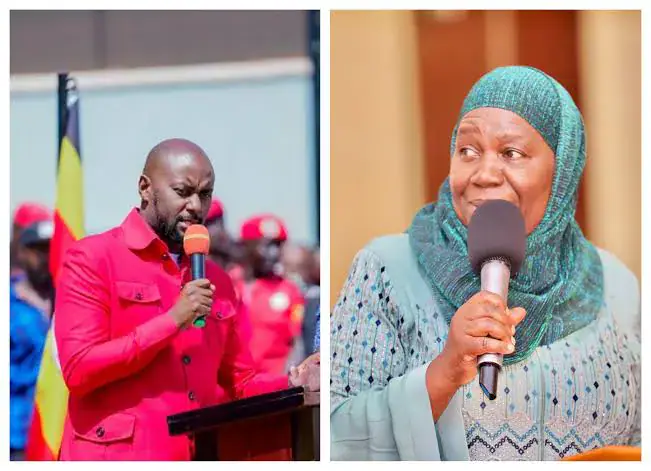
Uganda's Minister for Kampala Capital City and Metropolitan Affairs, Minsa Kabanda, has come under renewed scrutiny following claims that she told court she did not complete Senior Six. This has raised questions about her academic qualifications and eligibility to serve as a Member of Parliament. The controversy has sparked debate over the minimum academic qualifications required for parliamentary candidates and how the Electoral Commission verifies candidates' academic credentials.
The allegations have revived political tensions surrounding the Kampala Central parliamentary contest between Kabanda and National Unity Platform candidate Muhammad Muwanga Kivumbi. The controversy follows an election petition filed by NUP Secretary General David Lewis Rubongoya, who is challenging Kabanda's victory in the January 15, 2026 parliamentary elections. Rubongoya reportedly questioned Kabanda's academic records and names, arguing that her nomination was not legally valid.
During the proceedings, Kabanda reportedly told court that she did not sit the Uganda Advanced Certificate of Education examinations, commonly known as Senior Six. Her testimony has raised questions about the alternative academic qualification she presented during nomination. Under Uganda's Constitution, parliamentary candidates must possess an Advanced Level standard of education or its equivalent.
The petitioner, Rubongoya, is questioning a certificate of completion of formal education at Advanced Level standard or its equivalent, which Kabanda reportedly obtained on October 7, 2025, just 15 days before the October 22 nomination exercise. The Electoral Commission declared Kabanda the winner with 22,280 votes against Rubongoya's 18,211, a difference of 4,069 votes.
Rubongoya, who holds a Harvard law degree, is seeking to have Kabanda's election nullified, with a fresh election or a declaration that he was the rightful winner as alternative remedies. The case has placed the Electoral Commission under scrutiny over its verification of candidates' academic qualifications before approving nominations.
However, the court has not yet ruled that Kabanda is academically unqualified or that her nomination was unlawful. The central question remains whether the qualification she presented satisfies the constitutional requirements for parliamentary candidates. As the hearing continues, the outcome could have significant implications for Kabanda's political future and representation in Kampala Central.
The controversy has significant implications for Uganda's electoral process, particularly in verifying candidates' academic qualifications. The court's decision will be closely watched, as it may set a precedent for future cases. Key to the case is whether Kabanda's alternative qualification meets the constitutional requirements for parliamentary candidates.
Key points
- The case has significant implications for Uganda's electoral process.
- Kabanda's academic qualifications have been questioned.
- The court's decision may set a precedent for future cases.