The history of chow mein dates back to the 19th century when Chinese immigrants traveled to various parts of the world, bringing their cuisine with them. During the gold rushes in California and Melbourne, Chinese people left their homes, taking their culinary traditions with them. This diaspora has resulted in over 10 million Chinese-born people worldwide, with many communities establishing Chinatowns that showcase Chinese culture and food.
The dish has evolved differently in various countries, reflecting local tastes and ingredients. In the United States, chow mein often includes chicken, beef, pork, or shrimp, along with vegetables like carrots and celery. In India, it is primarily a vegetarian dish, sometimes featuring paneer, while in Mauritius, it has become a part of the national cuisine, known as mine frire. In Peru, chow mein is a key component of the popular dish tallarin saltado, which typically includes chicken and red peppers.
At its core, chow mein is a simple noodle stir-fry dish. The term "chow mein" refers to the combination of "chow," meaning stir-fry, and "mein," meaning noodles. Traditional Cantonese chaomian involves frying noodles until crispy, while the global version typically involves tossing noodles with vegetables and a chow mein sauce. This sauce is made from a mixture of soy sauce, oyster sauce, sesame oil, brown sugar, and cornflour, which gives the dish its characteristic silky finish.
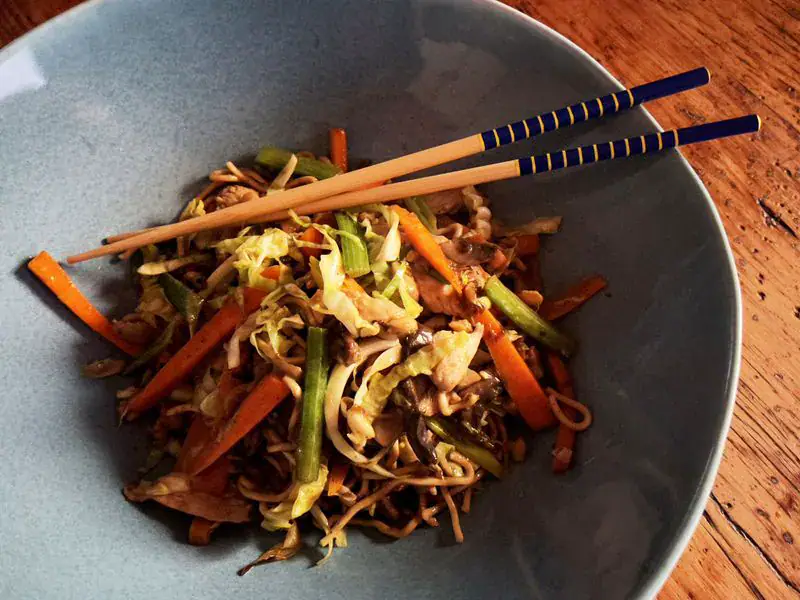
Tony Jackman, a food writer, has shared his recipe for chicken and shrimp chow mein, which features egg noodles, cabbage, carrots, celery, spring onions, and mushrooms. The sauce is a traditional mixture of soy sauce, oyster sauce, sesame oil, and cornflour. Jackman's recipe allows for flexibility, encouraging cooks to experiment with different ingredients while retaining the core components of the dish.
The ingredients for Jackman's recipe include 200g of chicken breast fillets, 1 cup of blanched frozen shrimp, 2 garlic cloves, 1 piece of fresh ginger, 1 large carrot, 1 celery stalk, 2 large brown mushrooms, 4 or 5 spring onions, and 2 cups of green cabbage. The chow mein sauce requires 2 tsp of cornflour, 2 tbsp of soy sauce, 2 tbsp of oyster sauce, 2 tbsp of rice wine vinegar, 1 tsp of sugar, and 1 tsp of sesame oil.
To prepare the dish, cooks need to marinate the chicken and shrimp in the sauce mixture, then stir-fry the ingredients in a wok with peanut oil. The noodles are prepared according to packet instructions and added to the wok with the remaining sauce and a splash of water. The dish is then tossed and served immediately.
Chow mein has become a beloved dish worldwide, with its adaptability and flavorful sauce making it a staple in many Chinese restaurants. As a symbol of Chinese cuisine's global reach, chow mein continues to evolve, incorporating local ingredients and tastes while maintaining its traditional roots.
Key points
- The global Chinese diaspora has played a significant role in the spread of chow mein worldwide.
- Chow mein has adapted to local tastes and ingredients, resulting in diverse variations across different countries.
- The traditional Cantonese chaomian involves frying noodles until crispy, whereas the global version typically involves tossing noodles with vegetables and a chow mein sauce.