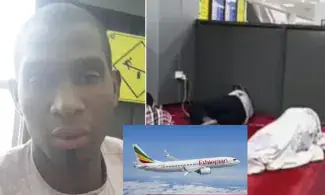
Abdullahi Salisu, a Nigerian from Kano State, spent 80 days living at the Nnamdi Azikiwe International Airport in Abuja. His ordeal began when he attempted to return to his job in Egypt on a flight with Ethiopian Airlines. Salisu claims the airline's ticketing system was deceptive, leading to his inability to board the flight. He had booked a return flight from Abuja to Cairo via Addis Ababa, but his troubles started when he tried to manage his booking through the airline's mobile application.
Salisu's problems escalated when he arrived at the airport and was told there were no economy seats available. He claims to have seen empty economy seats on the flight using the airline's app, but was allegedly dismissed by airline staff. As a result, he missed his flight and his deadline to return to work in Egypt. Salisu had a strict deadline to return to his workplace at Crispy Chicken Restaurant in Giza, Egypt, or risk losing his job. An email from the restaurant's HR management, obtained by SaharaReporters, warned him that if he did not return by September 1, 2026, his employment would be terminated.
The failure to board the flight had severe consequences for Salisu. He was left stranded at the airport, forced to sleep on cold airport chairs and bathe in public restrooms. He survived on the kindness of strangers and airport staff, with no money for a new ticket as the airline was holding his funds and refusing to refund him. Salisu's situation became increasingly desperate, and he was eventually ejected from the airport on September 15, 2026. Three days later, he was robbed in Abuja, losing his phone and trolley case.
With his life in ruins, Salisu turned to micro-lending apps to survive, accumulating debts with OPay and EaseMoni to feed himself. Financial records show a trail of small emergency loans ranging from ₦2,000 to ₦10,000 taken between July 31 and October 23, 2026. Salisu also lost his job in Egypt due to his inability to return on time. He is now struggling to make ends meet and is grieving the loss of his livelihood.
The Nigerian Civil Aviation Authority (NCAA) eventually intervened in Salisu's case, with Director of Consumer Protection and Public Affairs Michael Achimugu facilitating the re-issuance of Salisu's ticket for November 6, 2026. However, a dispute erupted over Salisu's demand for a refund and statutory compensation for the 80 days he was stranded. Salisu cited Nigerian Civil Aviation Regulations and the Civil Aviation Act 2022, arguing that Ethiopian Airlines misrepresented the refundability of his ticket.
Achimugu pushed back against Salisu's demands, accusing him of failing to secure a visa and paying for refund protection without reading the terms. He also claimed that Salisu stayed at the airport unnecessarily. The two parties engaged in a series of WhatsApp exchanges and phone calls, with Achimugu arguing that Salisu was not entitled to a refund under the airline's policy. Salisu is currently taking refuge in a mosque in Utako, Abuja, and is struggling to come to terms with his ordeal.
Salisu's case highlights the challenges faced by passengers dealing with airlines and regulatory bodies. His situation has raised questions about the effectiveness of consumer protection regulations in the aviation industry. Key points in the case include:
Key points
- Ethiopian Airlines' ticketing system was allegedly deceptive, leading to Salisu's inability to board his flight.
- Salisu was left stranded at the airport for 80 days, surviving on the kindness of strangers and airport staff.
- The NCAA intervened in Salisu's case, but a dispute erupted over his demand for a refund and statutory compensation.