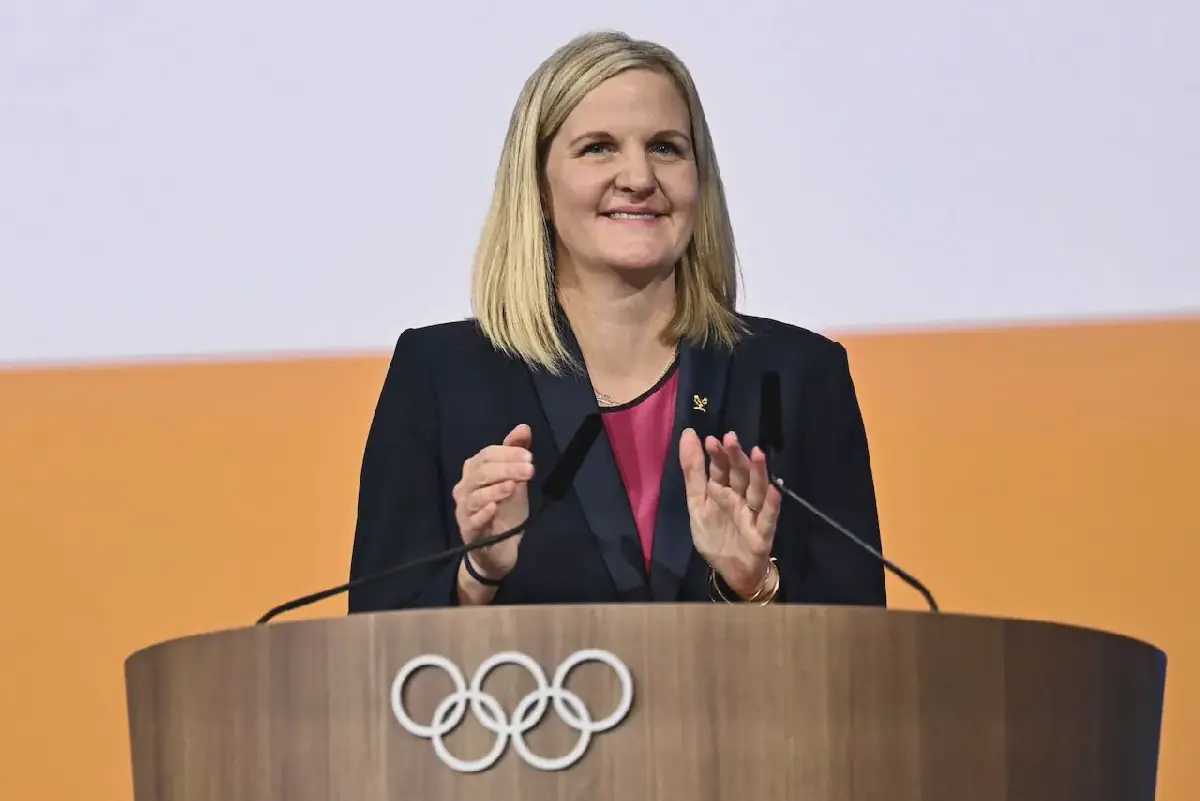
The International Olympic Committee (IOC) is facing a significant challenge in keeping politics out of sports as Ukrainian and Russian athletes prepare to compete together in the Youth Olympics in Dakar, Senegal. IOC president Kirsty Coventry has expressed her desire to keep politics out of sports, stating that "politics does not take over on the field of play." However, with the ongoing war between Ukraine and Russia, this goal is being sorely tested. The 13 Russian athletes competing in the Youth Olympics will be able to parade with their national flag and hear their national anthem, a first since the 2020 Winter Youth Games in Lausanne.
Coventry's approach to keeping politics out of sports is in contrast to the views of Ukraine Sports Minister Matviy Bidnyi. Bidnyi believes that any conversation about returning Russian athletes to the international arena can only happen after the war ends and a just peace is established. He also emphasizes that isolation is not a political move, but rather a matter of basic human decency. This differing view highlights the complexities of keeping politics out of sports, particularly in situations where countries are in conflict.
The relationship between politics and sports is not new, and many experts believe that it is impossible to completely separate the two. Terrence Burns, a former IOC marketing executive, states that "sport has never been separate from politics." He also notes that the Olympic movement only works if it stays independent of governments. Michael Payne, a former IOC marketing chief, agrees that politics and sports are intertwined, and that the growing politicization of sports is a significant threat to its future.
The use of boycotts as a political tool has been employed in the past, with varying degrees of success. The African boycott of the 1976 Montreal Games was effective in highlighting the issue of apartheid in South Africa, but it also had significant consequences for the Olympic movement. Burns notes that a boycott only works when it is sustained, collective, and aimed at the wrongdoer. The Ukrainian government has not employed the strategy of boycotting sporting events in which Russia has competed.
Despite the challenges, there have been instances where sports have brought nations together. The joint appearance of North and South Korea at the 2000 Sydney Games and the 2018 Winter Games in Pyeongchang is an example of how sports can offer a glimmer of hope. Burns believes that sports can open doors, but it cannot make anyone walk through them. He also notes that an open door is worth a great deal when every other one is shut.
The issue of politics in sports is not limited to the IOC, with other international sports organizations also facing challenges. FIFA president Gianni Infantino has been accused of crossing the line in his close friendship with US President Donald Trump. The awarding of the FIFA Peace Prize to Trump was widely ridiculed, with many questioning the legitimacy of the award. Infantino has also opened the gates to Russia, allowing them to compete in the Under-15 football World Cup.
The debate on politics in sports is set to continue, with no easy solution in sight. As Coventry continues to pursue a line of neutrality, others will likely continue to challenge this approach. Ultimately, the goal of keeping politics out of sports remains a significant challenge, one that will require careful consideration and navigation by sports organizations and leaders.
Key points
- IOC president Kirsty Coventry's goal of keeping politics out of sports is being tested as Ukrainian and Russian athletes compete together in the Youth Olympics in Dakar.
- The relationship between politics and sports is complex, with many experts believing that it is impossible to completely separate the two.
- The use of boycotts as a political tool has been employed in the past, with varying degrees of success.