Serbia's student anti-graft protest movement has ended 14 years of right-wing nationalist rule in the country. The movement, which began in November 2024, was sparked by the collapse of a concrete canopy at a railway station in the northern city of Novi Sad, killing 16 people. The tragedy led to nearly two years of protests, with students expressing their anger over corruption and calling for early elections.
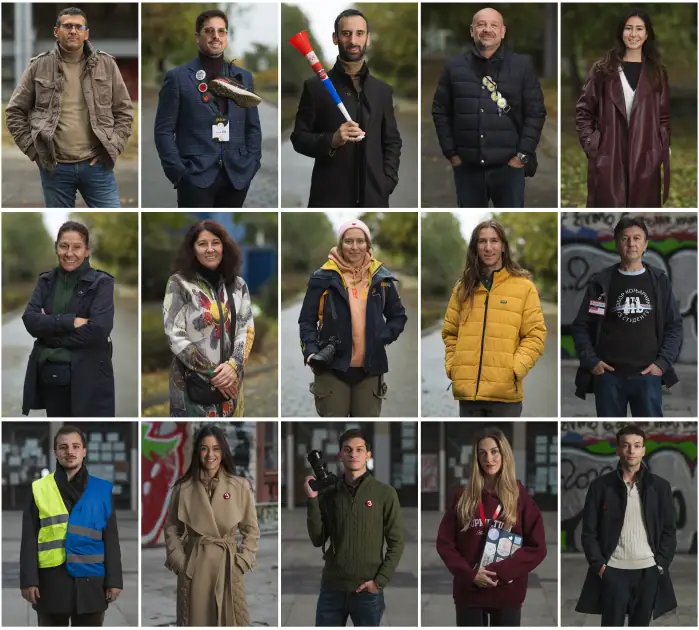
The Student List, a group formed by students, won 140 seats in the 250-seat parliament, enough to govern alone. This was a significant landslide victory, marking a substantial shift in the country's politics. The students' movement was unique in that it did not have any clearly identifiable leaders. Instead, candidates were chosen by students at faculty assemblies, mostly academics and professionals with little or no political experience.
The students' strategy of not having individual leaders was a deliberate one. Vukasin Djinovic, a student at Novi Sad's Faculty of Sciences, said that by not putting individuals forward, they managed to survive and avoid being targeted by pro-government media. The media had constantly tried to find leaders to break the organisation apart, but the students' unity and equality helped them stay strong.
The Student List's candidates were chosen based on their moral and professional integrity, not party membership or loyalty. This approach helped the movement maintain its independence and focus on fighting corruption. Aleksa Stankovic, a Belgrade philosophy student, spent two years photographing the movement and capturing its key moments. He said that despite being called terrorists and insulted by some, the students remained strong and determined.
The movement's impact was felt across the country, with students criss-crossing Serbia on foot to reach areas under the influence of pro-government media. Strahinja Stankovic, a political science student from Belgrade, helped organise the first student march to Novi Sad. He was arrested in June 2025 at a road blockade in Belgrade but said that he could finally feel at peace after the Student List's victory.
For Nikola Marovic, a professor at the Faculty of Technology in Novi Sad, the movement's success was a source of pride. He said that for the first time, he truly felt dignity in having taught the students who were out on the streets. Marovic added that Serbia did not need a single leader but millions of small leaders, which was what the movement had achieved.
The Student List's victory marks a significant shift in Serbia's politics, with the potential to bring about real change. The movement's focus on unity, equality, and integrity has inspired a new generation of leaders. As the country moves forward, it remains to be seen how the Student List will govern and what impact their policies will have on Serbia.
Key points
- The Student List won 140 seats in the 250-seat parliament, enough to govern alone.
- The movement was sparked by the collapse of a concrete canopy at a railway station in Novi Sad, killing 16 people.
- The students' strategy of not having individual leaders helped them stay strong and avoid being targeted by pro-government media.