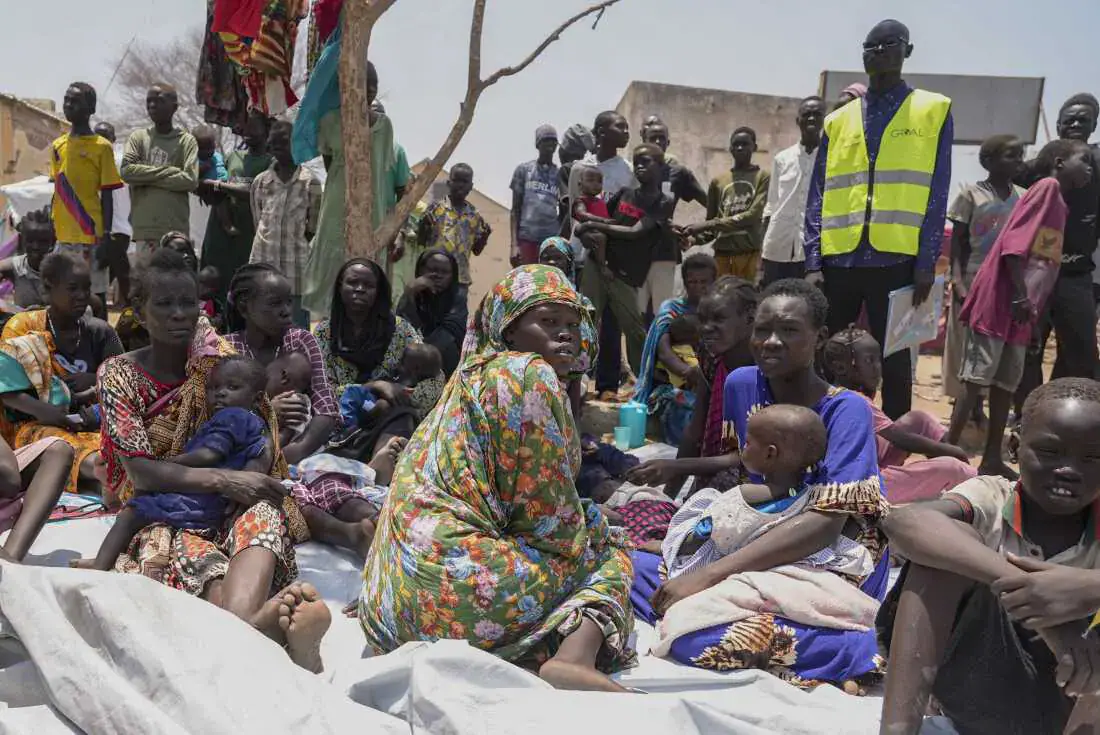
Residents of Panyikang County in South Sudan's oil-rich Upper Nile State face significant challenges in accessing essential medical care due to a lack of healthcare infrastructure. The county, home to over 7,737 inhabitants, has neither a tarmacked road nor an airstrip, leaving communities reliant on river transport to connect with the outside world. This has turned routine hospital visits and childbirth into life-threatening ordeals. The nearest hospital, located in Malakal, is over 48 hours away by boat, a journey fraught with danger from snakes, crocodiles, and other wildlife.
The risks associated with these journeys are underscored by the 14 deaths linked to water accidents reported in the county between May and June, according to local authorities. Maj. Gen. James Obur Aywok, the Panyikang County commissioner, acknowledged the risks, stating that river transport is the only means of accessing medical care. He noted that it takes up to three days to reach the hospital in Malakal, highlighting the urgent need for improved transport infrastructure and healthcare services in the county.
The health sector in South Sudan remains heavily underfunded, exacerbating the situation in Panyikang County. The United Nations Development Programme (UNDP) reports that the health and humanitarian sectors in South Sudan rely heavily on off-budget funding and support from international development partners, including UNICEF, the World Health Organization (WHO), and other donors. The WHO attributes the public health crisis in Upper Nile State to armed conflict, mass displacement, and severe food insecurity.
The absence of a healthcare facility in Panyikang County has resulted in numerous fatalities. Medical records at Malakal Hospital indicate that eight children, three women, and one man died in boat accidents between May and June while attempting to reach medical care. The director of Malakal Referral Hospital cited the long distances patients must travel as a contributing factor to high mortality rates. Commissioner Aywok emphasized that without a healthcare centre in Panyikang County, residents have no choice but to travel to Malakal, a journey that takes three days by boat.
Currently, Azienda Comunitaria di Romagna e Africa (ACRA) is the only organization supporting Panyikang County with mobile health units and life-saving medicines. However, this project was designed to be temporary and is set to end soon. The mobile health initiative is a partnership with WHO South Sudan, which provides emergency medical supplies and medicines. Other partners, including UNICEF South Sudan and the United Nations Office for the Coordination of Humanitarian Affairs (OCHA), provide critical funding and oversight through the South Sudan Humanitarian Fund (SSHF).
Residents and healthcare professionals are urging the government to establish health centres in local communities to improve access to medical care. Regina Awa, a 45-year-old resident of Panyikang County, emphasized the need for healthcare services closer to home. Dr. Younis Johnson, director of Malakal Teaching Hospital, highlighted the challenges in receiving patients in time, particularly at night, due to security concerns and the long distances involved. He stressed that many deaths could have been avoided if patients had reached the hospital promptly.
The director of Malakal Teaching Hospital called on the government to strengthen transport infrastructure and security across the state to improve access to healthcare. He noted that most emergency cases involve women in labour and people with gunshot wounds, underscoring the need for timely medical intervention. The situation in Panyikang County highlights the stark contrast between South Sudan's natural resource wealth and the healthcare challenges faced by its people.
Key points
- Panyikang County in South Sudan has no healthcare centre, forcing residents to undertake treacherous river journeys to access medical services.
- The county's reliance on river transport has resulted in numerous deaths, with 14 fatalities linked to water accidents reported between May and June.
- Residents and healthcare professionals are urging the government to establish health centres in local communities to improve access to medical care.