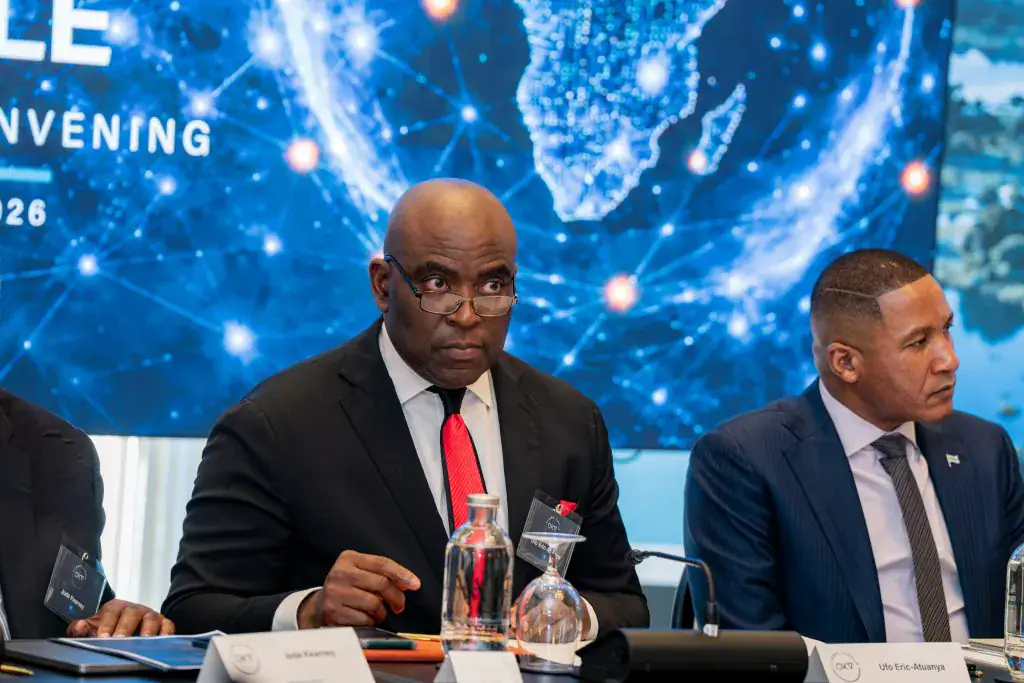
Ufo Eric-Atuanya, Co-Chair of the Okavango Circle, is leading a bold new vision for Africa's economic future. With over three decades of experience in international finance and business development, Eric-Atuanya believes that Africa's economic transformation requires more than investment pledges; it demands effective institutions, sound financing, and the capacity to turn opportunities into functioning businesses. Through the Okavango Circle, he aims to connect African priorities with global investment, technology, and economic decision-making.
The Okavango Circle made its international debut during UNGA 81 in New York, with Eric-Atuanya working alongside fellow Co-Chairs Jude Kearney and Ijeoma D. Agboti-Obatoyinbo. The initiative has outlined preliminary ambitions to develop 10 to 15 investment-ready projects and help at least five reach financial close within five years. Eric-Atuanya's experience has convinced him that Africa's economic transformation requires a focus on building industries, advancing technology, and securing a greater African stake in the global economy.
The inspiration for the Okavango Circle came from a fundamental question: Why does Africa supply so many of the resources that power the global economy, yet capture so little of the resulting wealth, technology, and industrial development? Eric-Atuanya's commitment to building stronger commercial relationships between Africa and the United States has shaped his career. He believes that Africa's economic transformation and global prosperity can and should reinforce one another.
President Duma Boko of Botswana played a significant role in the creation of the Okavango Circle. In 2025, he challenged stakeholders to explore mechanisms that would help Africa look beyond the extraction and export of its resources. This challenge resonated deeply with Eric-Atuanya, who returned to the President with the Okavango Circle as a proposed response. The initiative aims to address the governance of critical minerals, artificial intelligence, emerging technologies, and finance.
The Okavango Circle represents interconnectedness, with the Okavango Delta serving as a remarkable African setting from which to bring global leaders together around issues that will affect all our futures. Eric-Atuanya aspires for the Okavango to become synonymous with a new global conversation about how resources, technology, finance, and governance can work together to advance sustainable prosperity.
The Okavango Circle is African-housed, globally connected, and commercially oriented. Eric-Atuanya believes that Africa can help shape a more prosperous future for the world. The initiative has established a foundation from which to move towards implementation, with a steering committee and interim secretariat in place. Their commitment, expertise, and hard work have helped establish the Okavango Circle.
Ultimately, the Okavango Circle aims to change Africa's position in the global economy – from supplying resources to helping shape, build, and benefit from the industries of the future, in partnership with the world. Eric-Atuanya argues that Africa must not only participate in the global economic future; it must help architect it. The initiative's success will depend on effective partnerships and collaboration among the people and institutions that influence the global economy.
Key points
- The Okavango Circle aims to develop 10 to 15 investment-ready projects and help at least five reach financial close within five years.
Reporting sources
- Ufo Eric-Atuanya On the Game-Changing Mission of the Okavango Circle · Pan African Visions