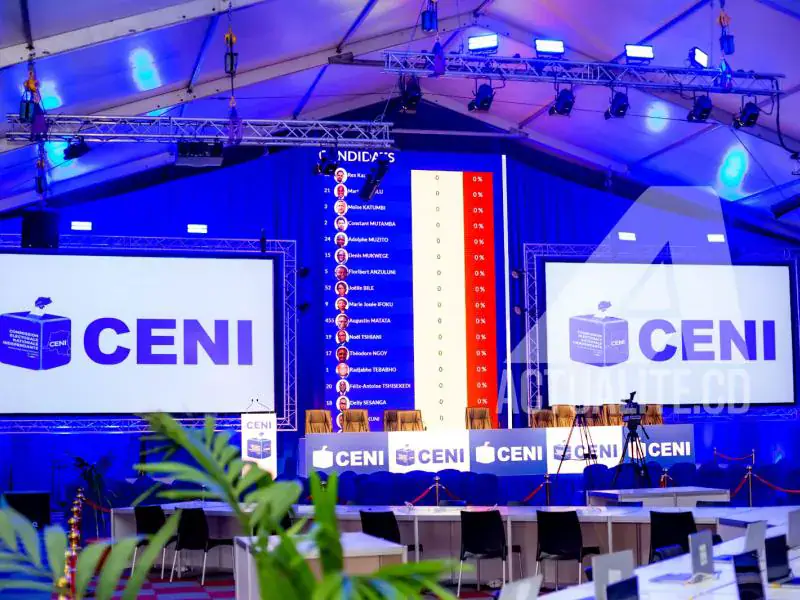
The Synergie des missions d'observation citoyenne des élections (SYMOCEL) has expressed concerns about the risks facing the 2028 electoral deadlines in the Democratic Republic of Congo. In its report, "RDC 2028: Éviter le naufrage électoral," the organization highlights the delays and uncertainties that could compromise the elections. The report analyzes the legal framework, the electoral commission's roadmap, and the risks associated with the electoral process.
According to the report, the legal framework requires periodic elections, but the electoral commission's roadmap has recorded operational and financial delays. The debate on the Constitution, the referendum project, and national dialogue initiatives have created political uncertainty. While these elements do not necessarily imply a postponement, their accumulation requires increased vigilance. The report emphasizes that the 2025-2029 roadmap is a concrete indicator, but several preparatory activities have not been executed within the announced deadlines.
The SYMOCEL report notes that the lack of financing, security difficulties, and the absence of a documented recovery plan are reducing the margins of maneuver. The organization cites analyses by Ebuteli, which indicate that these delays are not yet irreversible but require rapid budgetary decisions and reinforced institutional follow-up. The report recalls the 2016-2018 period, when electoral delays led to a crisis of confidence and a de facto prolongation of the political transition.
The SYMOCEL emphasizes the need to verify political will through concrete actions. The organization notes that the will to respect electoral deadlines has not yet translated into visible institutional mobilization, given the observed delays. This assessment is based on the gap between the announced calendar, actual operations, mobilized funds, and transparency of follow-up. The report calls for identifying the obligations and failures specific to each institution.
The report mentions the statement by President Félix Tshisekedi on May 6, 2026, that the 2028 elections could not be organized if the war in the East continued and the provinces of North Kivu and South Kivu could not participate in the vote. The SYMOCEL questions what concrete measures will be taken to preserve the constitutional calendar, ensure the participation of concerned populations, and prevent insecurity from becoming a durable obstacle to the electoral process.
The SYMOCEL report also addresses the constitutional debate and the referendum, which must be assessed for their institutional effects. While the debate on the Constitution does not establish a will to postpone the elections, it can contribute to a perception of political temporization when combined with persistent electoral delays and uncertainties on public priorities.
The report concludes that the situation is characterized by an open window of recovery, but it is narrowing as preparatory operations take delay. The question is no longer just whether the elections can be organized in 2028 but also whether institutions are willing to take immediate decisions to make this deadline achievable. The SYMOCEL emphasizes that the risk of a political and institutional crisis must not be confused with the certainty of a generalized armed conflict.
Key points
- The 2028 electoral deadlines in the Democratic Republic of Congo are at risk due to financial delays and political uncertainties.
- The SYMOCEL report highlights the need for rapid budgetary decisions and reinforced institutional follow-up to address the delays.
- The organization emphasizes the importance of verifying political will through concrete actions to preserve the constitutional calendar and ensure the participation of concerned populations.