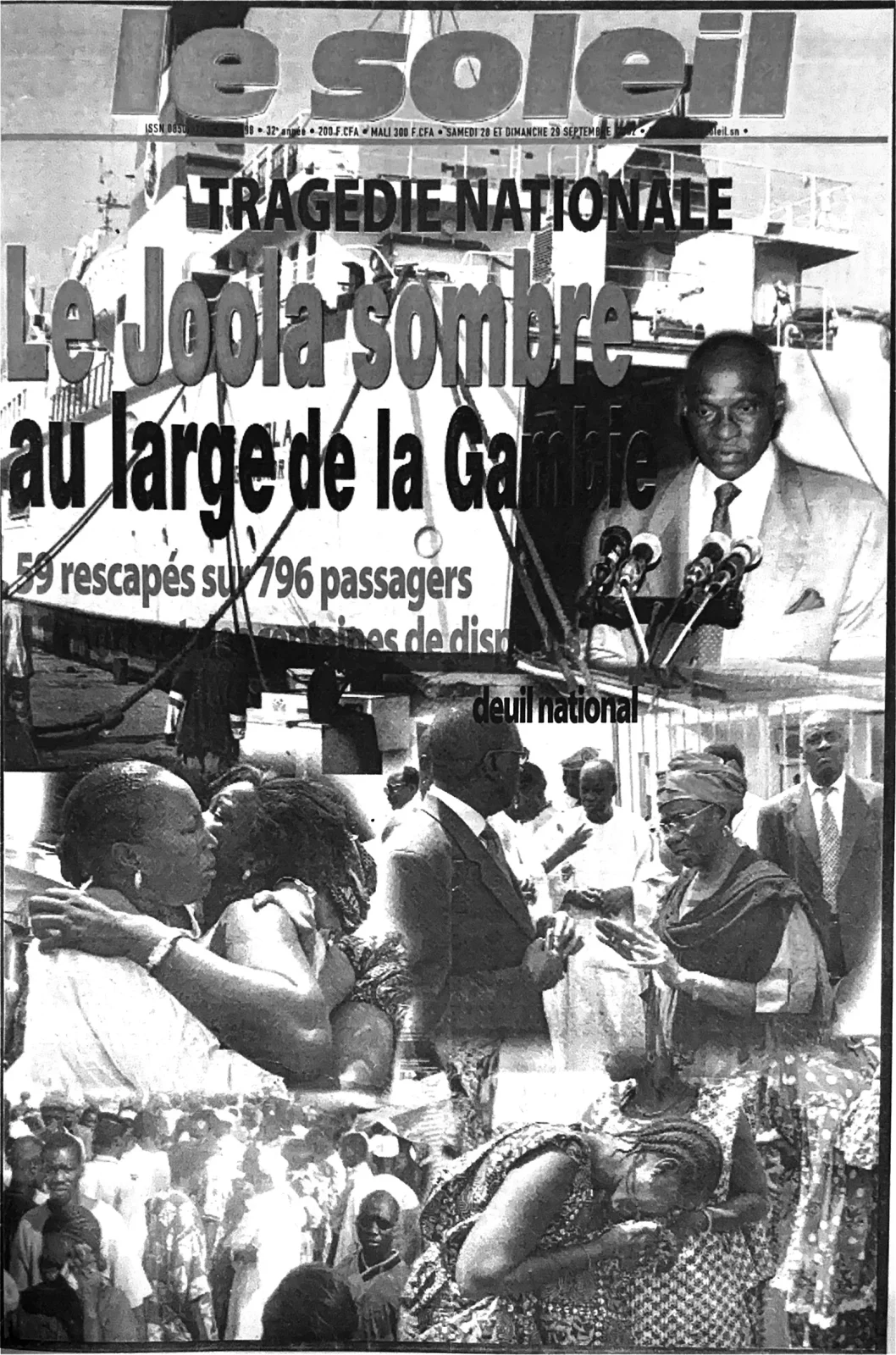
On September 27, 2002, Senegal woke up to devastating news: the Joola ferry had capsized off the coast of Gambia in the early hours of the morning. The tragedy occurred during the ferry's third rotation from Dakar to Ziguinchor since September 10, 2002. According to initial reports from the Prime Minister, Mame Madior Boye, there were 41 confirmed deaths and 32 survivors out of 796 passengers on board. The incident sent shockwaves across the nation, leaving many families and loved ones in a state of despair.
As news of the tragedy spread, panic and despair gripped the city of Ziguinchor, where families had been waiting for the safe return of their loved ones. The city's embarkation point and port were overrun with anxious relatives and curious onlookers seeking information about the fate of the passengers. Similar scenes of desperation played out in Dakar, where thousands of people flocked to the port, seeking news of their loved ones. The atmosphere was one of heavy silence and despair, as the nation struggled to come to terms with the scale of the tragedy.
In the aftermath of the disaster, President Abdoulaye Wade, who had just returned from a trip abroad, met with his ministers, including the Prime Minister, the Minister of Interior, and the Minister of Armed Forces. The President vowed to investigate the circumstances surrounding the tragedy and to shed light on the incident. A national three-day mourning period was declared, and the nation came together to pray for the souls of those who had lost their lives.
As the nation grappled with the enormity of the tragedy, questions began to emerge about the seaworthiness of the Joola ferry and the circumstances leading up to the disaster. The ferry had been plagued by incidents in the past, including a near-disappearance at sea over a year ago. The vessel had also experienced mechanical issues, which had led to its immobilization for nearly a year. Critics began to raise concerns about the ferry's safety record and whether it had been properly maintained.
An investigation into the incident was launched, with the government pledging to get to the bottom of the tragedy. A crisis cell was set up, led by the Prime Minister, and comprising various ministers, including those responsible for defense, justice, and social development. The government's response was aimed at providing support to the families of the victims and ensuring that those responsible for the tragedy were held accountable.
In the days and weeks that followed, the nation came together to mourn the loss of life and to support the families of the victims. The Joola ferry disaster would go down in history as one of Senegal's darkest moments, and it would serve as a catalyst for reforms aimed at improving maritime safety and preventing such tragedies from occurring in the future.
The Joola ferry disaster resulted in one of the deadliest maritime tragedies in Senegal's history, with estimates suggesting that over 1,800 people lost their lives. The incident led to significant changes in the way maritime safety was regulated and enforced in Senegal, with a greater emphasis placed on ensuring that vessels operating in the country's waters met the highest safety standards.
Key points
- The Joola ferry disaster was one of the deadliest maritime tragedies in Senegal's history, resulting in the loss of hundreds of lives.
- The incident raised questions about the seaworthiness of the ferry and the circumstances leading up to the disaster.
- The tragedy led to significant changes in maritime safety regulations and enforcement in Senegal.