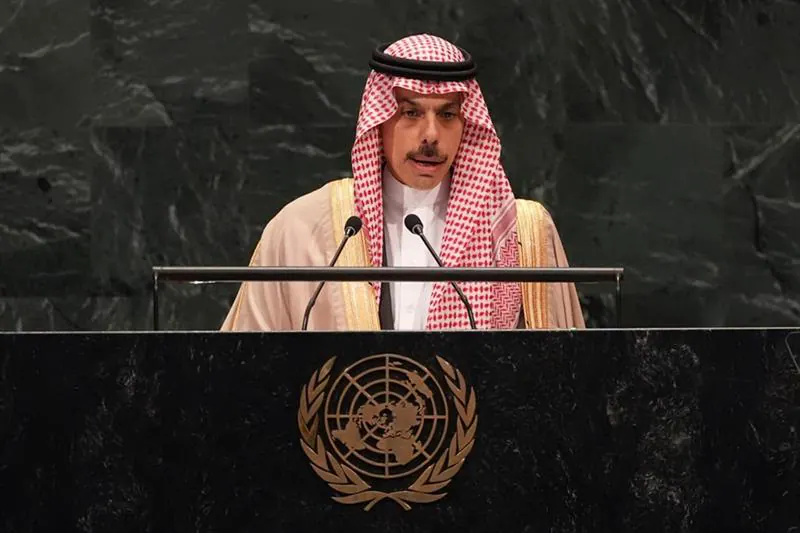
Saudi Arabia's Foreign Minister, Prince Faisal bin Farhan Al Saud, addressed the United Nations General Assembly on September 26, 2026, urging the international community to take greater responsibility in protecting freedom of navigation in vital Middle Eastern waterways. He emphasized that blocking these routes poses a significant threat to global energy security. The Strait of Hormuz and the Bab al-Mandab Strait, crucial for oil and gas exports, have been affected by disruptions from Iran and its Houthi allies in Yemen.
Prince Faisal bin Farhan stated that the international community has not fulfilled its responsibilities in confronting threats to international peace and security. He specifically called for the protection of freedom of navigation in the Strait of Hormuz, the Bab al-Mandab Strait, the Red Sea, and the Gulf of Aden. The minister demanded that conditions in the Strait of Hormuz return to what they were before February 28, 2026, without any imposed fees or taxes.
The Saudi Foreign Minister rejected the use of these vital passages as a tool for pressure, threat, or harm to the interests of states, emphasizing that such actions must be consistent with international law and relevant UN resolutions. His statement comes after US President Donald Trump rejected an Iranian proposal to reopen the Hormuz within a week in exchange for certain conditions, including a Middle East ceasefire and the release of frozen Iranian assets.
The disruptions in the Strait of Hormuz and the Bab al-Mandab Strait have been attributed to Iran and its Houthi allies in Yemen, respectively. These developments have significant implications for global energy security, as both waterways are critical routes for oil and gas exports. The international community has been urged to take action to prevent further disruptions and ensure the free flow of energy resources.
Iran's President has stated that the supreme leader backs a new plan to reopen the Hormuz. This plan was proposed by Iran, but reportedly rejected by US President Donald Trump. The Iranian proposal aimed to reopen the Hormuz within a week in exchange for certain conditions.
Iraq has sought an exemption from the US ban on Iran airlines. The US ban has implications for the region, and Iraq's request highlights the complexities of international relations in the Middle East. The country is navigating its relationships with both the US and Iran.
The situation in the Middle East remains complex, with various countries and factions vying for influence. The protection of freedom of navigation in vital waterways is a critical issue, with significant implications for global energy security. The international community must address these challenges to prevent further disruptions and ensure regional stability.
Key points
- Saudi Arabia urges international community to protect freedom of navigation in Middle Eastern waterways.
- Disruptions in Strait of Hormuz and Bab al-Mandab Strait threaten global energy security.
- Iran proposes plan to reopen Hormuz, but is reportedly rejected by US President Donald Trump.