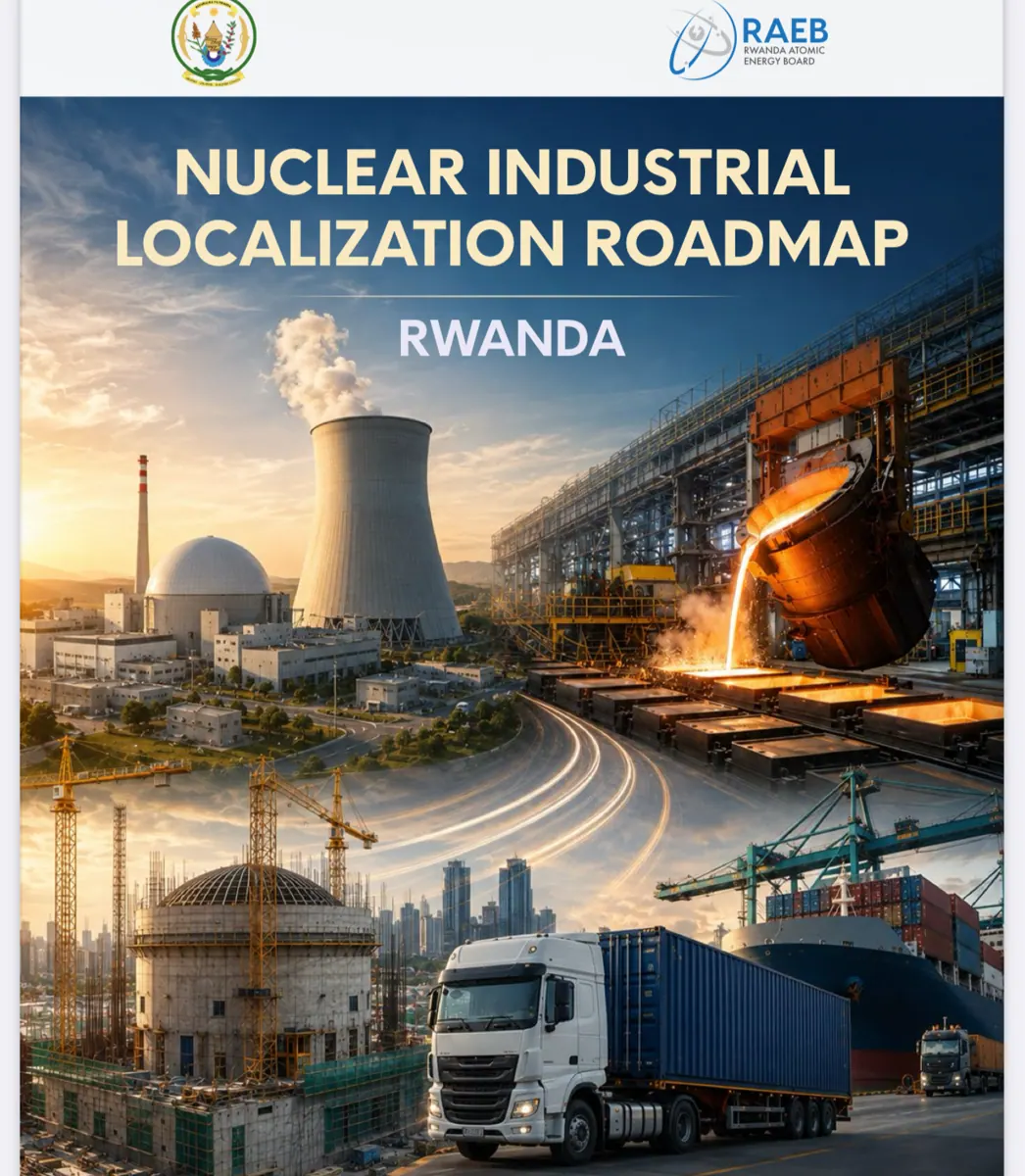
The Rwanda Atomic Energy Board has released a Nuclear Industrial Localization Roadmap, outlining how local companies can join the supply chain for the country's planned small modular reactors. Developed with the Ministry of Trade and Industry and technical support from the United Nations Economic Commission for Africa, the report sets out a plan for Rwandan businesses to meet the nuclear industry's strict safety and quality standards. The roadmap aims to create jobs and support technology transfer and industrial upgrading.
Rwanda's ambition for nuclear power is striking by international standards, aiming to supply 60-70% of its electricity by 2050. Currently, nuclear power is an established part of the global energy system, with 417 reactors operating worldwide, and a combined capacity of 377 gigawatts. In Africa, South Africa is currently the only nuclear power producer, while Egypt is building its first nuclear power plant.
The first opportunities for Rwandan firms are more practical than building reactors, including site preparation, construction, logistics, and conventional electrical work. Local contractors may begin by preparing a site or building supporting facilities. To take on more specialised work, they will need stronger quality controls, careful records, and staff trained to nuclear standards.
A survey of 28 Rwandan organisations found that 60% export within East Africa, and all said they were open to joint ventures or working with international nuclear suppliers. The report's readiness assessment ranked construction and installation highest, with a score of 0.5013, followed by logistics and supply chains at 0.3486. However, manufacturing and specialised technical services face larger gaps, including a shortage of nuclear engineering skills.
The roadmap recommends a national register of qualified suppliers, specialised training, and joint ventures that give Rwandan firms a path into project contracts. It also identifies major tasks ahead, including completing a national nuclear law and developing a financing strategy. The first commercial small modular reactor is expected to operate in the early 2030s.
However, there is a risk that the programme could add pressure to an already busy construction market. The roadmap notes that iron bar prices rose from Rwf 14,000 to Rwf 27,000 in 2025. Rwanda should expand local production for future nuclear projects rather than diverting cement and steel from other construction work and driving prices higher.
RAEB Chief Executive Dr Fidele Ndahayo writes that, “if approached strategically and collaboratively,” nuclear industrial participation can create jobs and support technology transfer and industrial upgrading. Reaching the target of nuclear power supplying 60-70% of Rwanda's electricity by 2050 will depend on financing, regulation, supplier development, and careful project execution.
Key points
- Rwanda aims for nuclear power to supply 60-70% of its electricity by 2050
- Local companies can join the supply chain for Rwanda's planned small modular reactors
- The roadmap recommends a national register of qualified suppliers and specialised training