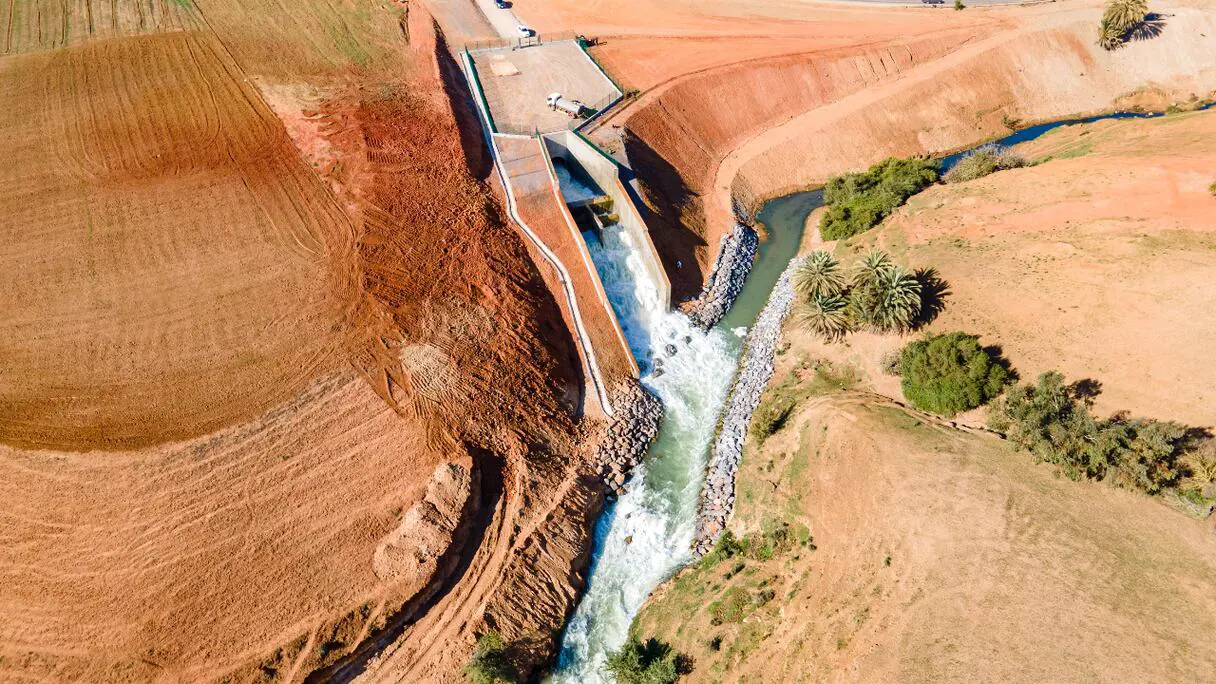
Morocco has launched a major water transfer project, connecting Oued Sebou to the Sidi Mohamed Ben Abdellah dam, which will enhance the water supply to Rabat and Casablanca. The system can transfer up to 1.2 million cubic meters of water per day. Of this, 800,000 cubic meters are allocated for potable water for the Rabat-Casablanca axis, while 400,000 cubic meters will bolster the dam's reserves.
The project relies on a 70-kilometer pipeline linking Oued Sebou to the dam, with a flow rate of 15 cubic meters per second. The system's management is flexible, adjusting to demand and the dam's water level. This flexibility has been facilitated by increased rainfall in the basin this year. The water transfer project aims to alleviate pressure on the Sidi Mohamed Ben Abdellah dam, a crucial source of potable water for Morocco's most populous coastal area.
During consecutive drought years, the dam reached critically low levels, posing a short-term risk to Casablanca's water supply. The transfer of water from Oued Sebou, a structurally surplus basin, has reversed this trend. With its abundant water resources, Oued Sebou can now support the water needs of Rabat and Casablanca. This successful transfer project may serve as a model for future water management initiatives in the region.
Plans are underway to extend the water transfer system to Al Massira dam, which supplies Casablanca and part of the Oum Er-Rbia basin. The Al Massira dam has struggled with persistently low water levels. This proposed extension represents the second phase of a north-south transfer scheme designed to redistribute surplus water from northern basins to deficit areas in the center.
The project aligns with Morocco's National Water Plan, which incorporates basin interconnections, desalination plants, and reduction of network losses. The plan prioritizes minimizing water losses, considered the most readily available source of water conservation. By implementing these strategies, Morocco aims to ensure a more sustainable and equitable distribution of its water resources.
Effective management of the water transfer system will be crucial to its long-term success. The system's flexibility allows for adjustments in response to changing conditions, such as fluctuations in water demand or unexpected changes in precipitation patterns. By leveraging this flexibility, Moroccan authorities can optimize the system's performance and maximize its benefits for the region.
The successful implementation of this water transfer project demonstrates Morocco's commitment to addressing its water management challenges. The project's impact will be closely monitored, providing valuable insights for future initiatives aimed at ensuring the country's water security.
Key points
- The water transfer system can supply 800,000 cubic meters of potable water daily to Rabat and Casablanca.
- The project is part of Morocco's National Water Plan to ensure sustainable water distribution.
- Plans are underway to extend the system to Al Massira dam.