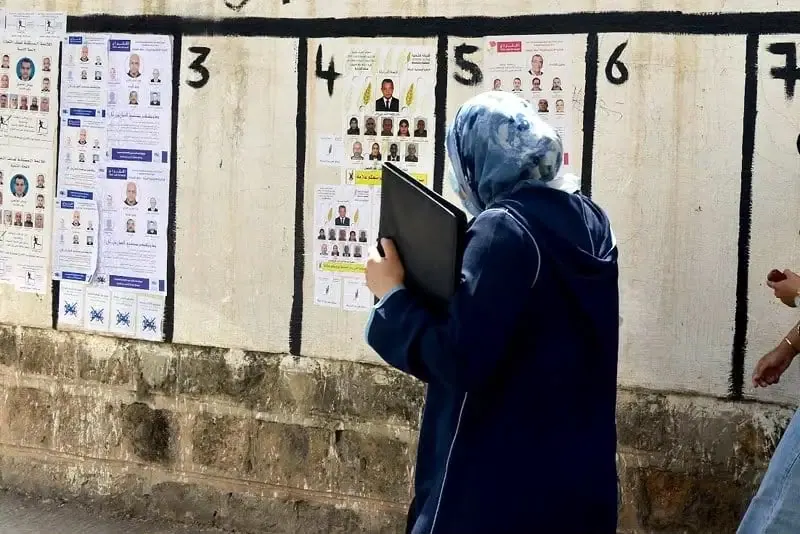
The Moroccan Association for the Democratization of Women in Morocco has released a report, "Political Representation Barometer," which evaluates the level of women's political empowerment within Moroccan political parties. The report's preparation was challenging due to difficulties in accessing information and data related to women's empowerment and participation in politics. According to Khadija Rabbah, national coordinator of the association, some parties refused to share data on women's political empowerment.
The report assessed parties based on 15 indicators across five dimensions, including political commitment to women's empowerment, governance of nominations and access to responsibility, support and empowerment during campaigns, political communication and appearance, and protection from political violence. The report found that parties varied in their level of commitment to women's empowerment, with some showing significant progress while others lagged behind.
According to the report, the parties that scored well in terms of integrating women's political empowerment into their policies were the Progressive Union and the Socialist Alliance. These parties demonstrated a strong commitment to promoting women's participation in politics and providing them with opportunities to take on leadership roles. However, other parties scored lower, indicating a need for improvement in this area.
The report also highlighted the lack of transparency within some parties regarding women's participation in politics. Some parties refused to provide information on women's empowerment, making it difficult for the association to assess their level of commitment. This lack of transparency was seen as a major obstacle to promoting women's participation in politics.
The association's report emphasized the need for parties to prioritize women's empowerment and create a safe and supportive environment for women to participate in politics. The report also called for parties to develop internal mechanisms to prevent and respond to political violence against women. According to Rabbah, 75% of parties evaluated showed a weak level of protection for women from political violence.
The report's findings were based on an assessment of 12 parties, which were evaluated based on their performance in various areas related to women's empowerment. The association hopes that the report will encourage parties to prioritize women's participation in politics and create a more inclusive and equitable political environment.
The association's efforts to promote women's empowerment in politics are part of a broader effort to promote democracy and human rights in Morocco. By highlighting the challenges faced by women in politics, the association aims to encourage parties to take concrete steps to promote women's participation and empowerment. The report's findings and recommendations are expected to contribute to a more informed and nuanced discussion about women's rights in Morocco.
Key points
- Moroccan political parties face challenges in empowering women in politics, with some parties showing a strong commitment to promoting women's participation while others lag behind.