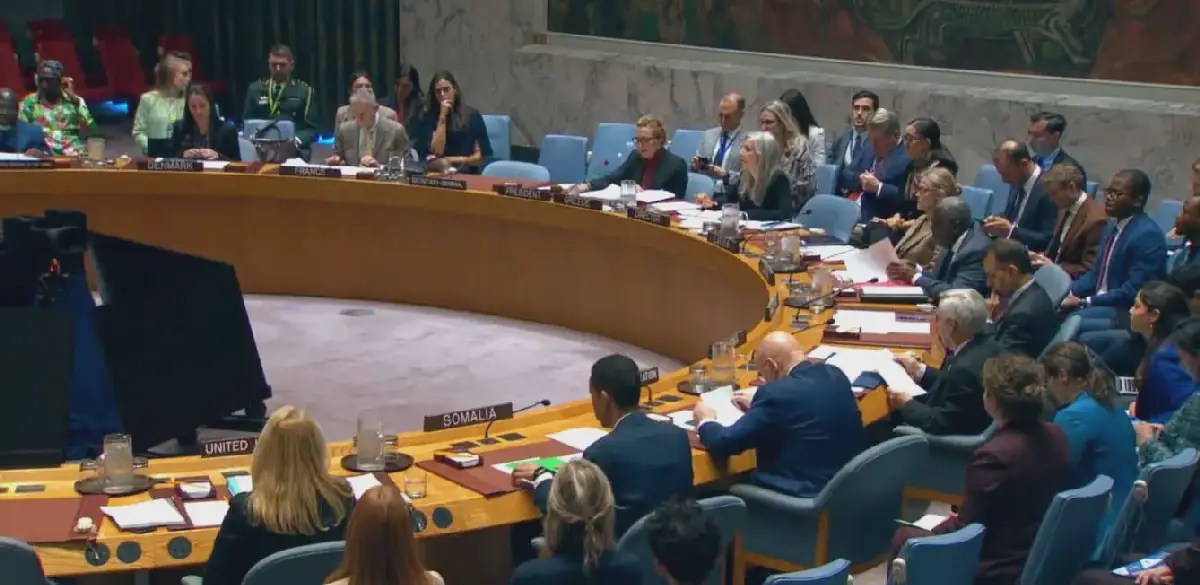
The United Nations Security Council failed to adopt a US-proposed resolution on Western Sahara on Friday, as Russia exercised its veto power. The resolution received 11 votes in favor, with one vote against and three abstentions. Russia's veto came just a day before the expiration of the mandate of the UN Mission for the Referendum in Western Sahara (MINURSO). The US resolution would have made the Moroccan autonomy plan the sole basis for political negotiations.
The resolution was more ambitious than the previous one, adopted in October 2025, which considered autonomy as one of the viable solutions. The US text would have renamed the mission, removing any reference to a referendum, and extended its mandate until October 31, 2027. An earlier version considered ending the peacekeeping component in the spring of 2027, reducing military personnel by at least half, and entrusting the UN High Commissioner for Refugees (UNHCR) with the census of the population in Tindouf camps.
In an attempt to gain Russian support, the US revised its text several times, toning down provisions on the restructuring of the mission and reaffirming the role of the UN Secretary-General's personal envoy, Staffan de Mistura. However, these concessions were not enough to secure Russia's approval. The Russian diplomacy had repeatedly emphasized that the UN presence should be maintained "in its current form."
Russia's position marks a significant shift, as it had abstained from voting on the 2025 resolution, alongside China and Pakistan. This time, Moscow went as far as to veto the US resolution, a first in the history of this UN dossier. Before the vote, Russia submitted its own draft resolution, which would have simply extended the MINURSO mandate for a year without changing its name or missions.
The Russian draft resolution called for a "just, sustainable, and mutually acceptable" solution, in line with the principle of self-determination. However, according to the latest information, this text was not adopted either, leaving MINURSO without a renewed mandate. The US Ambassador to the UN, Mike Waltz, strongly criticized Russia's veto, denouncing a move that would maintain the status quo.
The vote on the US resolution saw 11 countries in favor, including the US, France, the UK, Denmark, Greece, Panama, Bahrain, Colombia, Latvia, Liberia, and the Democratic Republic of Congo. China, Pakistan, and Somalia abstained, while Russia cast the sole vote against. The veto has significant implications for the future of Western Sahara, as it blocks a plan that would have given more autonomy to the region under Moroccan sovereignty.
The situation in Western Sahara remains uncertain, with the MINURSO mandate set to expire on October 31. The UN Security Council will need to revisit the issue and find a new solution that balances the interests of all parties involved. The US and Morocco had pushed for the autonomy plan, while Russia and other countries have emphasized the need for a more inclusive solution that takes into account the rights of the Sahrawi people.
Key points
- Russia exercised its veto power to block a US-proposed resolution on Western Sahara.
- The US resolution would have made the Moroccan autonomy plan the sole basis for political negotiations.
- The veto has significant implications for the future of Western Sahara, maintaining the status quo.