Phnom Penh, the capital of Cambodia, has been chosen to host the 20th summit of the Organization of French-speaking Countries (OIF) on November 15-16, 2026. This summit brings together leaders and government officials from 90 countries. Beyond its significant role in Cambodian politics, economy, and diplomacy, Phnom Penh boasts a rich history, unique architecture, and a vibrant culture that attracts tourists from worldwide.
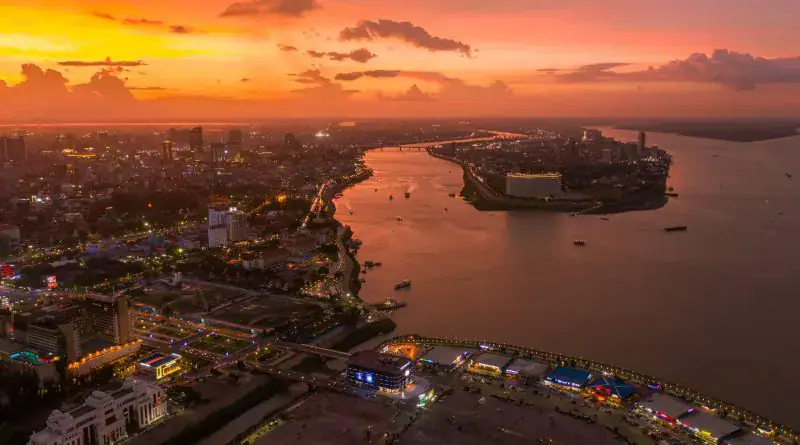
Phnom Penh's unique location is where three major rivers in Southeast Asia converge: the Mekong, Tonlé Sap, and Bassac. This confluence, known as Chaktomuk, has played a crucial role in the city's development, facilitating trade, transportation, and the livelihoods of its residents. The Tonlé Sap River is particularly notable for its changing water flow due to seasonal rains and the Mekong's water levels.
The city's name, Phnom Penh, originates from the legend of a woman named Daun Penh, also known as Grandma Penh. According to 14th-century accounts, she discovered Buddha images washed up by the Mekong River, which she placed on a hill where she lived, leading to the construction of a temple. This hill became known as Wat Phnom, meaning the temple hill, and the city's name is linked to this woman and the temple built there.
Phnom Penh showcases a blend of French colonial and Khmer architecture, reflecting its history as a French-administered territory. The city's colonial past has left a lasting legacy in its buildings, wide streets, and government structures. In 1866, under King Norodom's reign, Phnom Penh was declared the capital of Cambodia, and it became a significant center for governance, trade, and culture.
Among Phnom Penh's notable attractions are the Royal Palace, the King's residence, and the Silver Pagoda, known for its silver floor tiles. The Silver Pagoda houses a vast collection of Buddha images and artistic artifacts. These sites are crucial for understanding Cambodia's history and culture, making them popular destinations for tourists.
Phnom Penh also bears the scars of its turbulent past, particularly during the Khmer Rouge regime led by Pol Pot. In 1975, the Khmer Rouge seized power, forcibly relocating urban residents to rural areas for forced labor. The city's history is marked by sites like Tuol Sleng, a former school turned prison and torture center, and Choeung Ek, a mass grave site, which serve as somber reminders of the atrocities committed.
Today, Phnom Penh is a bustling city with a rich cultural heritage, known for its vibrant markets, traditional cuisine, and predominantly Buddhist population. The city's markets, such as the Central Market and the Russian Market, offer a wide range of goods, from clothing and jewelry to handicrafts and local delicacies. With its unique blend of history, culture, and resilience, Phnom Penh is set to welcome leaders from French-speaking countries for the OIF summit.
Key points
- Phnom Penh's strategic location at the confluence of three major rivers has facilitated its growth as a trade and cultural hub.
Reporting sources
- Ibyo ukwiye kumenya kuri Phnom Penh, umurwa mukuru wa Cambodia uzakira inama ya OIF · Radio Flash FM Rwanda