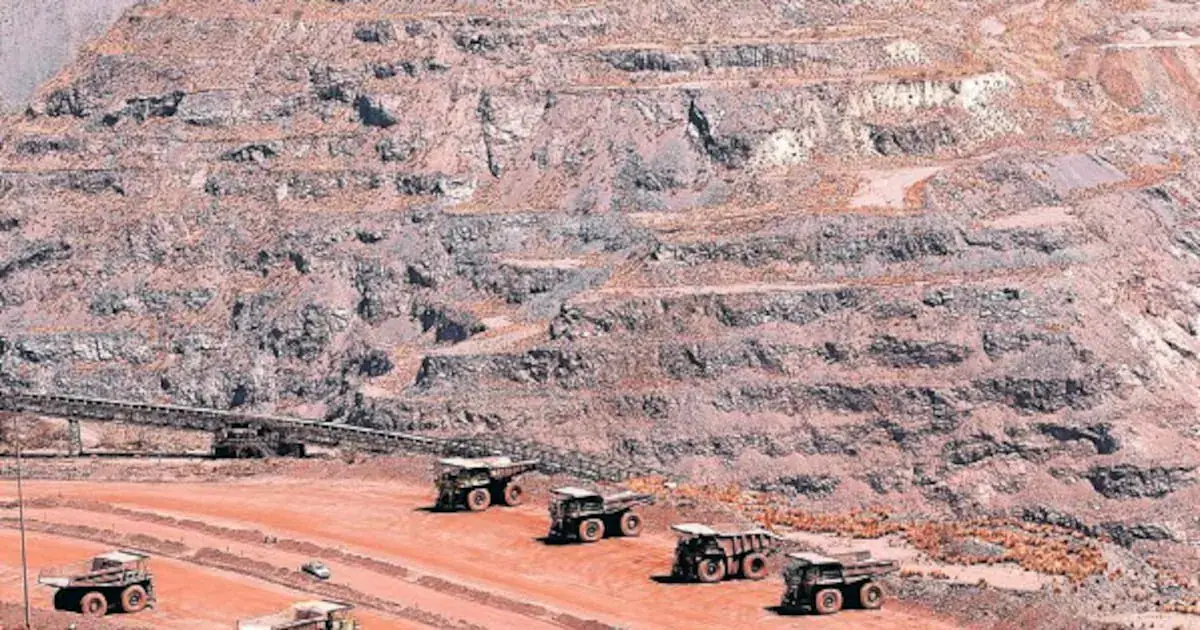
South Africa's mining production has extended its losses, recording a fifth consecutive annual contraction in September. According to data from Statistics South Africa, mining output declined by 10.7% compared to a revised 11.7% in August. This decline was primarily driven by decreases in iron ore, coal, platinum group metals, and diamonds. Iron ore output tumbled 23.7%, coal production was down 13.4%, platinum group metals weakened 9.9%, and diamonds plummeted 63.1%.
The decline in mining production had a significant impact on the sector's contribution to the country's GDP. In the third quarter, mining production shrunk by 6%, which is expected to weigh on economic growth for the period. The mining sector accounts for approximately 7% of South Africa's GDP. The recent decline in production is likely to have a ripple effect on the overall economy, given the sector's significant contribution.
Despite the annual decline, seasonally adjusted production increased by 2.8% between August and September. This rebound comes after two consecutive month-on-month declines of 4.8% and 2.1%, respectively. The increase in production suggests that the sector may be stabilizing, but it is still too early to determine if this is a sustained trend.
Mineral sales at current prices decreased by 4.1% year-on-year in September, primarily due to declines in iron ore, platinum group metals, and gold. However, coal sales jumped 6.2% compared to the same month last year, providing a partial offset to the decline. The decrease in mineral sales highlights the ongoing challenges facing the sector.
The mining sector has experienced a difficult year, with various challenges affecting production and profitability. The Middle East conflict has driven domestic fuel prices to record highs, while prohibitive electricity tariffs and persistent rail and port inefficiencies have undermined the competitiveness of mining companies. These challenges have resulted in increased operating costs and reduced profit margins.
The Minerals Council South Africa's mining composite input cost index increased by 4.9% year-on-year in September, compared to 3.7% in August. This rise in input costs signals renewed pressure on operating margins, with petroleum and chemicals being prominent concerns. The council noted that the principal risks facing the sector include further fuel-cost passthrough, exchange rate volatility, and persistent uncertainty over international trade and energy supply.
Economists expect the near-term outlook for mining to remain challenging, with weak production momentum likely to persist amid infrastructure constraints, elevated operating costs, and an uncertain global environment. Addressing structural constraints in electricity supply and transport logistics, alongside improving operational efficiency and investment in mining capacity, will be critical to restoring production growth and strengthening the sector's contribution to the broader economy.
Key points
- Mining production in South Africa declined by 10.7% in September, driven by decreases in iron ore, coal, platinum group metals, and diamonds.
- The sector's contribution to GDP is expected to be negatively impacted by the decline in production.
- Economists expect the near-term outlook for mining to remain challenging due to infrastructure constraints, elevated operating costs, and an uncertain global environment.
Reporting sources
- # 1 Mining production extends losses with 10.7% tumble in September · The Rand Daily Mail