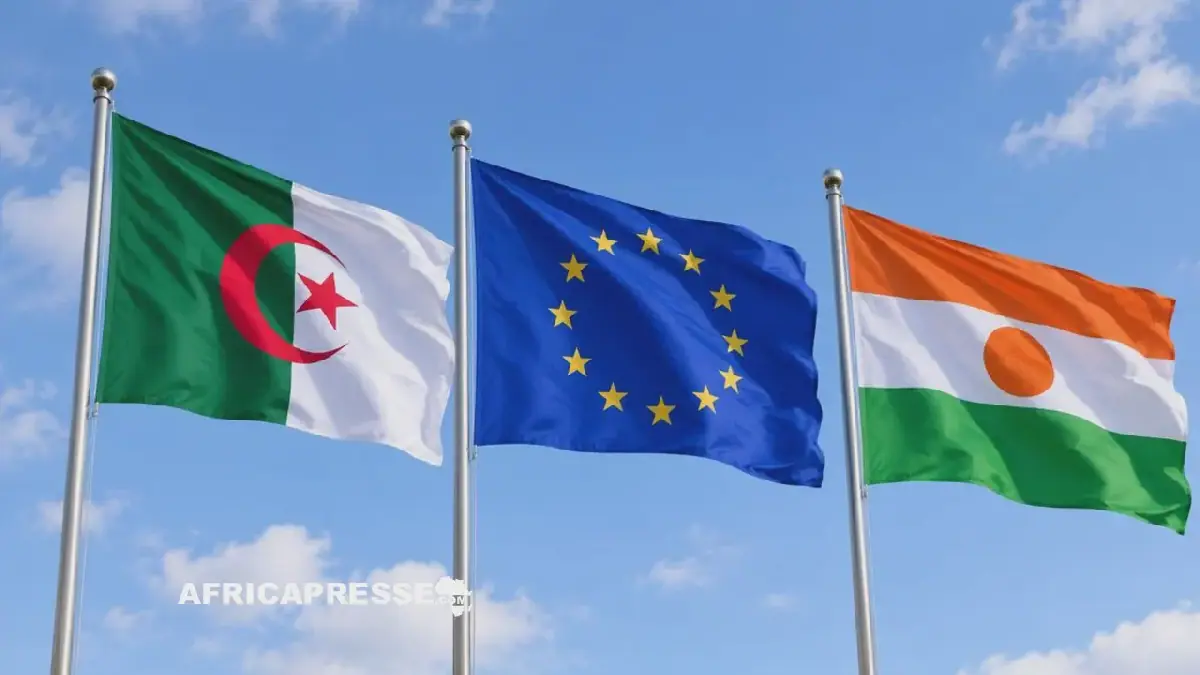
The European Union has unexpectedly reversed its stance on a military accord between Niger and Algeria, sparking questions about the coherence of its Sahel diplomacy. On November 10, EU spokesperson Anouar El Anouni stated that the deployment of Algerian troops to Niger was a bilateral matter between the two countries. This move comes after the Commission had previously requested clarification on the agreement's scope, objectives, and basis.
The EU's change of heart follows criticism from Niger's Ministry of Foreign Affairs, which denounced the initial request as interference in the internal affairs of two sovereign states. The development highlights the EU's challenges in maintaining a consistent diplomatic approach in the Sahel region, which has been marked by military coups in Mali, Burkina Faso, and Niger between 2020 and 2023.
The Niger-Algeria accord is part of a broader regional landscape, where new authorities in Niger have distanced themselves from Paris and some Western partners, instead seeking alliances with Russia and neighboring Maghreb countries. Algeria, a key player in Saharan security, aims to consolidate its influence along its 1,000-kilometer border with Niger.
The EU's reversal may undermine its credibility in the region, where it is already perceived as a waning influence. This development could also tacitly acknowledge Algeria's security role in Niger without the EU obtaining guarantees on the agreement's nature. Analysts argue that the EU's diplomacy in the Sahel has been hindered by its reliance on public pressure rather than discreet channels.
The incident highlights the EU's struggle to articulate a clear doctrine towards Sahel's military regimes. Without credible influence tools and a coherent strategy, the EU risks making contradictory statements, eroding its authority. Observers see the Niger-Algeria sequence as a case study of a major economic power failing to translate its principles into consistent action on strategic interests.
The EU's dilemma reflects a deeper challenge in its diplomatic efforts, balancing principle and pragmatism. As regional and international powers become more determined, the EU's voice may carry less weight. The organization's inconsistent stance may embolden other nations to challenge its influence in the Sahel.
The EU's future actions in the Sahel will be closely watched, as it seeks to maintain a dialogue with regimes it does not fully recognize. The coming months will likely reveal whether Brussels can adapt its approach to address regional dynamics and secure its interests in areas such as migration, terrorism, and energy flows.
Key points
- The EU's reversal on the Niger-Algeria military accord raises questions about its diplomatic coherence in the Sahel region.
- The development highlights the challenges facing the EU's influence in the region, amid rising assertiveness from regional and international powers.
- The incident underscores the need for the EU to articulate a clear doctrine towards Sahel's military regimes and develop credible influence tools.