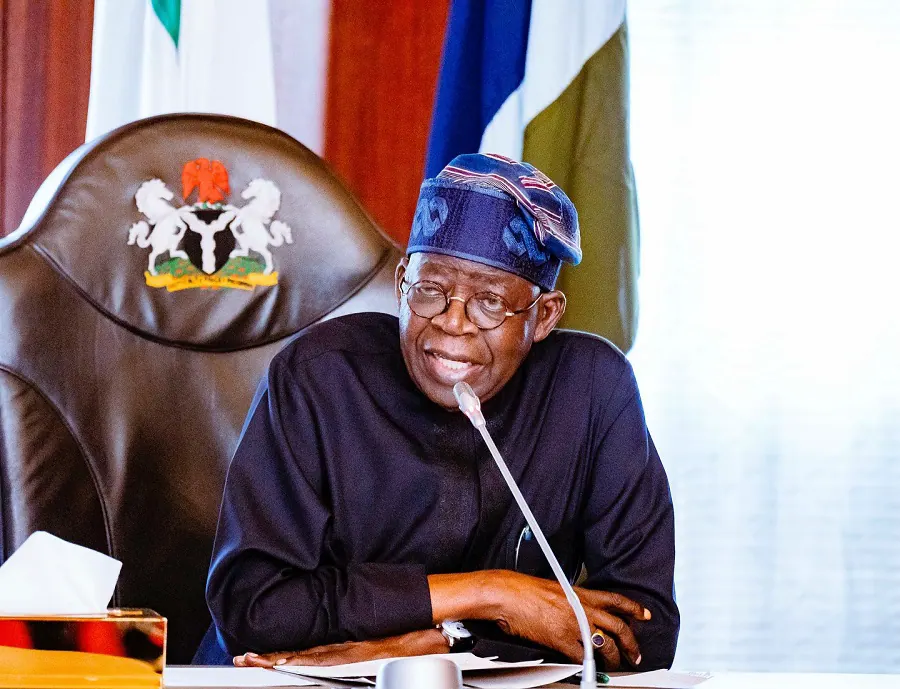
The Nigerian federal government has initiated plans to reduce transportation fares across the country, with President Bola Ahmed Tinubu directing state governments to accelerate the deployment of compressed natural gas (CNG) and electric mass transit systems. This move aims to deliver measurable reductions in transportation fares from October 1. Tinubu emphasized that Nigeria, as a gas-rich country, must focus on cheaper domestic alternatives rather than reverting to petrol subsidies.
Over 120,000 vehicles have been converted to CNG under the National Affordable CNG Transit Programme, with more than 400 certified conversion centres and 90 CNG refuelling stations operational across the states and the Federal Capital Territory. Tinubu met with governors of the 36 states on August 27, where they agreed to implement the programme and reduce transportation costs. An implementation committee was established under the Nigeria Governors' Forum (NGF), chaired by Kwara State Governor AbdulRahman AbdulRazaq.
The President cited existing CNG and electric transport schemes in several states as evidence that cheaper energy can translate into lower fares for commuters. In Borno State, CNG-powered and electric public transport services are carrying passengers for between N50 and N100 on routes where commercial operators charge between N300 and N600. In Kaduna State, 100 CNG buses provided free transportation on major routes, carrying about 3.2 million passengers and saving commuters over N3.5 billion in transportation costs.
Tinubu highlighted the success of CNG bus deployments in various states, including Oyo State, where the Lagos-Ibadan fare was reduced from N8,000 to N3,200. In Adamawa State, alternative-energy transit services reduced some fares by 50%, from N8,000 to N4,000. In Enugu State, the deployment of 100 CNG buses brought the Enugu-Nsukka fare down from N2,500 to N1,500. Additionally, government-supported buses in Plateau State transport about 13,000 commuters daily for N200, against commercial fares exceeding N500.
The Federal Government has partnered with the National Union of Road Transport Workers (NURTW) to offer a 40% fare reduction to passengers using CNG-converted commercial vehicles on selected Abuja routes. The Area 1-Gwagwalada fare has dropped from N1,500 to N900, while fares to Nyanya declined from N700 to N420 and Wuse from N400 to N240. In Niger State, passengers on the Suleja-Abuja service now pay N550 against about N800.
Tinubu commended governors and state governments that have quickly deployed alternative-energy transportation but stressed that more needs to be done to extend the benefits to millions of Nigerians. He assured states of Federal Government support to expand the programme, having spent the past three years building a CNG transportation ecosystem to reduce dependence on petrol. The Presidential CNG Initiative was established in August 2023, focusing on mass transit, vehicle conversions, and domestic assembly.
The administration has accelerated investment in CNG infrastructure, with Tinubu commissioning four CNG projects in Lagos, Abuja, and Owerri in May. Several states, including Edo, Kano, Delta, Kwara, and Lagos, are expanding CNG-supported transport services. Tinubu urged governors to sustain the momentum towards the October 1 target by working with transport unions, supporting vehicle conversions, and facilitating necessary infrastructure development to ensure savings from cheaper energy reach Nigerian citizens through lower fares.
Key points
- President Tinubu directs states to accelerate deployment of CNG and electric mass transit systems to reduce transportation fares.
- Over 120,000 vehicles converted to CNG under the National Affordable CNG Transit Programme.
- Measurable reductions in transportation fares expected from October 1.