The UN World Meteorological Organisation has warned that abnormal water supplies are becoming the norm, with sustained disruption to river flows, groundwater, and glaciers. According to the agency's State of Global Water Resources report, the trend is a decade-long signal rather than a single bad year. Secretary-General Celeste Saulo presented the report, highlighting the need for governments to prepare for moving baselines as historical water patterns become unreliable.
The report identified 2025 as one of the driest years for river flows in 35 years, with below-normal discharge across 36% of the world's river basin area. Groundwater levels have been falling since around 2014-2016, with nearly two-thirds of monitored wells outside their normal range in 2025, indicating a shift toward deficit. This trend is a cause for concern, as groundwater is a critical source of freshwater for human consumption, agriculture, and industry.
All 19 major glacier regions lost ice for the fourth consecutive year, with a cumulative loss of about 1,400 gigatonnes between 2023 and 2025 – roughly a third of the world's annual freshwater withdrawals. Glacier loss is a significant concern, as it contributes to sea-level rise and affects global water security. The report emphasizes that emissions reductions remain central to limiting further glacier loss.
Despite the dire situation, there are regional variations and signs of improvement. Parts of South America showed a partial recovery in water storage after a multi-year deficit, while central and southern Africa retained above-normal levels in several major lakes. This highlights the importance of continued monitoring and adaptation to changing water patterns.
The report also notes that monitoring capacity has expanded significantly, with 52 countries now reporting data from more than 3,100 river-flow stations, up from seven countries and 14 stations in the first edition five years ago. This increased monitoring capacity will help governments and international organizations better understand and respond to changing water patterns.
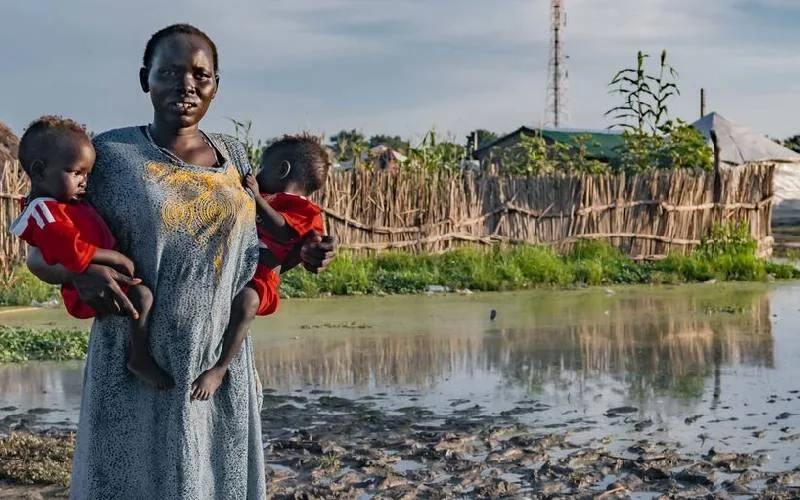
Water-related extreme events have devastated communities and economies, with Asia and Africa accounting for at least half of reported events and more than 80% of associated deaths over the past five years. The recent China-Nepal disaster highlighted the difficulty of anticipating such hazards under the new water reality. This emphasizes the need for shared data, standards, and early-warning systems to mitigate the impacts of water-related disasters.
WMO officials are urging governments to prepare for moving baselines as historical water patterns become unreliable. They emphasize the need for shared data, standards, and early-warning systems to adapt to the new water reality. Saulo highlighted that while some decline in glacier mass is inevitable, total loss is not predetermined, and emissions reductions can help limit further glacier loss.
Key points
- The UN World Meteorological Organisation warns of a lasting shift in the global water cycle.
- River flows, groundwater, and glaciers are showing sustained disruption.
- Governments are urged to prepare for moving baselines and adapt to changing water patterns.