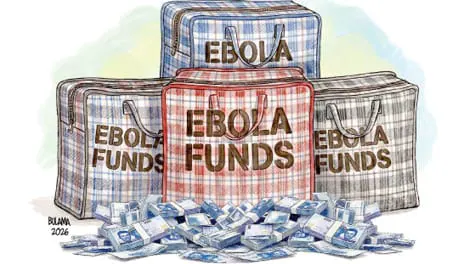
In June, President Bola Ahmed Tinubu approved N10 billion in emergency intervention funding to strengthen Nigeria's Ebola preparedness, alongside a separate N21.2 million per-state disbursement under the State Outbreak Investigation and Response Fund. The funding was aimed at enhancing the country's response to the Ebola outbreak in the Democratic Republic of Congo. Three months on, there is no public breakdown of how the N10 billion has been spent.
Travellers arriving in Nigeria have reported inconsistent screening processes, raising questions about the effectiveness of the preparedness measures. Habebat Ajayi, who returned to Nigeria from Jeddah Airport, said she completed the health declaration form but was not asked to present the information when she arrived at the Nnamdi Azikiwe International Airport, Abuja. Ajayi's experience was not unique, as several other travellers reported similar instances of incomplete screening.
The health declaration form, which is part of Nigeria's Ebola preparedness measures, requires travellers to provide identification and health information. However, travellers have reported that the QR code generated after completing the form was not scanned or verified upon arrival. Ibrahim Shehu, who completed the form, said officials appeared primarily concerned with whether passengers had completed the form and obtained a QR code, rather than verifying the information.
Phillip Clement, who travelled from Addis Ababa International Airport, Ethiopia, said passengers who had not completed the declaration were not immediately allowed to leave the airport. However, Clement reported that his temperature was not checked, despite completing the declaration and receiving a confirmation email. Fatima Damagum also reported a similar experience, saying that officials casually asked arriving passengers to show their QR codes without scanning or verifying the information.
The Nigeria Centre for Disease Control and Prevention (NCDC) had said travellers arriving from countries with active or relevant Ebola transmission may be required to complete health declaration forms upon arrival. However, checks by Weekend Trust at airports and isolation facilities suggest that the preparedness gap the money was meant to close is still there. The NCDC's measures were aimed at enhancing the country's response to the Ebola outbreak.
Despite the introduction of health declaration forms, there appeared to be no visible additional screening activity at the Murtala Muhammed International Airport (MMIA), Lagos. Travellers have questioned the purpose of the QR-code system, linking their experiences to the Federal Government's emergency preparedness funding. The effectiveness of the preparedness measures and the usage of the N10bn fund have raised concerns.
The Federal Government's emergency preparedness funding was aimed at strengthening Nigeria's response to the Ebola outbreak. However, the inconsistent screening processes and lack of transparency in the usage of the fund have raised questions about its effectiveness. Key stakeholders have called for a thorough review of the preparedness measures and the usage of the fund to ensure that Nigeria is adequately equipped to respond to the Ebola outbreak.
Key points
- Nigeria's N10bn Ebola fund has raised questions about its usage and effectiveness in strengthening the country's preparedness.
- Travellers report inconsistent screening processes, despite completing health declaration forms.
- The preparedness measures and usage of the fund require a thorough review to ensure Nigeria is adequately equipped to respond to the Ebola outbreak.