The 9th edition of the World Forum of the Sea, held in Bizerte on September 24-25, 2026, brought together decision-makers, experts, entrepreneurs, and civil society actors to discuss the pressing issue of plastic pollution. The forum's theme, "Acting for a Plastic-Free Mediterranean," underscored the urgent need for collective action to mitigate the impact of plastic waste on public health, environmental justice, and the future of the region.
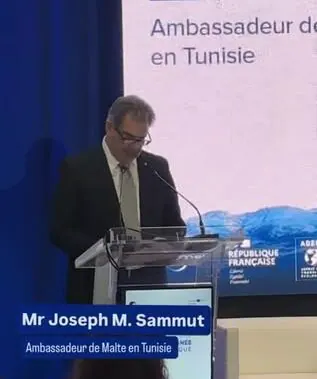
According to Dr. Joseph M. Sammut, Maltese Ambassador to Tunisia, education and source sorting are essential in addressing the plastic pollution problem. He notes that while plastic is a "necessary evil" that contributes to keeping costs low, its elimination is not feasible. Instead, the focus should be on promoting a circular economy, reducing single-use plastics, and implementing effective waste management practices.
Dr. Sammut highlights the importance of educating citizens about proper waste disposal and segregation. He explains that Malta has been working on this issue since the 1970s, starting with awareness campaigns to prevent littering in public spaces. Today, the country has a rigorous selective sorting system in place, which has significantly reduced environmental impacts.
The Maltese Ambassador emphasizes that each country is responsible for implementing and enforcing its own environmental policies. While international frameworks and organizations provide a platform for discussion, the onus is on individual states to take concrete actions to address plastic pollution.
Dr. Sammut's comments come at a time when Tunisia, like many other countries, is grappling with environmental challenges. Recent reports have highlighted the need for improved waste management and environmental regulation in the country. The issue of plastic pollution is particularly pressing, given its impact on the Mediterranean ecosystem.
The World Forum of the Sea has provided a platform for stakeholders to share experiences and best practices in addressing plastic pollution. Dr. Sammut's insights on education and source sorting offer valuable lessons for countries seeking to develop effective strategies to mitigate the impact of plastic waste.
As the international community continues to grapple with the challenges of plastic pollution, Dr. Sammut's emphasis on education and source sorting serves as a reminder that individual actions can collectively make a significant difference. By adopting a circular economy approach and promoting sustainable waste management practices, countries can work towards a future with reduced plastic waste.
Key points
- Education and source sorting are crucial in addressing plastic pollution.
- A circular economy approach can help reduce single-use plastics and promote sustainable waste management practices.
- Individual countries are responsible for implementing and enforcing their own environmental policies to address plastic pollution.