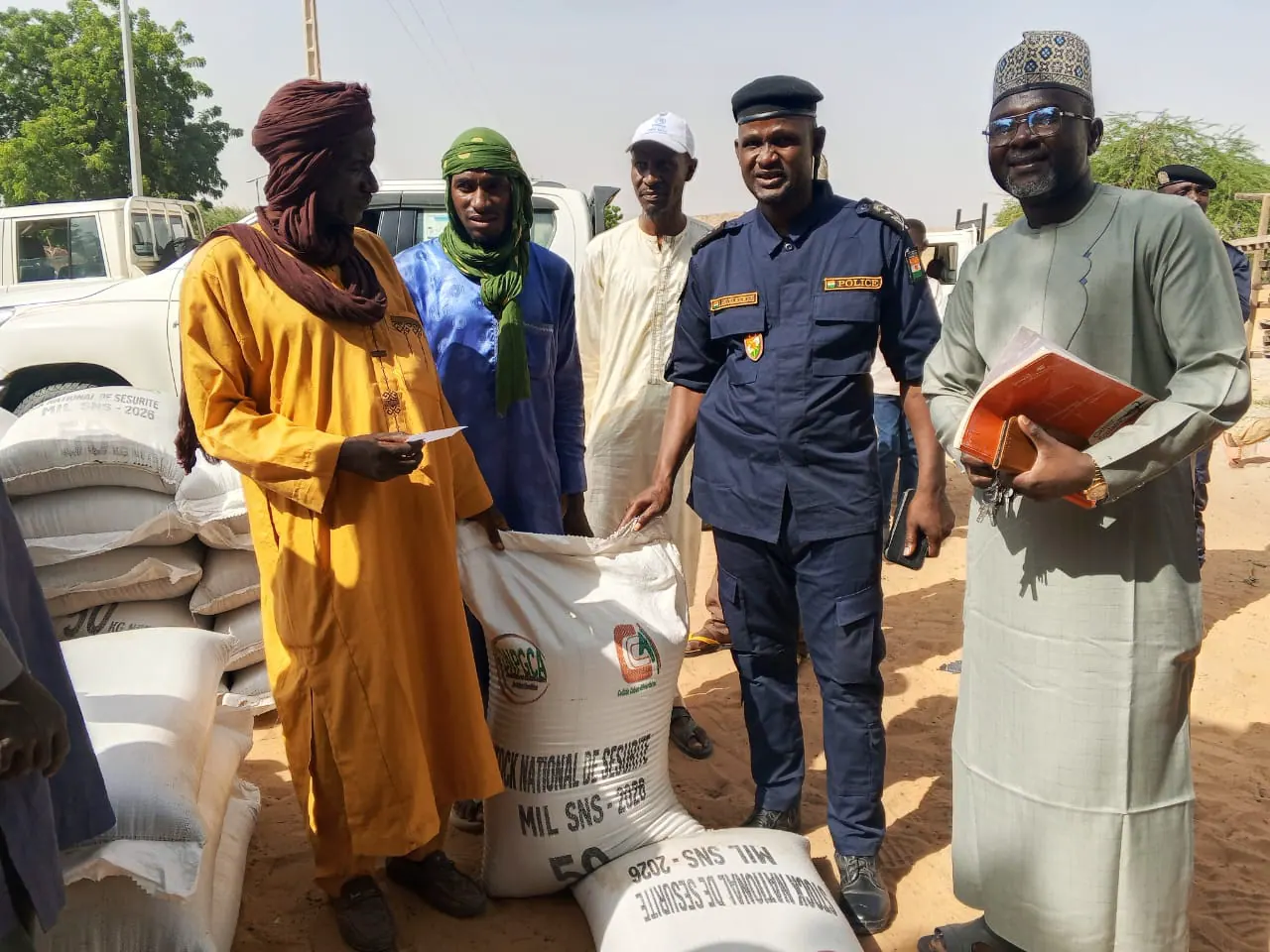
In the Diffa region of Niger, the town of Goudoumaria has initiated the first phase of its Targeted Free Distribution (TFD) of food, aimed at supporting vulnerable households. On October 2, 2026, the Secretary-General of the Goudoumaria prefecture, Yayé Kimba, officially launched the program. This first phase involves distributing 250 tons of millet to 104 villages in the department. The program aims to assist 2,500 households, which translates to 17,500 individuals, with each household receiving support for approximately seven people.
The launch ceremony was attended by close collaborators of the Secretary-General, technical service officials, and various stakeholders involved in implementing the operation. This initiative is part of the government's efforts to provide food assistance to identified vulnerable households, particularly those struggling to access basic food products. The TFD is a mechanism of the national device for preventing and managing food crises, specifically targeting populations in areas with significant food insecurity.
The TFD program focuses on supporting households identified as vulnerable, with a particular emphasis on those in areas confronting substantial food insecurity challenges. By targeting specific households based on vulnerability criteria, the program seeks to provide essential assistance. In several Niger regions, TFD operations are organized in multiple phases to ensure progressive support for targeted populations. Recent experiences have highlighted the crucial role of administrative authorities and local committees in monitoring distribution and adhering to targeting criteria.
The Goudoumaria department, characterized by a significant rural population, heavily relies on agropastoral activities. Residents primarily derive their livelihoods from agriculture, livestock, and the exploitation of oasis areas, which are vital production spaces in this part of the Diffa region. The targeted distribution complements existing actions aimed at enhancing the resilience of populations and improving their living conditions. By addressing immediate food needs, the program seeks to alleviate some of the challenges faced by vulnerable households.
During the launch, the Secretary-General urged all stakeholders involved in the implementation to ensure adherence to targeting criteria, transparency, and fairness in the distribution of food. This, he emphasized, would guarantee that assistance reaches the intended households. The department's reliance on agropastoral activities underscores the importance of such initiatives in supporting local livelihoods. By bolstering food security, the program aims to contribute to the overall well-being of the beneficiaries.
The targeted free distribution in Goudoumaria is a critical intervention, especially given the region's susceptibility to food insecurity. By providing essential food support, the program seeks to mitigate the impact of food shortages on vulnerable populations. With the involvement of local authorities and committees, the initiative is expected to effectively reach those in need, thereby enhancing the region's food security and supporting sustainable livelihoods.
As the program progresses, it is expected to have a positive impact on the lives of 17,500 individuals. The distribution of 250 tons of millet will not only address immediate food needs but also contribute to the long-term goal of improving food security in the region. The authorities have reiterated their commitment to ensuring the success of the program, which is a vital component of the national strategy to prevent and manage food crises.
Key points
- The program targets 2,500 households in 104 villages.
- A total of 250 tons of millet will be distributed.
- The initiative aims to support 17,500 people.