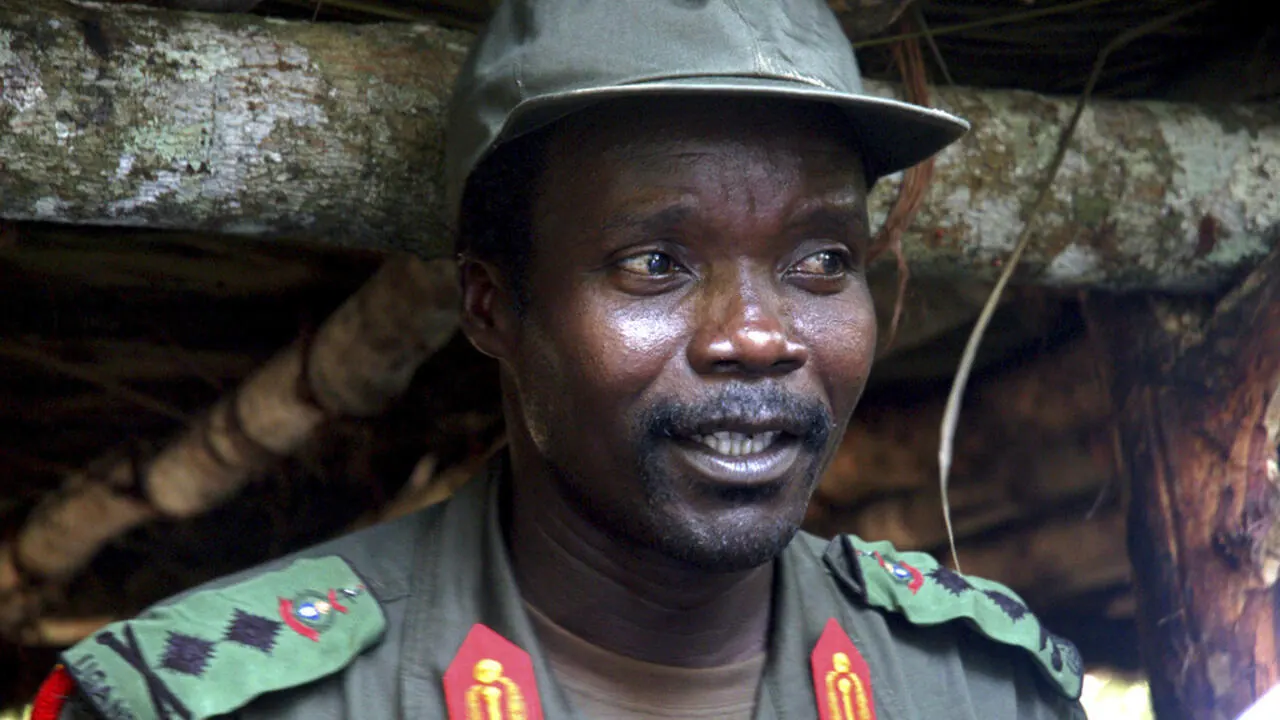
Joseph Kony, the fugitive rebel leader of the Lord's Resistance Army (LRA), has been wanted by the International Criminal Court (ICC) for more than 20 years. Kony founded the LRA in 1987 with the aim of overthrowing Ugandan President Yoweri Museveni and establishing a theocratic regime based on the Bible's ten commandments. The LRA's insurgency is one of Africa's longest and most brutal conflicts, claiming over 100,000 lives and displacing two million people, mainly in northern Uganda, according to the UN.
The LRA was driven out of Uganda in 2006 by the national army, but it remains active in isolated border areas of Central Africa. Recently, the group has made headlines with a resurgence of attacks in the east and southeast of the Central African Republic. At least 25 children have been abducted during several raids on villages in attacks attributed to Kony's militia. The ICC's lead investigator on the Kony case, Leonie von Braun, discussed the group's resurgence, stating that the LRA is much less powerful than in the 2000s but still active and employing a survival strategy.
Von Braun explained that the LRA operates on a smaller scale, with a less hierarchical structure than before, but remains armed and ready to commit acts of violence. The group kidnaps children because they are easy to indoctrinate and can be turned into fighters. The LRA's recruitment of children is not based on religious grounds, despite its self-proclaimed Christian identity. Instead, the group uses a syncretic approach, blending Christianity with local beliefs, and indoctrination is carried out primarily through violence.
The ICC issued an arrest warrant for Joseph Kony in 2005, and he has been the subject of an intense manhunt, including by the United States, which offered a $5 million reward for information leading to his capture. Despite massive media campaigns and US special forces deployed to Central Africa, Kony remains on the run. His ability to evade capture can be attributed to his knowledge of the terrain, his physical and psychological resilience, and his ability to set up an effective intelligence network.
The LRA's activities in the Central African Republic have raised concerns among local authorities, who are working to prevent further attacks. The group's resurgence highlights the ongoing risk posed by the LRA to local populations. Von Braun emphasized that the risk remains high due to the group's willingness to commit atrocities to ensure its survival. The ICC continues to investigate Kony and his associates, with a focus on bringing them to justice.
The situation is complicated by the fact that the LRA includes a large number of children, who are not combatants and are in no way responsible for their situation. Any planning for an operation must take into account the risk faced by those who are unarmed. It is essential to find the right moment to act, but this requires reliable and up-to-date information about the group, which is difficult to obtain.
The LRA's activities have had a profound impact on the region, with many communities affected by the group's violence and human rights abuses. Efforts to bring Kony and his associates to justice continue, with the ICC and other international organizations working to hold them accountable for their crimes. The international community remains committed to supporting the efforts of local authorities to prevent further attacks and protect vulnerable populations.
Key points
- Joseph Kony, the leader of the Lord's Resistance Army, has been wanted by the ICC for over 20 years and remains active in the Central African Republic.
- The LRA's resurgence in the Central African Republic has raised concerns among local authorities, who are working to prevent further attacks.
- The ICC continues to investigate Kony and his associates, with a focus on bringing them to justice for their crimes.