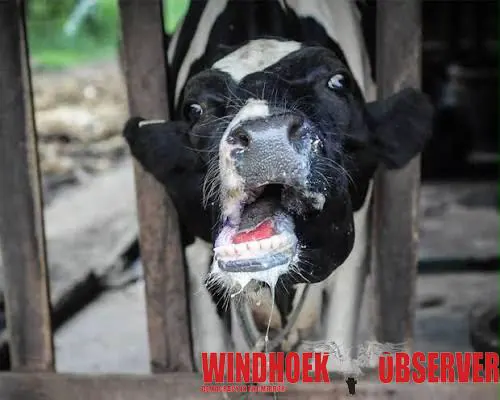
The Namibian Ministry of Agriculture, Fisheries, Water and Land Reform has announced a partial lifting of restrictions imposed following the Foot-and-Mouth Disease (FMD) outbreak in the Karasburg Veterinary District of the //Kharas region. This decision comes after thorough investigations and testing of livestock that had moved from the infected farm to the Otjozondjupa region before the outbreak was detected. All tested animals returned negative results for FMD.
According to the ministry, traceability and livestock inspections have confirmed that the disease remains confined to the //Kharas region. There is no evidence of transmission risk to areas north of the Veterinary Cordon Fence. As a result, movement restrictions on cloven-hoofed animals and their products north of the Veterinary Cordon Fence have been lifted with immediate effect. This change aims to ease the impact on the livestock industry and related businesses.
The lifting of restrictions allows for the movement of commodities such as cooked meat, pasteurised milk, and butter from north to south, subject to the Animal Health Act. However, certain restrictions remain in place. The movement of cloven-hoofed animals and products like meat, skin, unpasteurised milk, butter, and kraal manure into areas north of the Veterinary Cordon Fence is still prohibited.
South of the Veterinary Cordon Fence, excluding //Kharas, some restrictions have been lifted under specified conditions. These include the movement of raw meat from registered facilities, purchased meat from retailers and butcheries, as well as baled grass, lucerne, straw, forage, hay, silage, and crop residue. Proof of the origin of these products is required to ensure compliance with health regulations.
The ministry has also announced that the movement and trade of cooked processed meat products, pasteurised milk and its products, and hides processed up to wet-blue are now permitted countrywide. This expansion aims to support the livestock industry's recovery and maintain a stable supply of essential products.
Despite the partial lifting of restrictions, the ministry has urged farmers and the public to remain vigilant. They are encouraged to report any suspected FMD symptoms to the nearest State Veterinary Office promptly. Continued vigilance is crucial to preventing further outbreaks and ensuring the disease does not spread to new areas.
The partial lifting of FMD restrictions reflects the ministry's efforts to balance disease control with the economic needs of the livestock sector. By allowing the movement of certain products and animals under controlled conditions, the ministry aims to support the industry's recovery while safeguarding animal health.
Key points
- The Namibian Ministry of Agriculture partially lifted FMD restrictions.
- Livestock movement restrictions north of the Veterinary Cordon Fence have been lifted.
- Certain restrictions remain in place to prevent FMD spread.