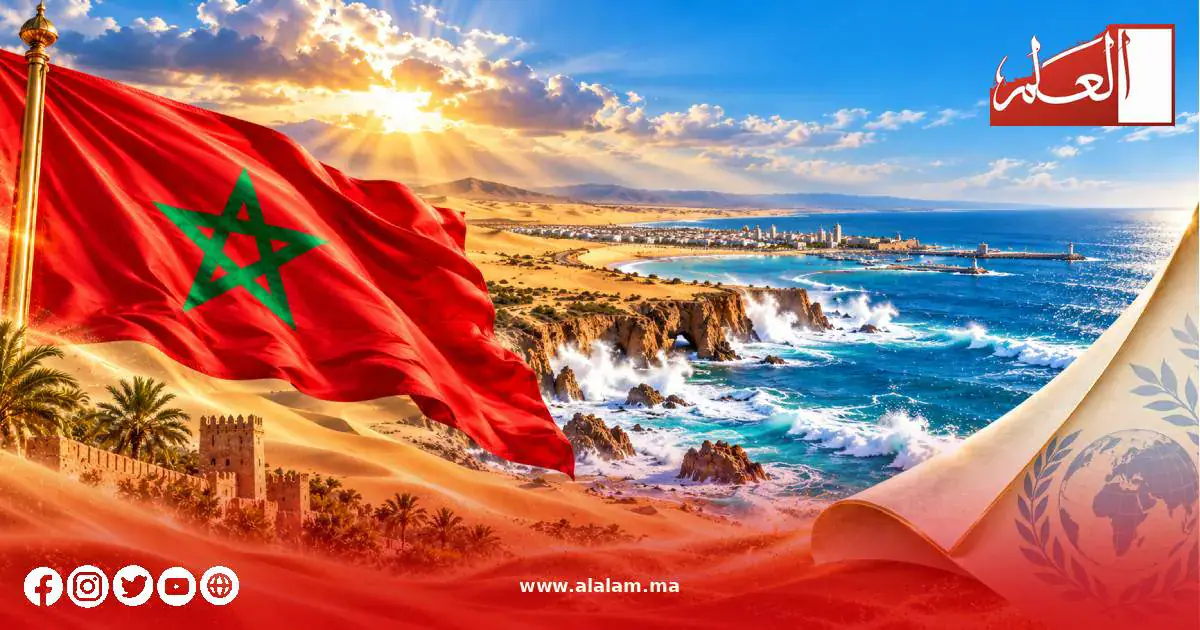
The Moroccan Royal Diwan issued a statement on October 30, 2026, confirming that the United Nations Security Council's decision not to extend the mandate of the MINURSO mission marks a significant development in the Western Sahara issue. This move is seen as a major step towards closing the file on Western Sahara within the United Nations. The MINURSO mission, established in 1991, was tasked with monitoring the ceasefire and facilitating a peaceful resolution to the conflict.
The Royal Diwan's statement emphasized that the end of the MINURSO mission, which had been in operation for 35 years, signifies a new phase in the Moroccan Sahara issue. The diwan described the mission as a relic of a bygone era, which had long been used to internationalize the regional conflict over Western Sahara. The statement also noted that the mission's presence in the southern regions of Morocco, including its personnel, vehicles, equipment, and symbols, should come to an end in the coming days.
The decision not to extend the MINURSO mission's mandate implies that the issue will no longer be referred to the UN Security Council, and the case will be removed from the council's agenda. The Royal Diwan's statement stressed that there will be no justification for periodic meetings dedicated to Western Sahara, nor for reports from the UN Secretary-General or briefings from his personal envoy.
Despite this development, Morocco expressed satisfaction with the decision, reaffirming its commitment to the ceasefire and the protection of its national security, territory, and citizens. The Royal Diwan's statement also highlighted the continuation of the international dynamic launched by King Mohammed VI, both bilaterally and regionally. This dynamic has garnered significant support, with over two-thirds of UN member states, including permanent members of the Security Council and influential international powers, backing Morocco's autonomy initiative.
The autonomy initiative, presented by Morocco, is seen as the only framework for resolving the regional conflict. The Royal Diwan's statement emphasized that this initiative is based on the principles of sovereignty and territorial integrity. Morocco's approach has been supported by many countries, which view it as a viable solution to the longstanding conflict.
The end of the MINURSO mission and the new phase in the Western Sahara issue come as Morocco prepares for upcoming elections in 2027. The country's internal affairs are also being closely watched, with recent developments in the city of Agadir sparking questions about professional and ethical standards. Meanwhile, the cultural scene in Morocco is thriving, with the Doha Film Festival 2026 announcing its lineup and competition.
As Morocco navigates this new phase in the Western Sahara issue, the country is also focused on promoting its economic development and regional integration. The government's vision for the development of major ports is seen as a key driver of growth and job creation. With its rich cultural heritage and strategic location, Morocco is poised to play an increasingly important role in regional and international affairs.
Key points
- Morocco's Royal Diwan announces end of MINURSO mission, marking new phase in Western Sahara issue.
- The end of the MINURSO mission signifies a significant development in the Western Sahara issue, with Morocco committed to protecting its national security and territory.
- Morocco's autonomy initiative, backed by over two-thirds of UN member states, is seen as the only framework for resolving the regional conflict.