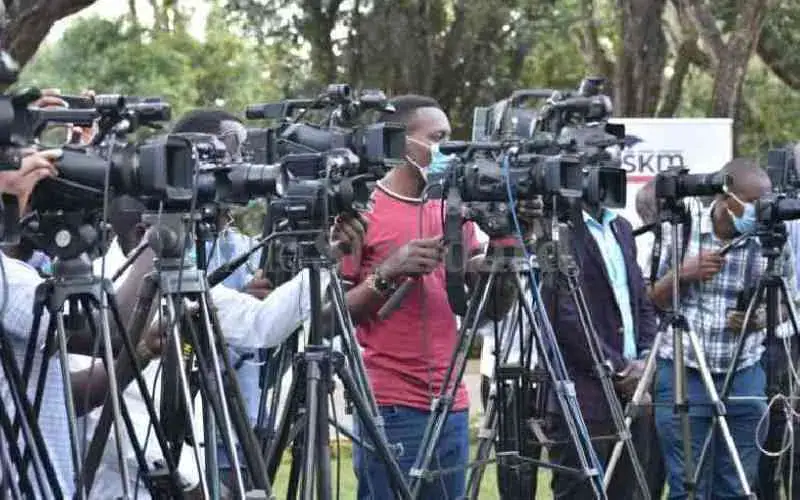
A recent survey conducted by the Kenya Union of Journalists (KUJ) and the Media Council of Kenya (MCK) has revealed that more than half of Kenyan journalists earn less than Sh50,000 a month. The findings, based on a sample of 120 journalists across different ranks and media houses, also show that 55 per cent work as correspondents, freelancers or contributors, arrangements that often leave journalists without the security of permanent employment.
The survey further found that 48 per cent of respondents had not received a salary review in more than three years, while 82 per cent did not receive allowances or bonuses. This has raised concerns over how journalists, particularly those working outside permanent employment arrangements, sustain themselves in an industry that relies on regular news coverage and demanding working hours.
According to KUJ Secretary-General Eric Oduor, poor remuneration is affecting journalists' ability to carry out their professional responsibilities. He emphasized that the welfare of journalists has an impact on their output and called for the findings to inform discussions on improving journalists' working conditions and remuneration.
The survey also found that journalists work an average of 8.5 hours daily, with more than 65 per cent reporting increased workloads over the past five years without corresponding increases in pay or allowances. This has resulted in 89 per cent of respondents actively looking for jobs outside their current workplaces, while one in three planned to leave journalism at the earliest opportunity.
The financial challenges also extend to retirement planning, particularly for journalists working as freelancers, correspondents and contributors who may not have access to employer-backed pension arrangements. In response, the Retirement Benefits Authority (RBA) has pledged to support KUJ and the media industry in establishing a Press Pension Scheme targeting non-permanent journalists.
RBA Chief Executive Charles Machira urged journalists to begin saving for retirement regardless of their current earnings. He emphasized that time is a significant advantage for young journalists, and the earlier they begin saving, the more opportunity their savings have to grow.
The proposed pension scheme is expected to provide a retirement savings option for journalists who may not have access to formal employment benefits. This move aims to address the welfare concerns of journalists and ensure they can sustain themselves in the industry.
Key points
- 52 per cent of Kenyan journalists earn below Sh50,000 a month.
- 55 per cent of journalists work as correspondents, freelancers or contributors without permanent employment.
- The Retirement Benefits Authority will support the establishment of a Press Pension Scheme for non-permanent journalists.