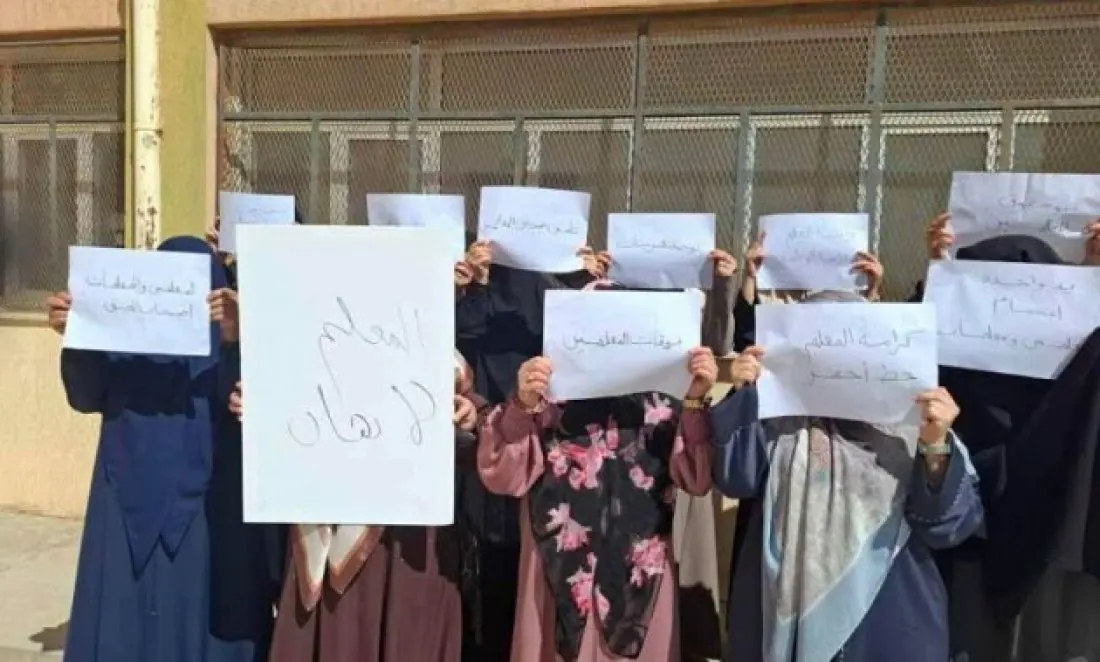
The Libyan education sector has been plunged into crisis as teachers went on a nationwide strike, affecting all schools and educational institutions. The strike, announced by the General Teachers' Syndicate in Libya, comes as the new academic year, which began on September 13, has been struggling to get underway. The teachers' union has been pressing for improvements in their working conditions, including unified salary scales and payment of outstanding benefits.
The strike is the latest development in a long-standing dispute between the teachers and the government. The teachers had initially gone on an open-ended sit-in protest when the new academic year began, which has now escalated into a nationwide strike. The union's demands include the payment of salary differences, as stipulated in Law No. 4, which they claim have not been fully implemented. They are also calling for comprehensive health insurance for themselves and their families.
The Libyan Ministry of Education had set September 13 as the start date for the new academic year, but the protests by teachers in various regions disrupted the process. The situation has been deteriorating, with the protests spreading to different areas and municipalities, prompting the General Teachers' Syndicate to declare a nationwide strike. The strike has left thousands of students affected, with their education and academic progress hanging in the balance.
The teachers' union has been pushing for several key demands, including the unification of salary scales, payment of outstanding benefits, and improved working conditions. They are also seeking the release of withheld funds and better benefits for teachers on contract. The strike has brought the education system to a grinding halt, with no clear end in sight.
The Libyan government has not made an official statement on the strike, but it is understood that the authorities are under pressure to address the teachers' demands. The strike has sparked concerns about the impact on the country's education system and the future of its students. The situation remains fluid, with negotiations between the government and the teachers' union yet to yield a resolution.
The strike in Libya comes at a time when the country's education system is already facing significant challenges. The sector has been struggling to recover from years of conflict and instability, which have left infrastructure and resources depleted. The strike has highlighted the need for urgent reforms and investment in the education sector to ensure that students receive a quality education.
The international community has expressed concern about the situation in Libya, with many calling for a peaceful resolution to the crisis. The strike has also sparked debate about the role of education in Libya's development and the need for sustainable solutions to the country's education challenges.
Key points
- Libyan teachers have gone on a nationwide strike, affecting all schools and educational institutions, demanding better pay and benefits.