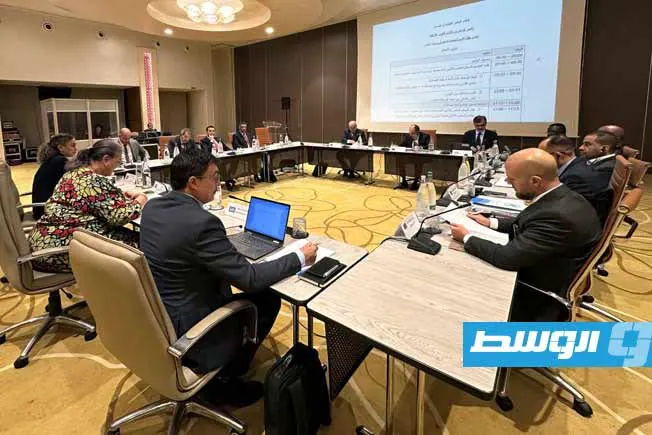
The 4+4 committee, comprising representatives from Libya's warring factions, convened in Tunis on October 4, 2026, to discuss the potential implications of the country's judicial divisions on the electoral process. The committee, led by UN Special Representative Hana Tietie, emphasized the urgent need to address these divisions while maintaining judicial independence and avoiding political interference. This meeting marks the tenth since the committee's inception and the second since the signing of the 4+4 agreement.
The committee reaffirmed its commitment to implementing the 4+4 agreement, signed on August 30, 2026, which aims to reform Libya's electoral laws and establish a new national electoral commission. The agreement also proposes the appointment of a new commission chairman and deputy chairman, as well as six additional members. The committee agreed to continue engaging with all Libyan parties to ensure broad support for the agreement and scheduled a follow-up meeting before the end of the month.
Key aspects of the 4+4 agreement include the adoption of Law No. 28 of 2023 as the basis for presidential elections, with certain amendments. Notably, the law allows dual citizens to run for office, provided they renounce their non-Libyan citizenship before taking the oath of office. The agreement also outlines procedures for re-holding elections if a candidate fails to meet this requirement.
The 4+4 committee's efforts aim to address long-standing issues in Libya's electoral process. The country's judicial divisions have raised concerns about the integrity of upcoming elections. The committee's emphasis on judicial reforms seeks to ensure a fair and transparent electoral process.
The meeting in Tunis was attended by Hana Tietie and Stephanie Khouri, with representatives from various Libyan factions. The committee's discussions focused on finding a way forward for Libya's stalled electoral process. The agreement's implementation is seen as crucial for Libya's transition to stability.
Libya's electoral process has faced numerous challenges, including disagreements over the country's electoral laws and the composition of the national electoral commission. The 4+4 committee's efforts aim to overcome these obstacles and pave the way for a successful electoral process.
The committee's next meeting is expected to take place before the end of October. The outcome of these discussions will be crucial in determining the future of Libya's electoral process. The international community is closely watching the developments, with many stakeholders emphasizing the importance of a fair and transparent electoral process.
Key points
- The 4+4 committee emphasizes the need for judicial reforms to ensure election integrity in Libya.