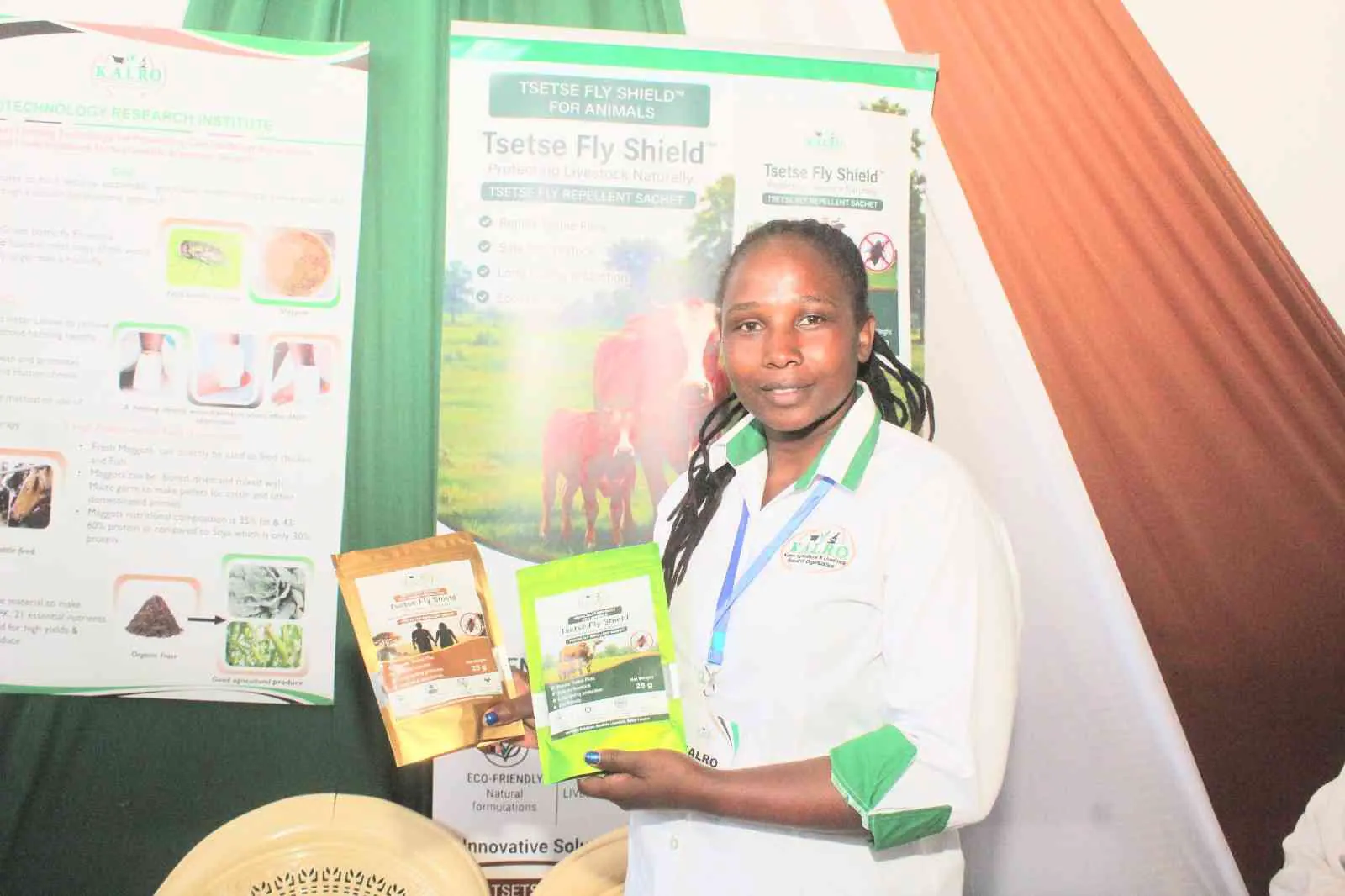
Scientists at the Kenya Agricultural and Livestock Research Organisation (KALRO) have developed a natural repellent sachet called Tsetse Fly Shield. This technology uses compounds that tsetse flies naturally avoid, creating an odour barrier around its users. The repellent is designed for livestock farmers, pastoralists, herders, wildlife rangers, researchers, and others who work or live in areas where tsetse flies occur.
The research draws from the natural relationship between waterbuck and tsetse flies. Scientists found that certain compounds associated with waterbuck odour can discourage tsetse flies from approaching. Instead of killing the insects, the technology works by making livestock or people less attractive to them. Emily Kipsura, a research scientist, explained that the repellent is an eco-friendly natural blend of compounds that tsetse flies naturally avoid.
The livestock sachet can be placed in a neck collar or animal harness, allowing the repellent to remain close to the animal during grazing and herding. For people, the sachet can be worn as a bracelet or placed inside a vehicle when travelling through areas where tsetse flies are present. Kipsura emphasized that the sachets should be used whenever livestock or people are exposed to tsetse flies, particularly during grazing, herding animals, field research, wildlife patrols, farming activities, and when travelling through tsetse-infested areas.
Tsetse flies transmit parasites that cause animal African trypanosomiasis, commonly known as nagana, in livestock and human African trypanosomiasis, or sleeping sickness, in people. The disease can affect animal health and productivity, creating an additional burden in areas where tsetse flies are common. The repellent is intended to reduce contact between the insects and their hosts, thereby reducing opportunities for disease transmission.
The sachets are designed to provide continuous protection for up to 30 days before replacement. KALRO says the technology can be used around dairy farms, ranches, pastoral grazing areas, livestock markets, and wildlife-livestock interface zones, as well as in communities affected by tsetse flies. This approach could offer an alternative to conventional methods that rely on insecticides or other measures to control tsetse populations.
Researchers are pursuing wider application of the technology as they seek ways of reducing the impact of tsetse flies on livestock and people. The product, however, should not be presented as a treatment for trypanosomiasis. Its role is prevention by reducing exposure to the insects that transmit the disease. The potential benefits extend beyond disease prevention, including protecting livestock health and productivity.
The waterbuck-inspired technology represents a different way of tackling an old problem: rather than chasing or killing the tsetse fly, scientists are using the scent of one of its natural neighbours to persuade it to stay away. By lowering exposure to bites, researchers hope to reduce opportunities for disease transmission, ultimately improving the health and well-being of both livestock and people.
Key points
- KALRO develops eco-friendly repellent using waterbuck scent to protect against tsetse fly bites.
- Tsetse Fly Shield offers alternative to conventional methods of controlling tsetse populations.
- Repellent provides continuous protection for up to 30 days, reducing disease transmission risks.