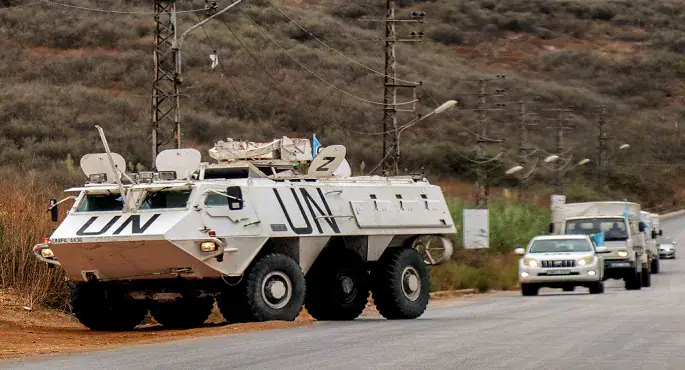
The Lebanese government is facing a critical phase as the United Nations Interim Force in Lebanon (UNIFIL) mission is set to conclude, leaving behind a security vacuum and raising concerns over Israel's continued presence in the region. With over 45 years of international presence, the challenge lies not only in identifying who will take over the field tasks but also in ensuring a smooth transition without leaving a security gap or losing international witness capability to document events on the ground.
According to Monir Chahade, former Lebanese government coordinator for UNIFIL, the upcoming phase requires a well-planned transition of responsibilities, supported by political and international guarantees and an alternative mechanism for monitoring violations. He warns that the absence of international force may weaken the ability to independently verify field facts and open the door to conflicting narratives on responsibility for any new escalation.
The Lebanese army is considered the national and legal entity qualified to take over security responsibilities in the south, but its success depends on providing the necessary human, technical, and logistical capabilities, along with a transitional phase that ensures continuity of coordination and monitoring. Chahade notes that the Lebanese army has shown high readiness in terms of deployment and discipline, with around 10,000 elements currently deployed in the south, and a plan to increase numbers.
However, several challenges remain, particularly regarding night surveillance equipment, communications, and transportation means, necessitating continued external support to ensure it can implement required tasks. Chahade suggests a transition period of 6-12 months, with some form of UN non-direct supervision, stressing that a rushed handover without necessary capabilities and guarantees may create conditions that Israel can exploit to intensify its movements or expand its operations.
The monitoring mechanism for the ceasefire and documenting violations is one of the most prominent files that will be affected by the end of UNIFIL's mission. Chahade explains that the current mechanism is linked to the international force through the tripartite committee, which includes the Lebanese army, UNIFIL, and the Israeli side, warning that the departure of the international force will deprive this mechanism of one of its main elements.
There is a discussion within the UN about alternative formulas, including establishing an office for the UN Secretary-General in Beirut or forming a small, unarmed monitoring mission to document and report on violations. However, a ready alternative has not yet crystallized, making agreement on a clear monitoring mechanism a priority to avoid leaving documentation of events to one party.
Chahade emphasizes that the Lebanese government has not yet obtained written and binding guarantees to ensure continued international monitoring after the UNIFIL mission ends, pointing out that what has been issued by France, the European Union, and the US falls under commitments to continue supporting the Lebanese army financially, logistically, and continuing interest in the Lebanese file in the Security Council.
Key points
- The Lebanese army is expected to play a key role in maintaining security in the south.
- The transition period will require careful planning to avoid a security vacuum.
- The international community has offered support to Lebanon, but a clear mechanism for continued monitoring is still needed.