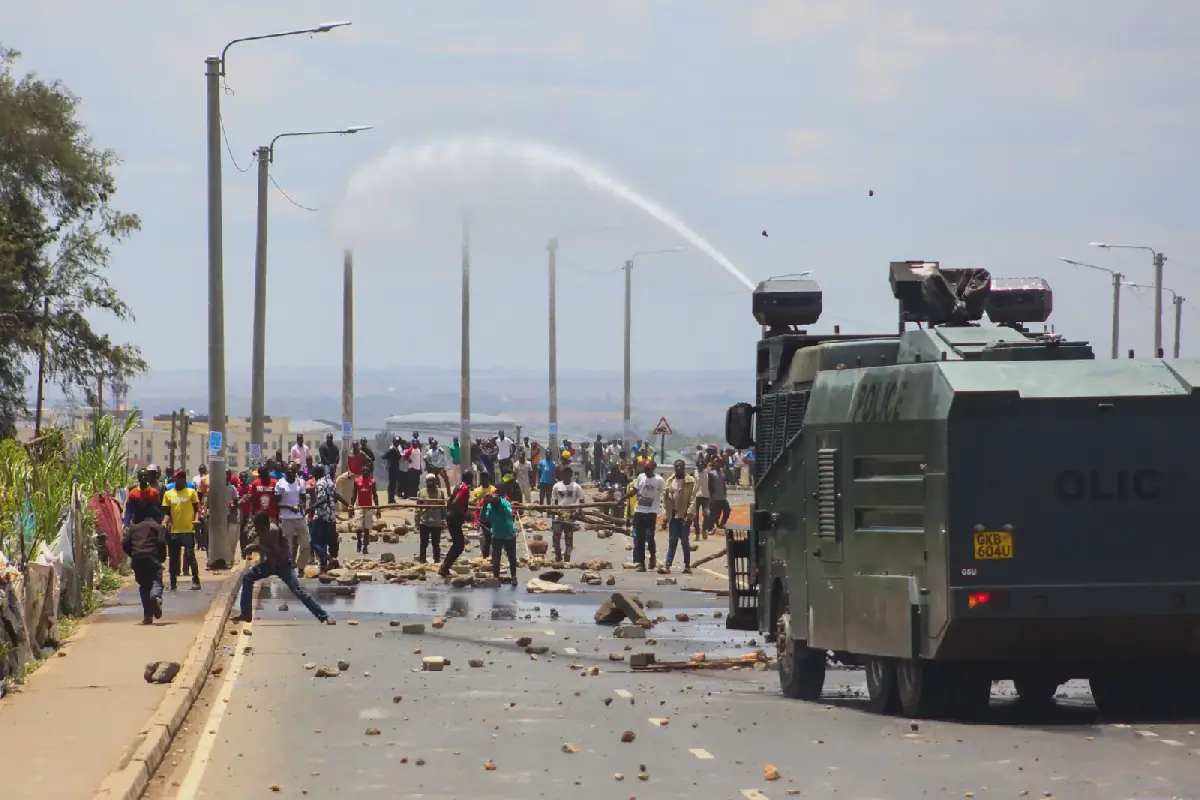
On August 16, 2026, a convoy carrying opposition politicians and supporters of the Linda Mwananchi movement was attacked in Homa Bay county, western Kenya. The attackers, armed with machetes, guns, and sticks, killed at least three people and beat and robbed journalists covering the violence. Witnesses reported that police officers were present but failed to contain the attacks. This incident was one of several violent attacks targeting civil society events and opposition gatherings in the months leading up to Kenya's August 10, 2027, general elections.
At least six people have reportedly been killed and dozens injured in these attacks, raising serious concerns about the safety of political participation as the campaign season gathers pace. President William Ruto is expected to seek a second term, while opposition parties and candidates have already begun mobilizing supporters at rallies across the country. The growing sense of anxiety about the elections and the lack of confidence in institutions responsible for protecting people's rights are palpable.
Conversations with people from different walks of life in Nairobi, Kenya's capital, revealed a troubling lack of confidence that the institutions responsible for protecting people's rights will be able to prevent violence and ensure accountability. One 28-year-old woman stated that she would not vote in the next year's elections, citing that "our votes do not change anything." In contrast, another young woman emphasized the need to look beyond elections and ensure that every vote counts, that people can participate freely, and that everyone, including women, can participate without fear.
The conversations also highlighted a palpable fear that the 2027 elections could be violent. Several people, including civil society actors, opposition members, grassroots organizers, and youth mobilizers, pointed to recent violence at political rallies as early warning signs. The violence in Homa Bay was repeatedly described as a turning point, signaling a deterioration in the political environment and raising concerns about what could lie ahead as campaigning intensifies.
The phenomenon of so-called "goons" – gangs allegedly mobilized or paid by politicians to disrupt political rallies, intimidate opponents, and engage in violence – was also raised. Some drew parallels with the Mungiki, an ethnic-based militia and criminal gang historically mobilized for political violence and entangled in Kenya's electoral cycles. Opposition and civil society members described young people being mobilized or allegedly paid to disrupt rallies, intimidate political opponents, and influence political gatherings.
At the heart of these concerns is impunity, with many questioning whether state institutions will protect them or hold those responsible for the abuse accountable. Some people raised concerns about the role of the Kenya National Commission on Human Rights, citing constraints including inadequate funding and other significant capacity and resource limitations. Young people expressed doubts about the effectiveness of its statements, saying it should do more.
The threat of violence and human rights abuses extends beyond Kenya's borders. On October 25, Tanzanian activist and human rights defender Twaha Salim Mwaipaya was reportedly abducted in Kamulu, Kenya, where he had sought refuge after reporting torture and threats linked to his activism in Tanzania. His whereabouts remained unknown, raising concerns about the cross-border targeting of government critics and the risks facing activists seeking safety in neighboring countries.
Key points
- The 2027 general elections in Kenya are approaching with concerns about potential violence and human rights abuses.
- There are fears of voter suppression, manipulation of ethnic divisions, and inflammatory rhetoric by political leaders.
- Impunity and lack of accountability for past abuses have raised concerns about the role of state institutions in protecting people's rights.