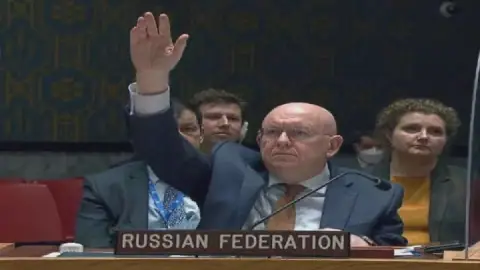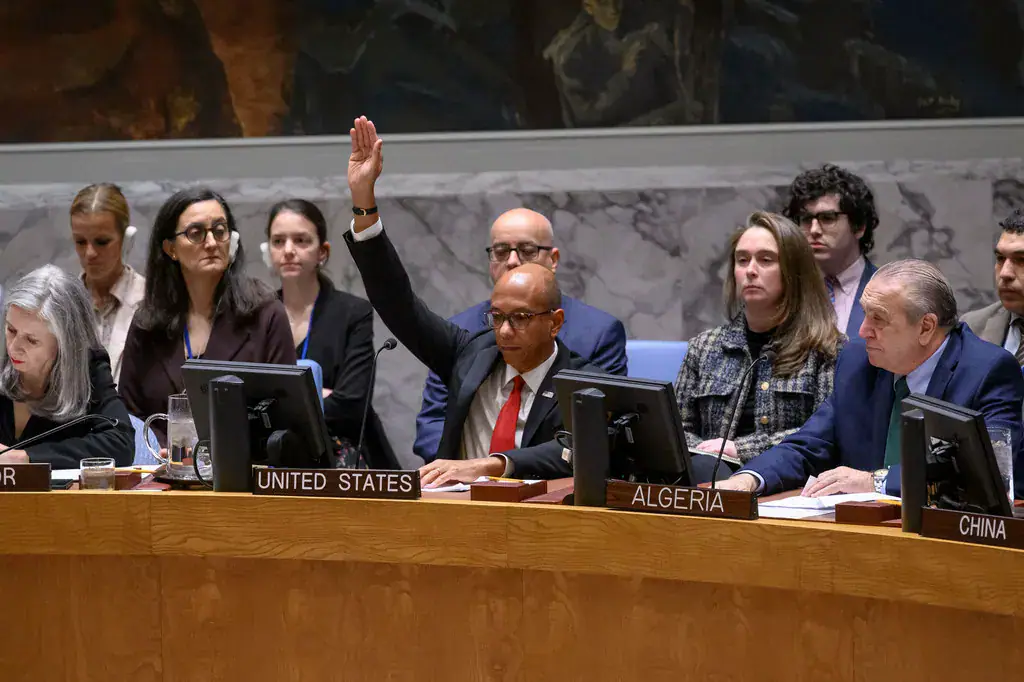
The Russian alternative plan for Western Sahara failed to gain support from the UN Security Council, with only three votes in favor. The plan aimed to technically extend the mandate of the UN Mission for the Referendum in Western Sahara (MINURSO) until October 31, 2027, while maintaining its current institutional framework, nature of tasks, and military component. The plan was rejected, with the United States voting against it, citing that it perpetuated political stagnation and did not reflect the international support for Morocco's autonomy initiative.
The UN Security Council vote took place on October 30, 2026, with 11 countries abstaining and the United States voting against the Russian proposal. The US argued that the plan did not reflect the dynamic nature of the issue and the international support for Morocco's autonomy initiative. The Russian plan was seen as an attempt to counter the US-proposed changes to the MINURSO mission, which included renaming the mission and altering its field structure.
Morocco's autonomy initiative has gained significant international support, with many countries recognizing it as a viable solution to the Western Sahara conflict. The initiative, which was presented by Morocco in 2007, proposes a degree of autonomy for the region under Moroccan sovereignty. The plan has been endorsed by several countries, including the United States, which has expressed its support for Morocco's efforts to find a peaceful solution to the conflict.
The Western Sahara conflict has been a longstanding issue, with the UN having been involved in efforts to find a peaceful solution since the 1990s. The conflict began in 1975, when Morocco and Mauritania claimed sovereignty over the territory, leading to a war with the Polisario Front, a separatist group backed by Algeria. The UN has been working to find a solution to the conflict, with the MINURSO mission being established in 1991 to oversee a ceasefire and facilitate a referendum.
The Russian plan's failure to gain support from the UN Security Council is seen as a significant setback for Russia's efforts to play a more prominent role in international diplomacy. Russia has been seeking to increase its influence in Africa and the Middle East, and the Western Sahara conflict is seen as an opportunity for Russia to expand its presence in the region.
The United States has been a key player in efforts to find a solution to the Western Sahara conflict, with the US having expressed its support for Morocco's autonomy initiative. The US has also been critical of Russia's efforts to undermine the US-proposed changes to the MINURSO mission, which were seen as an attempt to promote a peaceful solution to the conflict.
The failure of the Russian plan has been seen as a positive development for Morocco, which has been seeking international support for its autonomy initiative. Morocco's efforts to find a peaceful solution to the conflict have been recognized by the international community, and the country's autonomy initiative is seen as a viable solution to the Western Sahara conflict.
Key points
- The Russian alternative plan for Western Sahara failed to gain support from the UN Security Council, garnering only 3 votes.
- The plan was rejected due to its failure to reflect the dynamic nature of the issue and the international support for Morocco's autonomy initiative.
- Morocco's autonomy initiative has gained significant international support, with many countries recognizing it as a viable solution to the Western Sahara conflict.