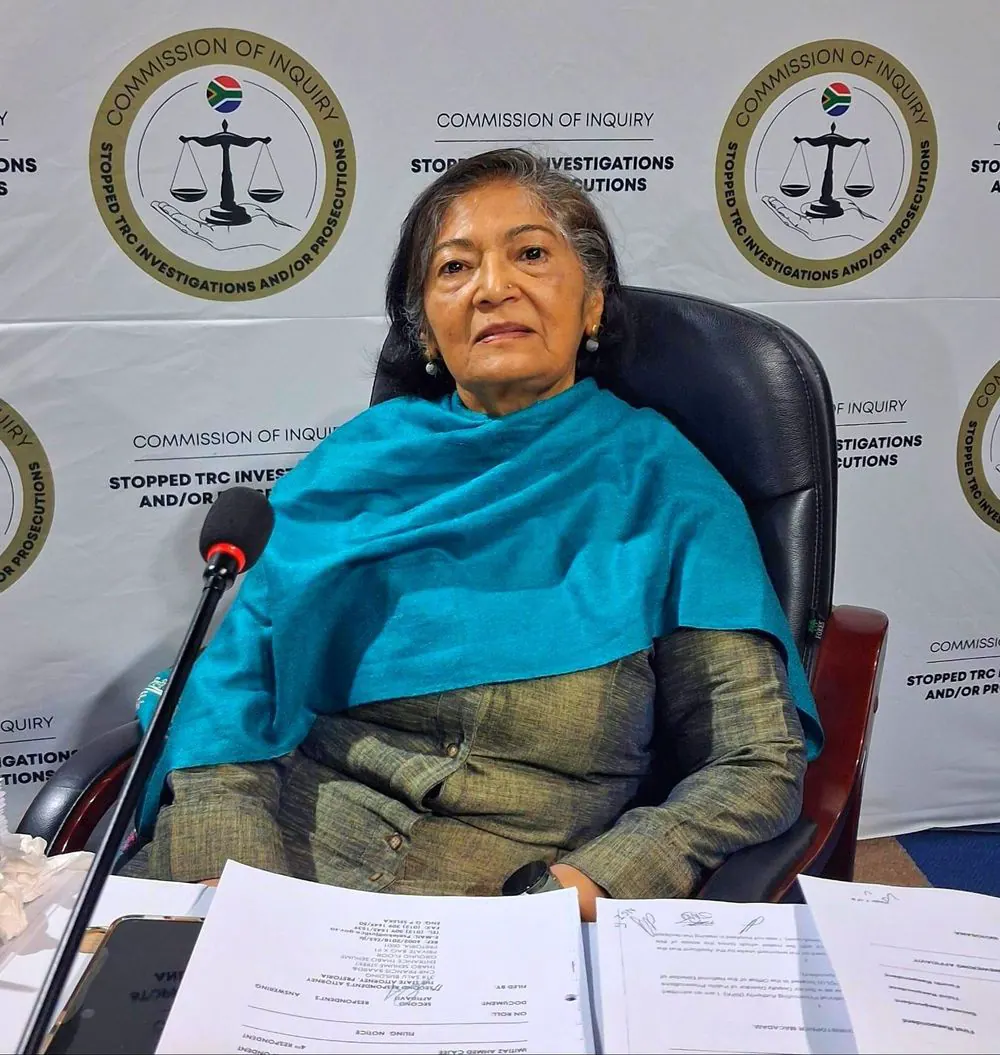
Former Truth and Reconciliation Commission (TRC) Commissioner Jasmin Sooka has expressed disappointment over Reverend Frank Chikane's media statement regarding the plea bargain in his attempted murder case. Sooka told the TRC Cases Inquiry that Chikane's characterization of the plea bargain as a "win-win situation" fell short of expectations. She had anticipated that Chikane, given his high moral standing, would push for greater accountability from those involved in the attempted murder, including former minister Adriaan Vlok.
The backdrop to the inquiry dates back to 2007, when Vlok, the then-minister of Police, along with four co-accused, pleaded guilty to charges of attempting to murder Chikane. This was part of a broader pattern of violence and repression against anti-apartheid activists during the apartheid era. Sooka reiterated her earlier statement that Chikane could have done more to hold those responsible accountable for their atrocities. The inquiry is probing allegations of political interference with TRC cases.
Sooka also referenced the plea agreement involving several high-ranking police officials, including General Johann van der Merwe and Colonel Christo Otto, regarding their involvement in Chikane's poisoning in 1989. She underlined the importance of public transparency regarding the truth of these past atrocities. Sooka emphasized that the right to truth is a normative framework in dealing with the past, comprising the right of victims to know what happened and the right of society to preserve public memory.
Sooka stated that she had appealed to Chikane to use his moral authority to call for wider disclosure of apartheid atrocities. She expressed disappointment that Chikane did not use his voice to push for greater accountability. Advocate Kgomotso Moroka, cross-examining Sooka, noted that records show Chikane previously expressed dissatisfaction with the details of the plea bargain, raising concerns with former Justice minister Brigitte Mabandla.
The TRC Cases Inquiry continues to hear evidence on unresolved cases, including those involving Nokuthula Simelane and St. James Church massacre. Former justice minister Penuell Maduna has called for reparations for apartheid victims. The inquiry has also heard testimony from other witnesses, including Advocate Chris Macadam, who disclosed that former Police Commissioner Jackie Selebi obstructed TRC prosecutions.
The Constitutional Court recently dismissed Jacob Zuma and Thabo Mbeki's bid to remove Justice Sisi Khampepe from the TRC inquiry. The Jacob Zuma Foundation has announced plans for further legal action, signaling an ongoing battle over the narrative of South Africa's apartheid history. The TRC Cases Inquiry aims to uncover the truth about past atrocities and provide closure for victims and their families.
The inquiry's findings are expected to have significant implications for South Africa's transitional justice process. Sooka's testimony highlights the complexities and challenges of dealing with the legacy of apartheid-era crimes. As the inquiry continues, it is likely to shed more light on the extent of political interference in TRC cases and the impact on victims and their families.
Key points
- Jasmin Sooka expresses disappointment over Frank Chikane's response to the Vlok plea deal.
- Sooka emphasizes the importance of public transparency regarding the truth of past atrocities.
- The TRC Cases Inquiry continues to hear evidence on unresolved cases and allegations of political interference.