Israeli President Isaac Herzog has announced that he will task Gadi Eisenkot, leader of the Yesh Atid party, with forming a new government. This decision comes after Eisenkot gained the support of 67 Knesset members. Herzog invited Eisenkot to the presidential residence on Sunday, where a formal ceremony will take place. According to the basic law, Eisenkot has 28 days to form a new government, with the possibility of a 14-day extension if needed.
The move is seen as a significant development in Israeli politics, with Eisenkot's party emerging as a key player. The Yesh Atid party has been a vocal critic of Prime Minister Benjamin Netanyahu, and Eisenkot has vowed to form a government that will prioritize the needs of all Israeli citizens. Netanyahu, who has been in power for over a decade, had been hoping to form a new government himself, but failed to secure the necessary support.
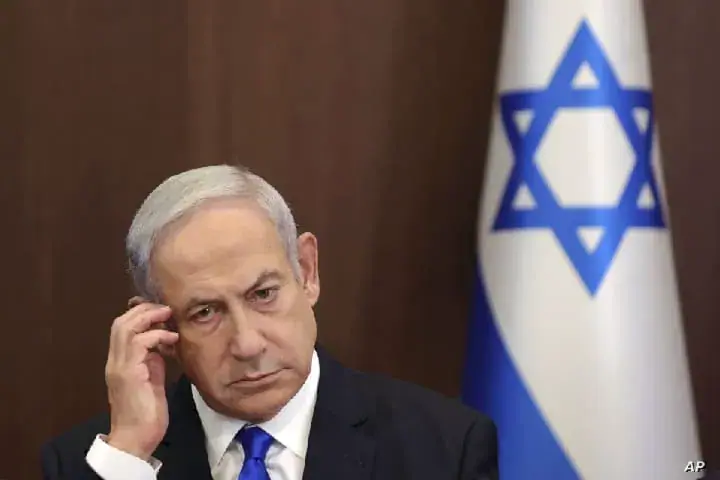
In a speech on Saturday, Netanyahu called for a national unity government, warning against forming a government that would rely on Arab parties. He accused Eisenkot of planning to form a government with parties that support terrorism and seek to undermine the state of Israel. Eisenkot responded by accusing Netanyahu of having a history of undermining governments and failing to honor agreements with his political partners.
The Israeli political landscape has been marked by deep divisions in recent years, with no clear majority emerging in the Knesset. The Likud party, led by Netanyahu, has been at odds with the Yesh Atid party, and it remains to be seen whether Eisenkot will be able to form a stable government. The US administration has reportedly been in touch with Eisenkot's team, urging him to move quickly to form a new government.
The international community has been closely watching the developments in Israel, with many countries expressing concern about the stability of the region. The Israeli-Palestinian conflict remains a major issue, and the formation of a new government could have significant implications for the peace process. Eisenkot has stated that he will prioritize the needs of all Israeli citizens, but it remains to be seen how he will address the complex issues facing the country.
The task of forming a new government will not be easy for Eisenkot, who will need to navigate the complex web of alliances and rivalries in the Knesset. He has stated that he will work to form a government that is inclusive and representative of all Israeli citizens. The success of his efforts will depend on his ability to build coalitions and negotiate with different parties.
The coming days and weeks will be crucial in determining the future of Israel's government. Eisenkot's ability to form a stable government will depend on his skill in building alliances and addressing the complex issues facing the country. The Israeli public will be watching closely to see whether he can deliver on his promises and provide a new direction for the country.
Key points
- Eisenkot has been tasked with forming a new Israeli government, following a stalemate in the Knesset.